
An outdoor kitchen in Florida usually needs one or more permits, because it typically combines gas, electrical, and plumbing work, and each trade can require its own permit and inspection. Whether you need an outdoor kitchen permit in Florida comes down to which utilities you add: a built-in grill with a gas line, outlets and lighting, and a sink with water and drainage each trigger their own review. A simple freestanding grill needs nothing, but a built-in kitchen is a multi-trade project.
Key takeaways
- An outdoor kitchen in Florida is usually permitted by trade: gas, electrical, and plumbing each may need a permit.
- A freestanding portable grill generally needs no permit; a built-in kitchen with utilities does.
- Gas lines and electrical near water are the safety-critical parts that inspection targets.
- If the kitchen sits under a new roofed structure, that structure is permitted too.
Table of contents
- Do you need a permit for an outdoor kitchen in Florida?
- Which permits does an outdoor kitchen need?
- Why are gas and electrical the critical parts?
- What if the kitchen goes under a roof or lanai?
- A quick example: a built-in kitchen in Polk County
- How do you plan an outdoor kitchen the right way?
Do you need a permit for an outdoor kitchen in Florida?
It depends on what you build. A simple portable grill on the patio needs no permit. But a built-in outdoor kitchen usually combines several trades, and each one, gas, electrical, and plumbing, can require its own permit and inspection in Florida. The more utilities you add, the more the project looks like an indoor kitchen from a permitting standpoint.
The cleanest way to plan is to list the utilities: a gas line for the grill or cooktop, electrical for outlets, lights, or a fridge, and plumbing for a sink. Each of those is permitted work. Use our permit checker to start, and review our project pages for how trade permits work.
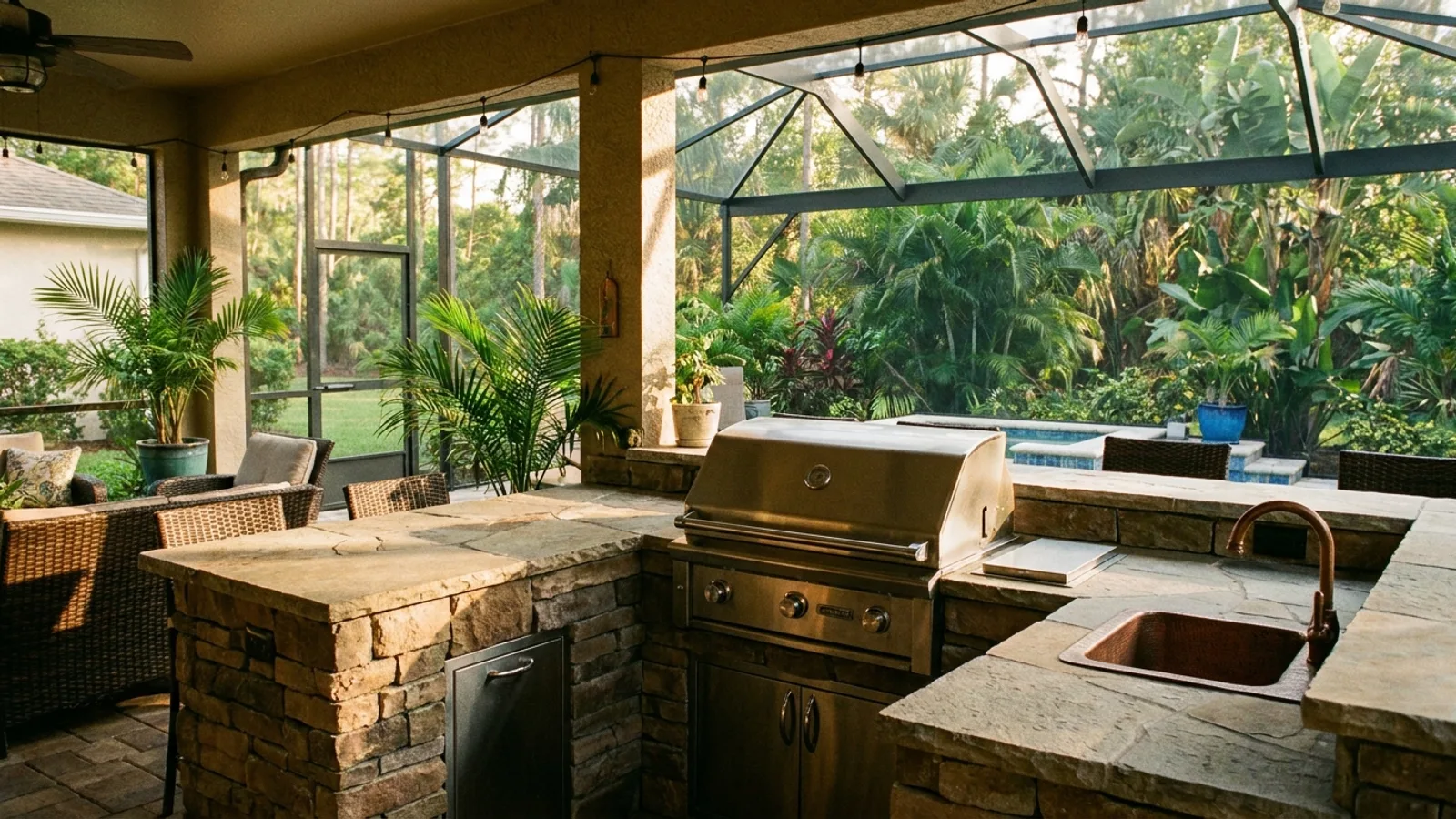
Which permits does an outdoor kitchen need?
Think of it trade by trade. An outdoor kitchen is rarely one permit; it is often a set of permits matching the utilities you install.
| Feature | Permit typically involved |
|---|---|
| Built-in gas grill or cooktop with a gas line | Gas permit |
| Outlets, lighting, refrigerator | Electrical permit |
| Sink with water supply and drainage | Plumbing permit |
| New roof or cover over the kitchen | Building permit for the structure |
| Freestanding portable grill only | Usually none |
Some jurisdictions combine these into a single application, but the inspections still cover each trade. The gas and electrical work near an outdoor sink are the parts inspectors focus on most.
Why are gas and electrical the critical parts?
Gas lines and electrical are the safety-critical trades in an outdoor kitchen. A gas leak or an improperly protected outlet near a sink is a real hazard, so those connections are permitted and inspected. This is the same reasoning behind permitting a gas water heater or any fixed electrical circuit.
Running a new gas line, in particular, is not a do-it-yourself afterthought. It has to be sized, connected, and pressure-tested correctly, and the inspection is what confirms it will not leak.
What if the kitchen goes under a roof or lanai?
If your outdoor kitchen sits under a new roofed structure or an enclosed lanai you are building, that structure is its own permitted item, separate from the trade permits inside it. A roof adds wind loads in Florida, which is why covers and enclosures are reviewed.
An existing covered lanai is different from building a new cover. If you are adding the structure, see our lanai and patio cover guide and the screen enclosure project page for how those reviews work.
A quick example: a built-in kitchen in Polk County
A homeowner in Polk County builds a masonry outdoor kitchen on an existing lanai with a built-in gas grill, outlets, and a sink. They pull the relevant trade permits, gas for the grill line, electrical for the outlets and lighting, and plumbing for the sink, and pass each inspection. Because the lanai already exists, no new structure permit is needed.
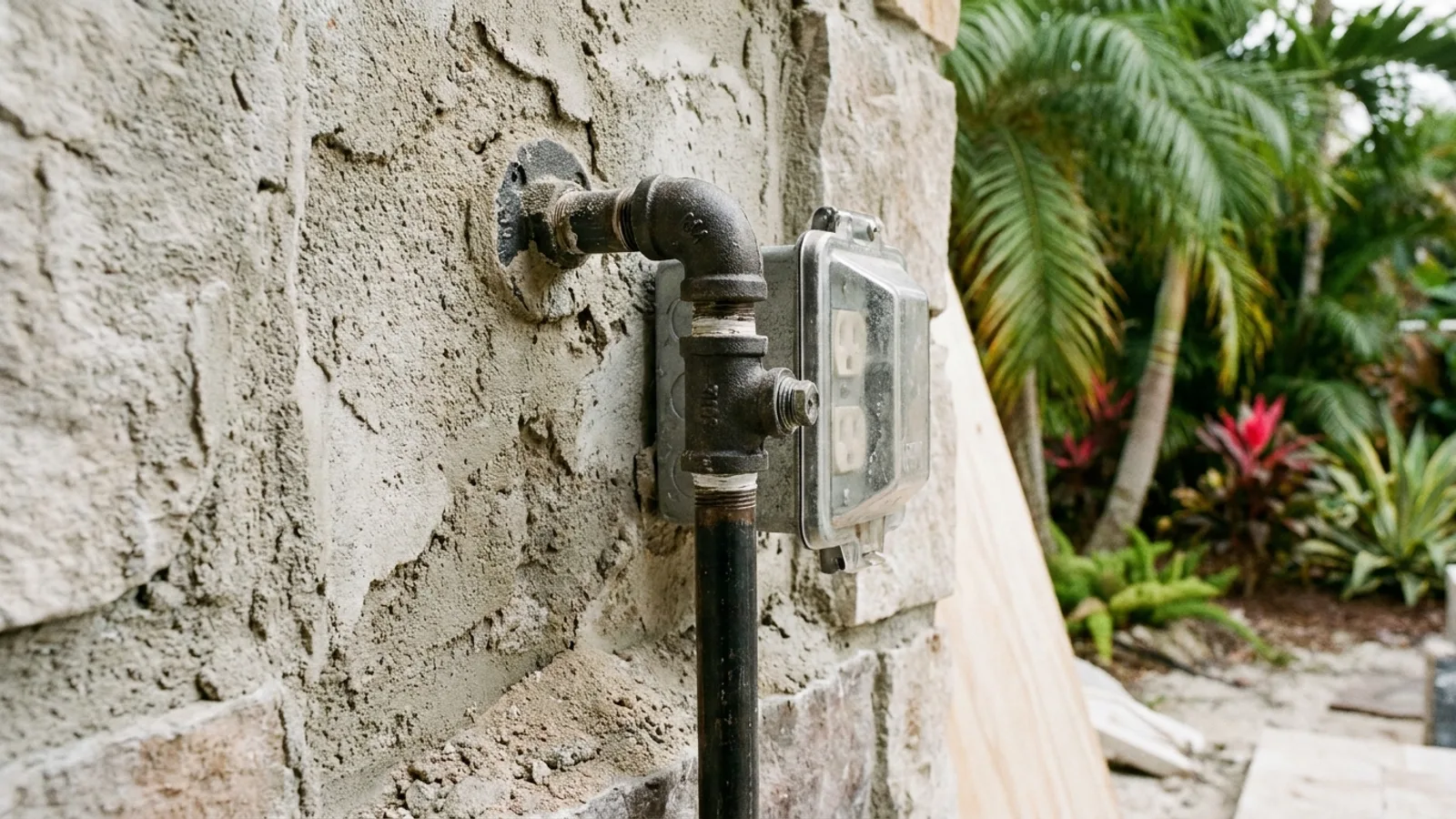
A neighbor who simply rolls a portable grill onto the patio needs no permit at all. The difference is entirely in the fixed utilities.
Our take: Permit the utilities, not the countertop. The gas and electrical near water are where the danger is, and an unpermitted gas line or outlet is exactly the hidden hazard inspection exists to catch.
How do you plan an outdoor kitchen the right way?
Start by listing every utility you plan to add, then confirm which permits your jurisdiction requires for each. Use licensed trades for the gas and electrical work in particular, and coordinate the inspections. If you are adding a cover or enclosure, permit that structure as well.
Keep the closed permits with your records. Documented gas, electrical, and plumbing work protects you at resale and reassures insurers that the outdoor kitchen was built safely, and that documentation matters most where a gas line is involved.