
Mobile home tie-downs and anchoring are regulated in Florida, and installing or upgrading them generally requires a permit and inspection. Because manufactured homes are held down against hurricane winds by their anchor system, tie-down work in Florida is safety-critical, and it can be overseen by agencies other than your building department. If your straps or anchors are missing, corroded, or undersized, permitted correction is the safe route.
Key takeaways
- Mobile home tie-down and anchoring work in Florida generally requires a permit and inspection.
- Manufactured homes are regulated differently from site-built homes, sometimes by a separate state program.
- Anchoring resists hurricane uplift, so it is treated as safety-critical, not cosmetic.
- Corroded or missing straps and anchors should be corrected through a permitted, inspected process.
Table of contents
- Do you need a permit for mobile home tie-downs in Florida?
- Who regulates manufactured-home anchoring in Florida?
- Why is anchoring treated as safety-critical?
- What does a tie-down inspection check?
- A quick example: re-anchoring an older home in Polk County
- How do you start tie-down work the right way?
Do you need a permit for mobile home tie-downs in Florida?
Generally, yes. Installing or replacing the tie-down and anchoring system on a manufactured home is regulated work in Florida, because that system is what keeps the home in place during high winds. Whether you are setting up a home or upgrading old anchors, expect a permit and an inspection of the completed anchoring.
Manufactured homes do not always follow the same permitting path as site-built homes. Some aspects are overseen through a state manufactured-home program rather than only your local building department, so confirming who has jurisdiction is the first step. Our permit checker can help you start on the local side.
Who regulates manufactured-home anchoring in Florida?
This is the key difference from a normal project. Manufactured-home installation and anchoring in Florida is licensed and regulated at the state level, and installers work under state rules, with the local jurisdiction often involved as well. That is different from a stick-built addition, which your county building department handles directly.
Because of that overlap, the practical move is to confirm with both your local building department and, where relevant, the state manufactured-home program which permit and inspection apply. Florida licenses these contractors and trades through the state, as described by the DBPR licensing program.
Why is anchoring treated as safety-critical?
A manufactured home is lighter than a site-built house and relies on its anchor system to resist wind uplift and sliding. In a Florida hurricane, undersized, corroded, or missing anchors are a direct life-safety risk. That is why the anchoring is inspected rather than left to the installer's word.
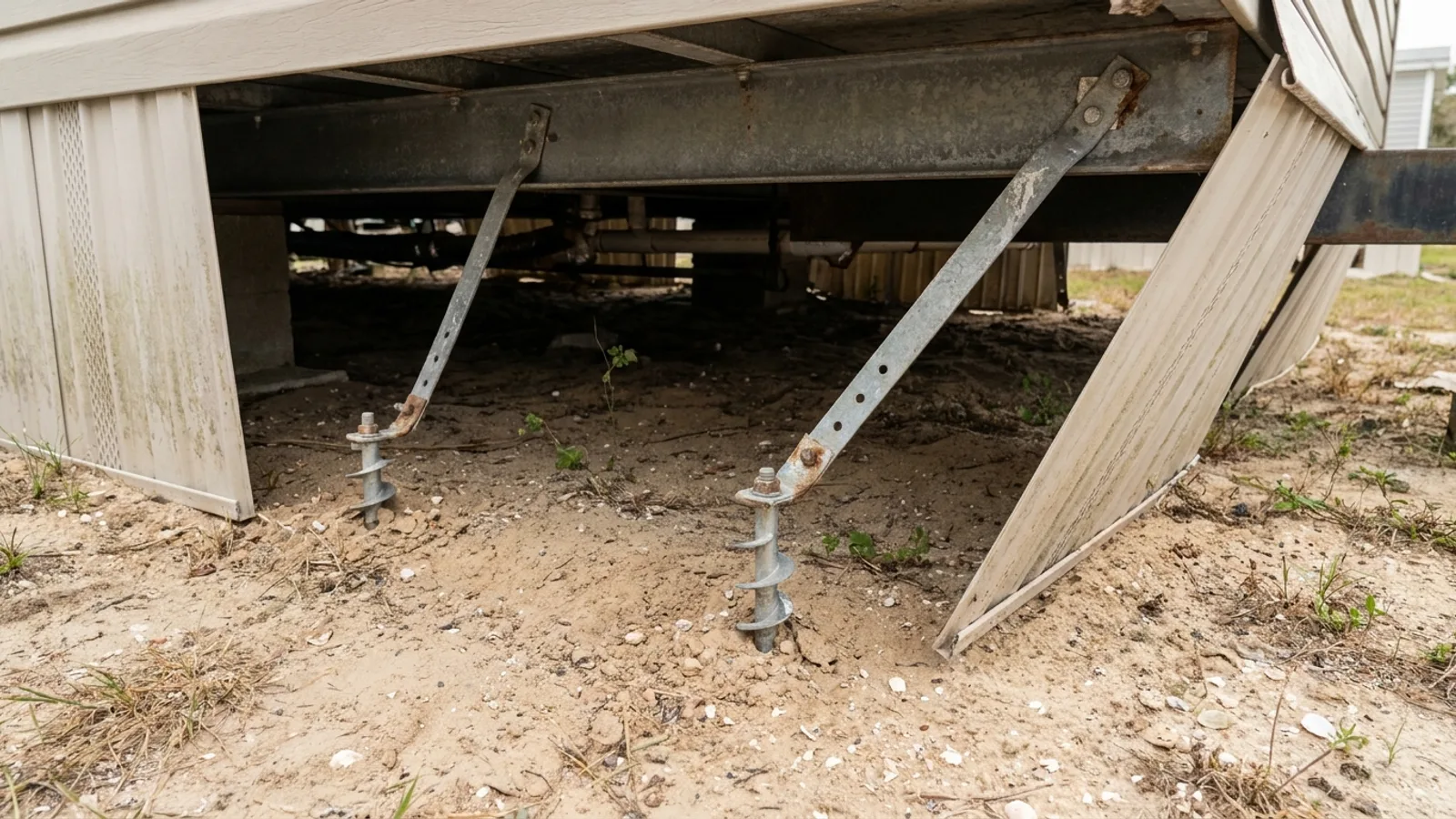
The system usually combines frame ties, over-the-top or diagonal straps depending on the home, and ground anchors sized for the soil. The inspection confirms the right number, spacing, and condition, which is exactly what fails when anchors are neglected.
What does a tie-down inspection check?
The inspector looks at the anchor type and count, the strap condition and tension, and how the system matches the home and the soil. The comparison below shows why condition matters so much on older homes.
| Anchoring condition | Typical action |
|---|---|
| New setup, correct anchors and straps | Permit and pass inspection |
| Corroded or loose straps | Permitted replacement, re-inspect |
| Missing or too few anchors | Add anchors, inspect |
| Soil or home change since original setup | Re-evaluate the system |
If you are buying or insuring an older manufactured home, the anchoring condition is often a deciding factor, so documented tie-down work has real value.
A quick example: re-anchoring an older home in Polk County
A homeowner with an older manufactured home in Polk County notices rusted straps and a couple of pulled anchors. Rather than patching it informally, they have a licensed installer pull the appropriate permit, replace the straps and anchors to current standards, and pass an inspection of the completed system.
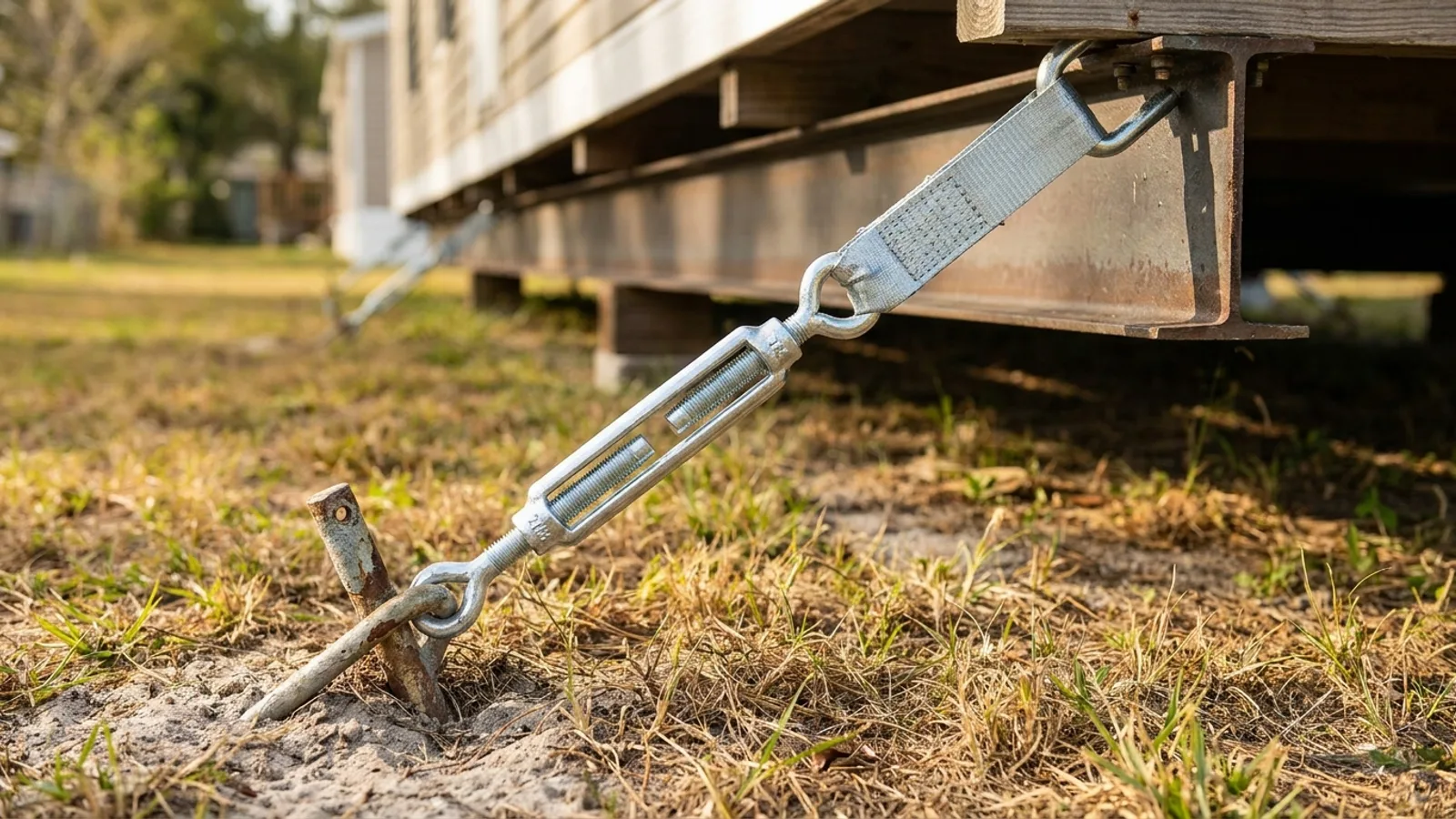
The permitted correction gives them documented, inspected anchoring, which matters for both storm safety and insurance. Compare this with a site-built shed or accessory structure, where the anchoring logic is similar but the jurisdiction is more straightforward.
Our take: Do not treat tie-downs as a do-it-yourself patch. Anchoring is the single thing keeping a manufactured home down in a hurricane, and the permit and inspection are how you know it will actually hold.
How do you start tie-down work the right way?
Confirm jurisdiction first. Contact your local building department and, where it applies, the state manufactured-home program to learn which permit and inspection govern your anchoring work. Then use a licensed installer familiar with manufactured-home anchoring, since the trade is specialized.
Keep the permit and inspection records with your home documents. For a manufactured home, proof of proper anchoring is among the most useful records you can hold for insurance, resale, and your own storm-season peace of mind.
Anchoring also ties into insurance in a direct way. A wind mitigation inspection can look at how a manufactured home is anchored and tied down, and documented, up-to-date anchoring can support better coverage terms. If your home sits in a flood-prone area, our flood zone permit requirements guide covers how elevation and anchoring rules can add to the picture. Treating tie-downs as regulated safety work, rather than a weekend fix, is what keeps a manufactured home both storm-ready and insurable.