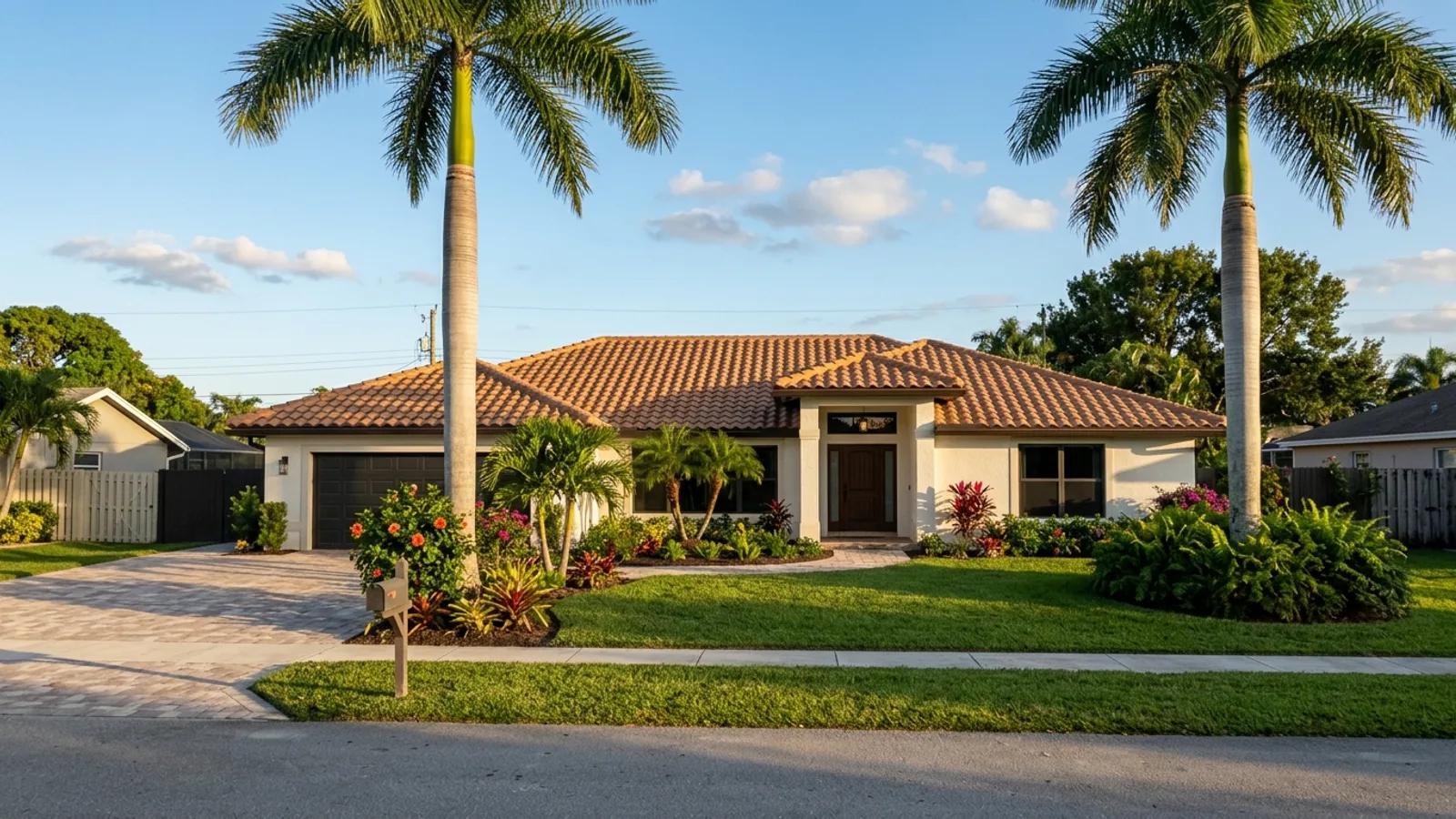
High-Velocity Hurricane Zone permits are the stricter roof, window, door, and shutter permits used in Broward and Miami-Dade counties, the two counties the Florida Building Code places in the High-Velocity Hurricane Zone (HVHZ). Roofing components need valid product approvals, exterior openings need impact-tested products or protection, and roofs are inspected in stages. Before you sign a contract, run your project through the free permit checker and confirm details with your building department.
Key takeaways
- The Florida Building Code defines the High-Velocity Hurricane Zone as Broward and Miami-Dade counties.
- In the HVHZ, every roofing component must have a valid and current product approval, and roof work uses an HVHZ Uniform Roofing Permit Application.
- HVHZ outside doors, skylights, and glazing must pass impact testing or be protected by a tested device such as a shutter.
- Several South Florida city checklists accept either a Florida product approval or a Miami-Dade Notice of Acceptance (NOA).
- HVHZ reroofs are inspected in phases, from underlayment through a final inspection.
Table of contents
- What is the High-Velocity Hurricane Zone?
- What changes for a roof permit in the HVHZ?
- What inspections does an HVHZ reroof get?
- What changes for windows, doors, and shutters?
- Do I need a Miami-Dade NOA or a Florida product approval?
- HVHZ permits at a glance
- A worked example: a tile reroof in Hialeah
- How do you start an HVHZ permit the right way?
What is the High-Velocity Hurricane Zone?
The High-Velocity Hurricane Zone is a code designation that, in the Florida Building Code's words, "consists of Broward and Miami-Dade counties." It is a whole-county boundary, not a flood zone or a wind speed line.
The HVHZ carries its own rules. The section numbers in this guide come from the 2023 (8th edition) Florida Building Code; Miami-Dade's product approval notices say the 2026 edition takes effect December 31, 2026, so confirm current section numbers with your permit office after that date. The Florida Building Code, Building, Chapter 15 sends HVHZ roofs to Sections 1512 through 1525, and Chapter 16 has separate HVHZ sections for wind loads and wind-borne debris impact tests. Homes are covered too: the Florida Building Code, Residential points HVHZ houses to its Chapter 44, which refers back to the Building volume for roofs, glazing, and structure.
What changes for a roof permit in the HVHZ?
In the HVHZ, a permit is required for all work connected with the application, repair, or maintenance of any roofing component, except as Section 105 of the code otherwise allows. Treat even modest roof repairs as permit work until your building department says otherwise.
The HVHZ Uniform Roofing Permit Application
Section 1512.3.1 requires reroofing, recovering, repair, and maintenance to have an HVHZ Uniform Roofing Permit Application, completed and executed by a licensed contractor. Attachments include the product approval, detail drawings, the municipal permit application, and a signed owner's notification. Under Section 1512.2.1, every roofing component, system, and assembly needs a valid and current product approval.
The owner's notification
Section 1524 is a notification your roofer must explain and you initial. One item warns that the existing wood deck may have to be renailed to current HVHZ requirements, and the deck is usually hidden until the old roof comes off. Ask how your contract prices renailing before you sign.
What inspections does an HVHZ reroof get?
An HVHZ reroof is inspected in phases, then gets a final inspection. Section 1512.4 ties the timing to the roof system.
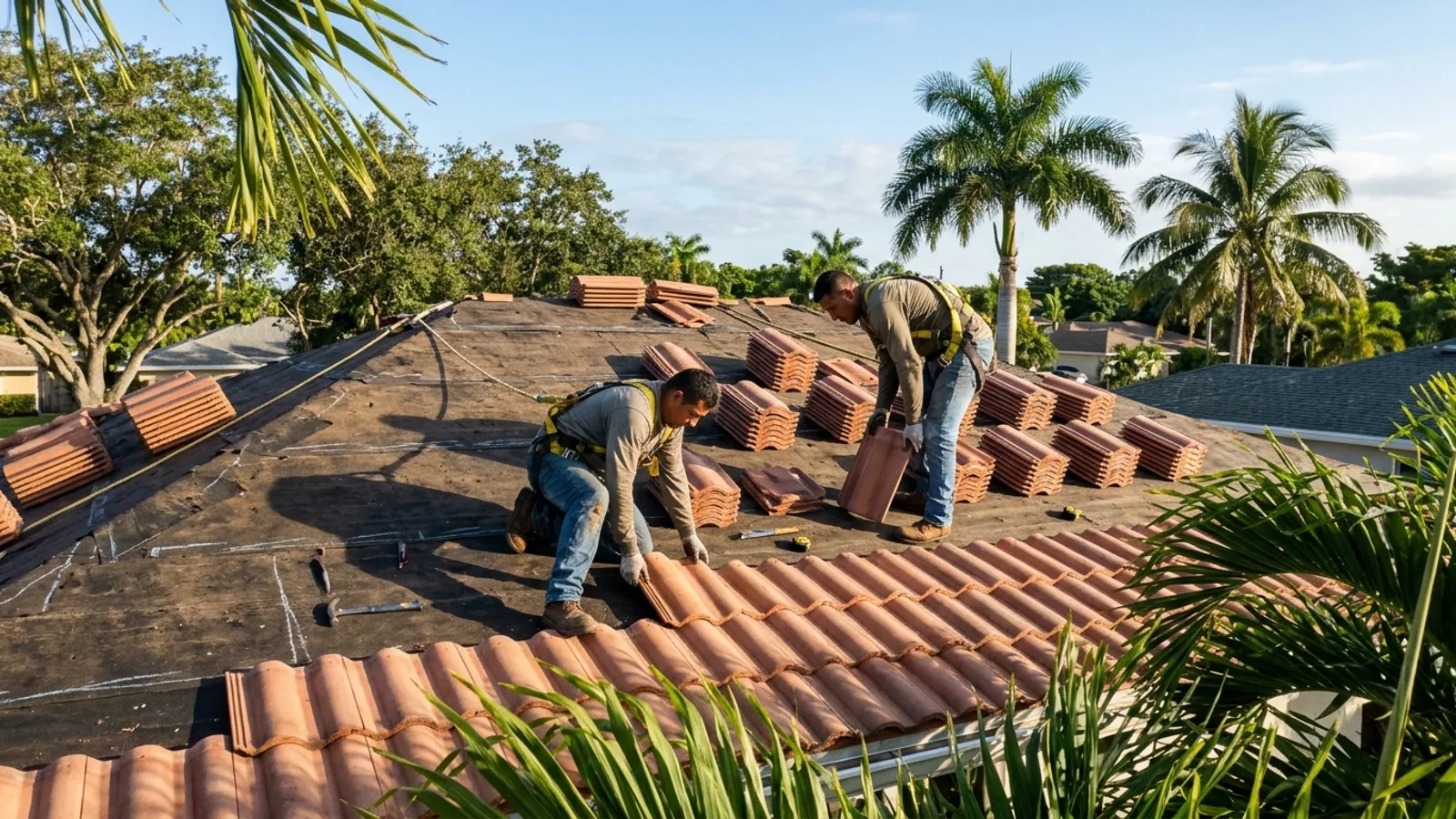
For tile, shingle, and similar discontinuous systems, the code lists inspections during or after the underlayment, during the cap sheet, and during installation of the roof covering. Adhesive-set and mortar-set tile roofs also need a field static uplift test under TAS 106 before the final, with results submitted to the building official.
What changes for windows, doors, and shutters?
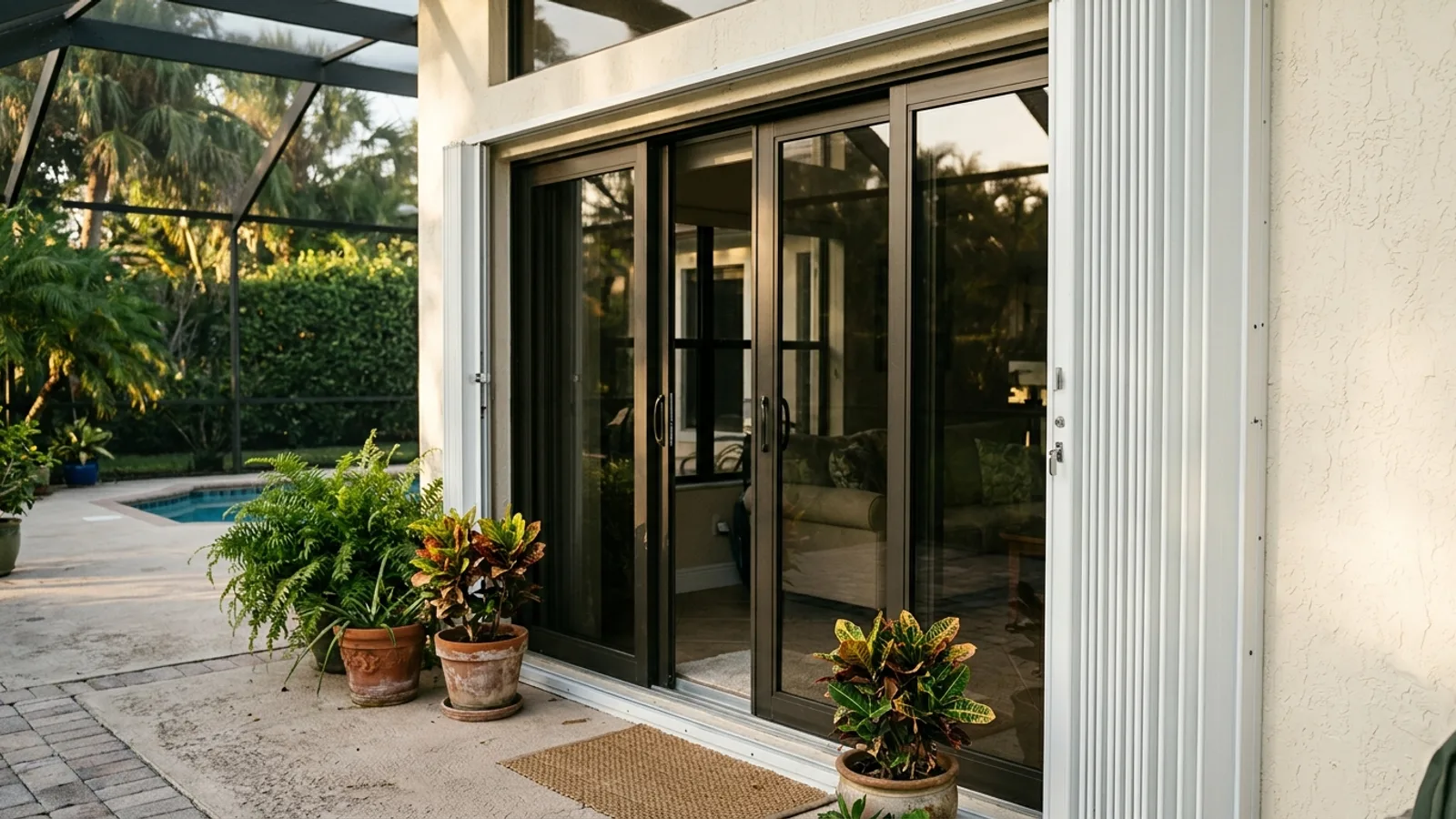
In the HVHZ, exterior walls, roofs, outside doors, skylights, glazing, and glass block must meet impact test criteria or be protected by an external device, such as a shutter, that does. Section 1626.1 applies this across the zone, with narrow exceptions such as soffit vents and some screen rooms.
The large missile test in Section 1626.2 strikes the specimen with a nine-pound piece of lumber at 50 feet per second, and HVHZ windows and sliding doors must comply with TAS 202. Impact-resistant coverings carry a permanent label from the product approval holder, and installation instructions must be available to inspectors on site. Outside the HVHZ, similar protection depends on whether you are in a wind-borne debris region.
City checklists apply this directly. Hialeah's window and door requirements call for the product approval number of each opening component, and Coral Gables requires an NOA or product approval for windows, doors, and shutters.
Do I need a Miami-Dade NOA or a Florida product approval?
Often either works, as long as the product is approved for HVHZ use and your city accepts it. An NOA is issued by Miami-Dade County's Product Control Section, which reviews windows, exterior glazing, wall cladding, roofing, exterior doors, skylights, glass block, siding, and shutters.
The Florida product approval search lets you filter statewide approvals by "Approved for use in HVHZ," so an FL number alone does not prove a product suits a South Florida house. Our guide to Florida product approval and NOAs explains how to read both.
- Deerfield Beach says roof product approvals may be Florida Product Approvals or a Miami-Dade County NOA.
- Coral Gables accepts an NOA or Product Approval from the State of Florida or Miami-Dade County for each roof component.
- Coral Springs says roofing must follow Dade County NOAs, and roof vents and skylights need an NOA at permit time.
Our take: In the HVHZ, the product approval decides whether your permit gets issued. Get the exact NOA or FL number, confirm it covers HVHZ use, and match it to your city's checklist before you pay a deposit.
HVHZ permits at a glance
Your city's checklist controls the final list, but this is what the HVHZ adds.
| Project | What the HVHZ adds | Typical paperwork |
|---|---|---|
| Reroof or roof repair | Product approval for every roofing component, phased inspections | HVHZ Uniform Roofing Permit Application, owner's notification, NOA or FL approval |
| Windows and sliding doors | Impact testing or tested protection, TAS 202 compliance | Product approval number for each opening |
| Garage doors | HVHZ testing to TAS 202 | Labeled door with its approval number where applicable |
| Shutters | Must pass the HVHZ impact tests in Section 1626 | NOA or product approval, labeled product, installation instructions on site |
A worked example: a tile reroof in Hialeah
A Hialeah homeowner is replacing a 2,000 square foot concrete tile roof. Hialeah's Roofing Package says a Product Control Notice of Acceptance and the method of installation must be provided at permit application and posted at the job site for inspection.
The roofer files the HVHZ Uniform Roofing Permit Application with the tile and underlayment approvals, and the homeowner initials the owner's notification, including the renailing item. Hialeah's fee schedule, effective March 20, 2026, prices roofing permits at $0.20 per square foot with a $290.00 minimum, so the office works out the base fee from the roof's square footage and adds the state surcharges. It confirms the total when it issues the permit. Inspections follow the underlayment, the tile installation, a TAS 106 uplift test if the tile is adhesive-set or mortar-set, and the final.
How do you start an HVHZ permit the right way?
Confirm who issues your permit, then lock down product approvals before you buy anything, because checklists differ by building department.
- Find your jurisdiction on the Miami-Dade County permit page or in our Broward County building permits guide.
- Download that office's roofing or window checklist.
- Get the NOA or FL number for each product and confirm it covers HVHZ use.
- Hire a licensed contractor, and see our Florida roof permit guide for how reroofs work statewide.
- Ask the permit office about exemptions, owner-builder work, or repairs before work begins.