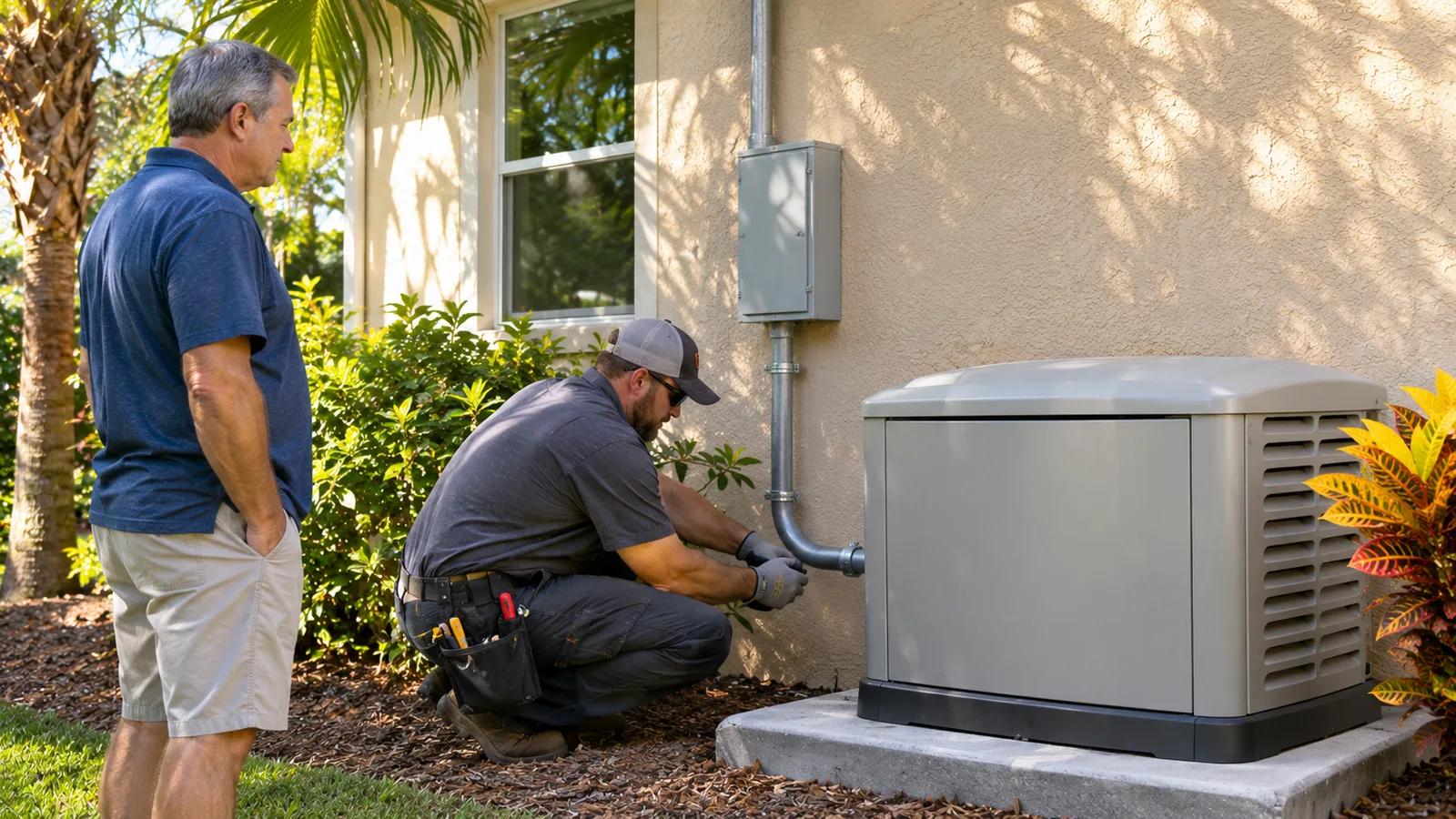
A generator installer permit in Florida is pulled by a state-licensed contractor, almost always an electrical contractor, because a standby generator ties into your home's wiring through a transfer switch. A natural gas or propane unit usually adds a fuel gas permit and a contractor licensed for gas work, and some offices also review the pad or tank. Here is who may do the work, what they pull, and how to check a license. To find your permit office, start with the free checker.
Key takeaways
- Florida's Electrical Contractors' Licensing Board issues certified electrical contractor (EC) licenses, valid statewide, and registered electrical contractor (ER) licenses, valid only where the contractor holds a local license.
- Hillsborough County lets a Florida EC or ER apply for the residential generator electrical permit and requires two inspections: electrical rough-in and electrical final.
- Florida Statutes section 489.105 places natural gas and liquefied petroleum gas line installation within the plumbing contractor's scope.
- Brevard County lets building, general and residential contractors pull a residential generator permit only if they name a subcontractor.
- Verify every installer on the DBPR license search at myfloridalicense.com before you sign a contract.
Table of contents
- Who is allowed to install a standby generator in Florida?
- Who installs the gas or propane line?
- Which permits does a generator installer pull?
- What does the installer submit with the permit?
- What inspections will a standby generator get?
- How do I check a generator installer's license?
- Can a homeowner pull a generator permit as an owner-builder?
- What does a typical generator installation look like?
Who is allowed to install a standby generator in Florida?
The electrical side of a standby generator belongs to a Florida-licensed electrical contractor. Other contractors can sometimes hold the permit, but must name a licensed subcontractor.
The Electrical Contractors' Licensing Board FAQ explains the two main licenses. A certified contractor passed the state exam and may work anywhere in Florida. A registered contractor registered a local certificate of competency and may work only in the counties or cities where that local license is held. The board also issues electrical specialty licenses, including a Residential Electrical Specialty, so ask your permit office whether a specialty license may pull a generator permit there.
Brevard County's residential generator page lists who may apply: an electrical contractor, a residential electrical contractor, or a building, general or residential contractor who must name a subcontractor. Professionals may only obtain permits within their license type.
Who installs the gas or propane line?
A contractor licensed for gas work installs the fuel line, and that is often a different company from the electrician.
Florida Statutes section 489.105 places the installation of natural gas and liquefied petroleum gas lines, and related venting, within the plumbing contractor's scope. Section 527.02 also requires a state license for liquefied petroleum gas businesses, with license categories that include a Category V LP gas installer.
Offices handle the fuel side differently. Hillsborough County asks for evidence of a fuel gas permit or a note that gas is by others, and Fort Myers sends fuel tank permits through its Fire Department.
Which permits does a generator installer pull?
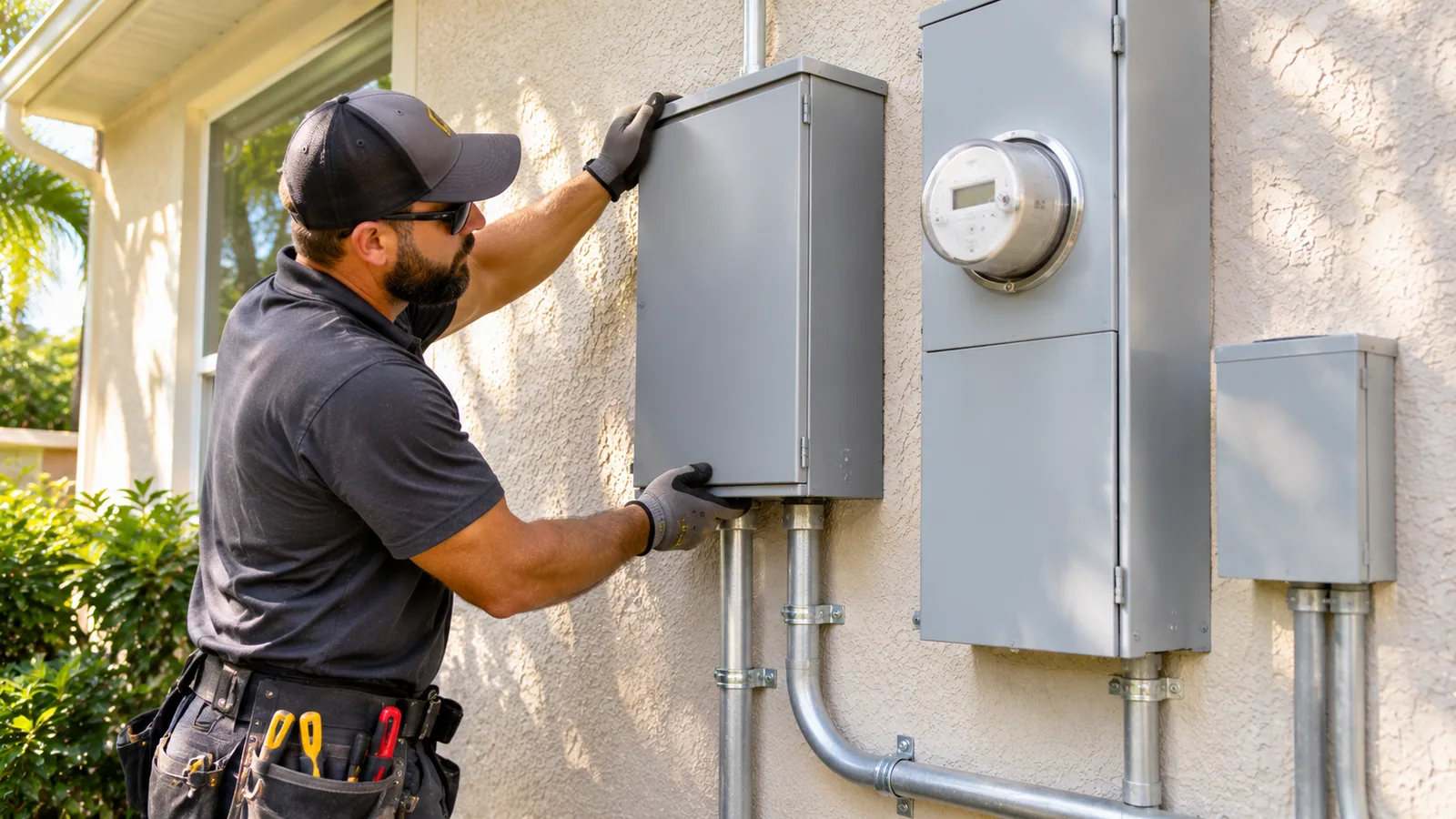
Expect an electrical permit, a fuel gas permit when the unit burns gas, and in some offices a building review for the pad or a separate tank permit. One combined permit is also possible.
| Office | What the published page shows |
|---|---|
| Hillsborough County | Residential electrical trade permit by an EC or ER, plus evidence of a fuel gas permit or gas by others |
| Brevard County | One Residential Generator permit covering the whole-house generator, including all electrical and plumbing |
| City of Fort Myers | Generator permit with slab and fuel details, plus a separate fuel tank permit through the Fire Department |
| Pinellas County | Inspection codes include a gas generator set and anchor inspection and aboveground tank inspections |
Each row reflects the office's published page, checked in November 2026.
What does the installer submit with the permit?
Most offices want the manufacturer's specifications, a site plan showing clearances, and details for the fuel source. Larger jobs add load calculations and a recorded Notice of Commencement.
Fort Myers' generator checklist is a good example of a full submittal:
- Manufacturer's specifications and installation instructions.
- Electrical plans such as load calculations and riser diagrams.
- The slab type, pre-cast or poured, with an engineered design if poured.
- Natural gas piping diagrams with pipe size, material and length, or the propane tank location and capacity.
- A dimensioned site plan showing distances to openings, property lines, windows, doors and A/C units.
Hillsborough County requires a site plan signed and sealed by a surveyor or design professional, or one signed by the contractor following county instructions, and flood elevation details in a Special Flood Hazard Area. When the direct contract is greater than $5,000, Florida Statutes section 713.135 requires a copy of the recorded Notice of Commencement before the first inspection. Our notice of commencement guide explains how to record one.
What inspections will a standby generator get?
At minimum, an electrical rough-in and an electrical final, with gas and setting inspections where the office lists them.
Hillsborough County's residential backup generator requirements require two inspections, electrical rough-in and electrical final, with the final scheduled after the rough-in is approved. Pinellas County's published codes add gas inspections, including "Gas Generator Set and Anchor," "1st Rough Piping and PT Ext" and a gas final.
For what inspectors typically look at, from the transfer switch to clearances, see our standby generator permit guide.
How do I check a generator installer's license?
Look the license up yourself on the state database before you sign.
- Get the license number. DBPR says an electrical contractor's license number must appear on contracts, business proposals, advertisements and vehicle signs.
- Search it on the DBPR license search at myfloridalicense.com and confirm the name matches the company on your contract.
- Check the type. EC is statewide; ER is limited to the local jurisdictions where it is registered, so confirm your county is covered.
- Confirm the status is current and active.
- Ask who holds the gas permit and check that contractor's license the same way.
- Ask about local registration. Fort Myers, for example, requires current contractor registration with the city before the permit issues.
Can a homeowner pull a generator permit as an owner-builder?
Sometimes. Florida's owner-builder exemption in section 489.103(7) lets an owner act as their own contractor on their own home, and Brevard County lists owner-builders among the applicants for a generator permit.
To qualify, the owner must personally appear and sign the permit application. The owner then carries the contractor's responsibilities, including code compliance and every inspection. Because a generator combines electrical and fuel gas work, read our contractor versus owner-builder comparison before deciding.
What does a typical generator installation look like?
Here is an illustration based on Hillsborough County's published requirements.
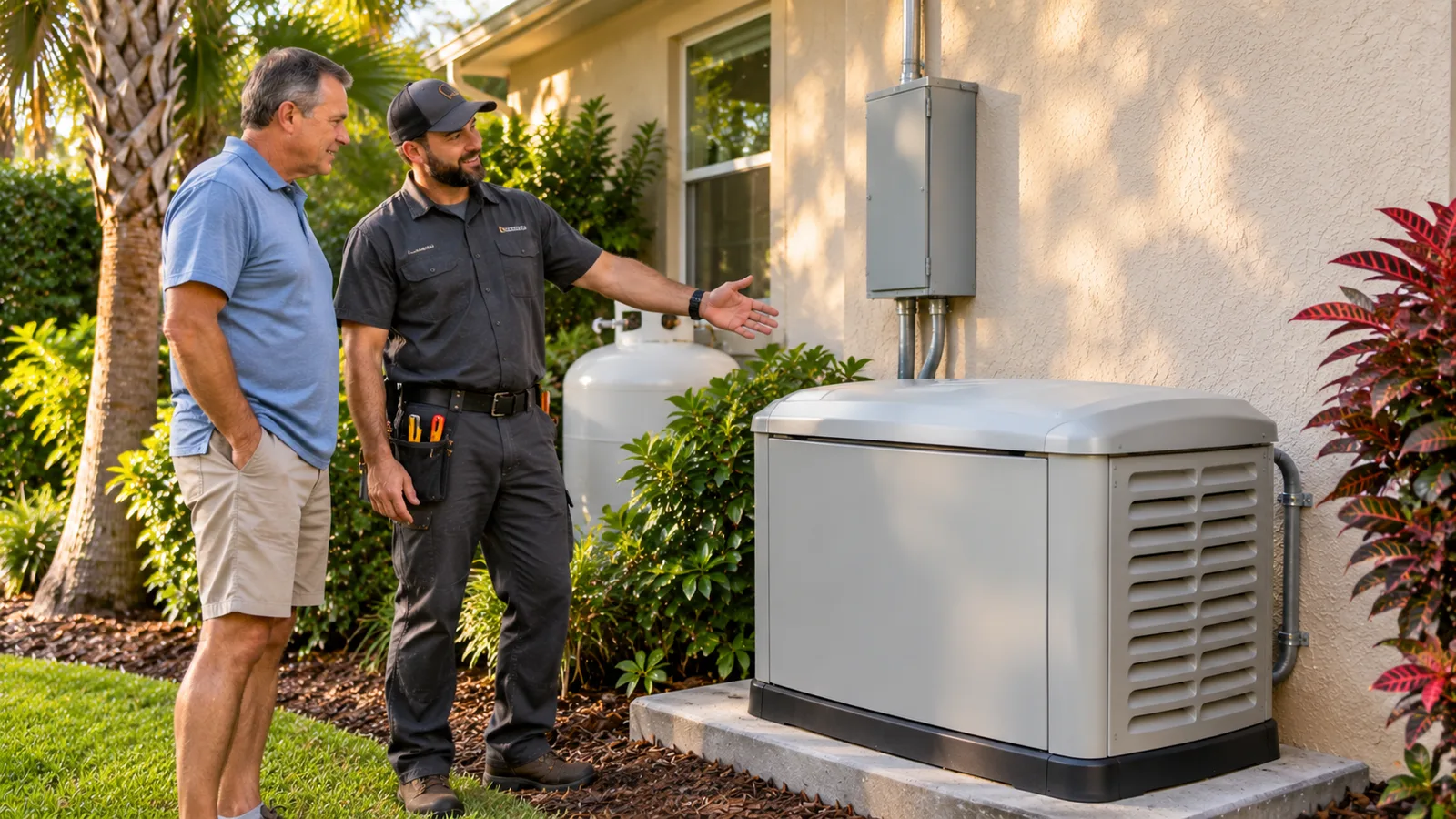
A homeowner in unincorporated Hillsborough County hires a dealer to install a natural gas standby generator under a contract well above $5,000. The dealer's certified electrical contractor applies for the residential electrical trade permit on HillsGovHub with a site plan, clearance documents and a load calculation, since the unit is rated below the home's main service. A licensed gas contractor pulls the fuel gas permit. The owner records a Notice of Commencement, and a certified copy is submitted before the first inspection. The electrical rough-in passes, the gas work is inspected under its own permit, and the electrical final closes the job.
Our take: Hire the license, not the brand. A dealer name is not a license, and the person whose license is on the permit is the one accountable for a safe transfer switch and gas connection. A few minutes on the state license search is cheap protection.
For the standard permit path, see the standby generator project page.