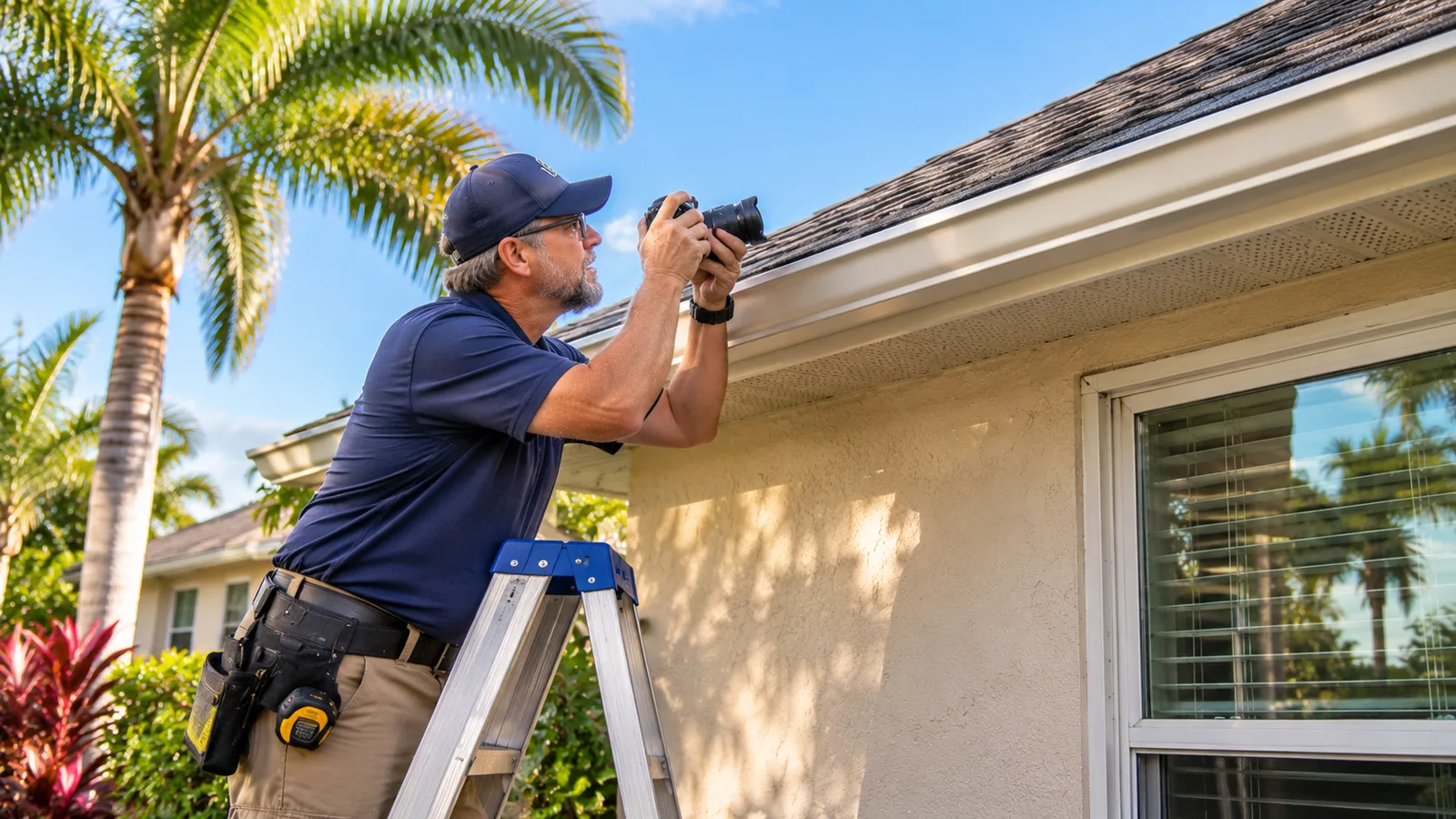
A roof certification in Florida is an insurance document, not a building permit. It is usually a roof inspection form, or the roof section of a 4-point inspection, signed by a Florida-licensed professional to tell an insurer the roof's age, condition and remaining useful life. A roof permit is the building department's approval to replace or repair a roof, closed out by code inspections. Neither replaces the other. If you are planning roof work, check what your address requires.
Key takeaways
- A roof certification in Florida is an insurance inspection form that records a roof's age, condition and remaining useful life for underwriting.
- A roof permit is issued by the local building department for re-roofing work and is closed by code inspections, including in-progress roof inspections in some counties.
- Citizens Property Insurance accepts its Roof Inspection Form only when signed by a Florida-licensed general, residential, building or roofing contractor, a building code inspector, or a Florida-licensed home inspector.
- Under Florida Statutes section 627.7011, an insurer may not refuse to issue or renew a homeowner's policy solely because the roof is less than 15 years old.
- Insurance roof forms ask for the date of the last roofing permit, so a closed permit becomes part of the inspector's record.
Table of contents
- What is a roof certification in Florida?
- How does a 4-point inspection cover the roof?
- What is a roof permit and what does it prove?
- How do a roof certification and a roof permit compare?
- Who can sign a roof certification in Florida?
- How does roof age affect Florida homeowners insurance?
- What does this look like when buying an older Florida home?
- What should you do next?
What is a roof certification in Florida?
"Roof certification" is the everyday name for an insurance roof inspection: a signed form describing the roof's covering, age, condition and remaining useful life. Insurers use it to decide whether to write or renew a policy.
Citizens Property Insurance Corporation publishes a sample Roof Inspection Form. It records the covering material, roof age, remaining useful life, the date of the last roofing permit, the date of the last update, visible damage such as cracking or soft decking, and signs of leaks, with photos of each roof slope.
The form says it is used only to determine insurability and is not a warranty. It describes condition on one day, not whether the roof was installed to code.
How does a 4-point inspection cover the roof?
A 4-point inspection is an underwriting report on four systems: the roof, electrical, plumbing, and heating and cooling.
According to Citizens' inspections page, Citizens requires a four-point inspection for all property owner, dwelling and mobile home applications for properties more than 20 years old. Citizens' sample 4-Point Inspection Form says its roof section, with photos of each slope, can take the place of the separate Roof Inspection Form. A trade-specific licensed professional may sign only the section for their own trade.
What is a roof permit and what does it prove?
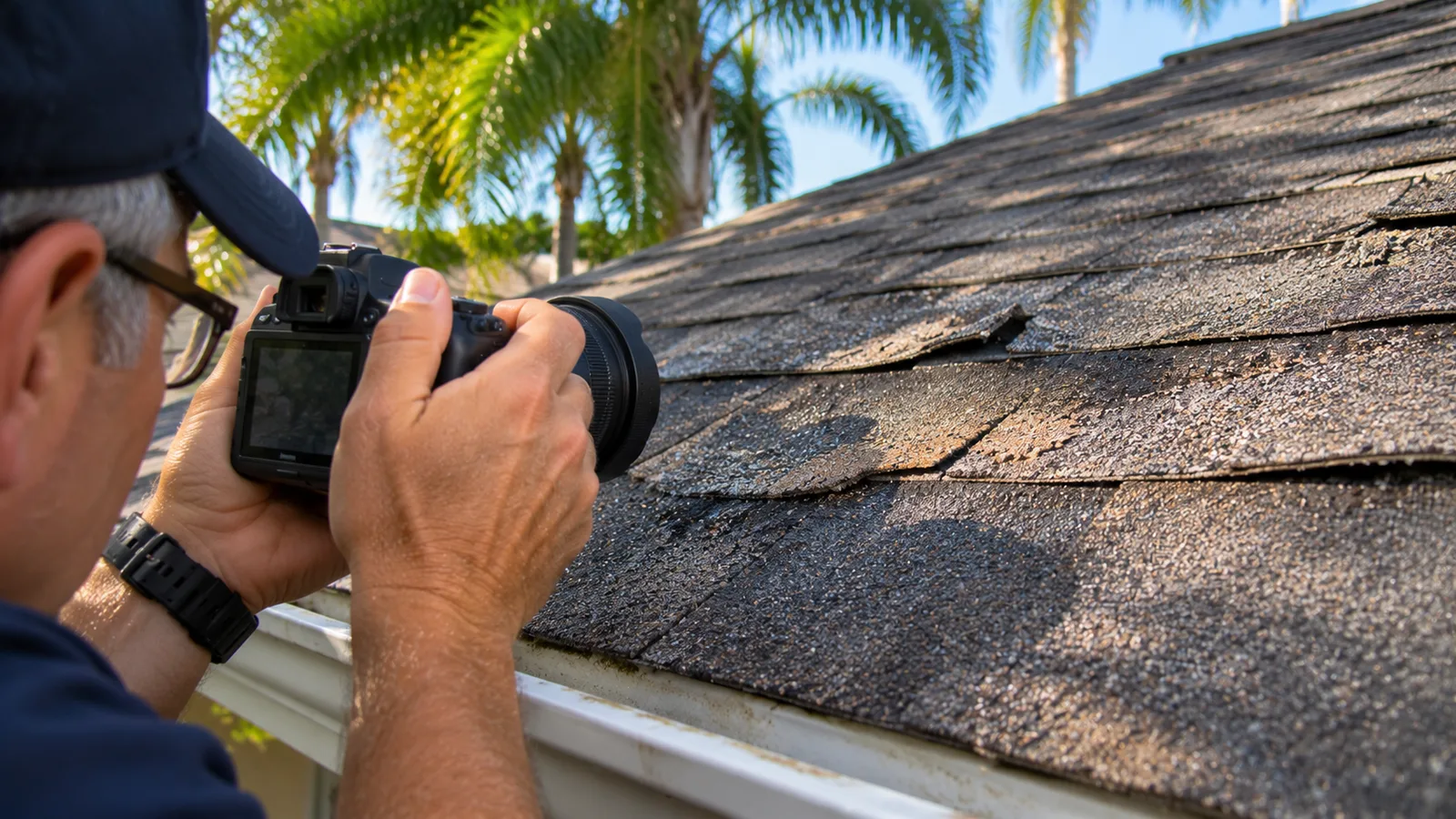
A roof permit is the local building department's authorization to re-roof or repair a roof, and its passed inspections show the work was checked against the building code. It is pulled before the work starts.
A licensed roofing contractor, as defined in Florida Statutes section 489.105, or a qualifying owner-builder pulls the permit. Inspections happen during the job: Pinellas County's inspection codes include a "Reroof in Progress" inspection, and Nassau County describes a re-roof sheathing inspection after the old water barrier is removed and the decking re-nailed. A final inspection closes the permit.
Our Florida roof permit guide covers the 25 percent rule, product approvals and the application, and the roof replacement project page shows the typical path.
How do a roof certification and a roof permit compare?
They answer different questions for different audiences.
| Roof certification (insurance form) | Roof permit (building department) | |
|---|---|---|
| Purpose | Shows an insurer the roof's age, condition and remaining useful life | Authorizes roof work and checks it against the building code |
| Who performs it | A Florida-licensed professional the insurer accepts | Building department inspectors, for work by a licensed roofer or owner-builder |
| When | At application, renewal or sale | Before and during new roof work |
| What it proves | Condition on the inspection date | The work was inspected and passed |
| What it does not prove | Code compliance or a warranty | Current condition years later |
Who can sign a roof certification in Florida?
Only a Florida-licensed professional the insurer accepts.
Citizens' Roof Inspection Form will not be accepted without the dated signature of a general, residential, building or roofing contractor, a building code inspector, or a Florida-licensed home inspector. Citizens also says a form may be rejected if the professional's license is not active or cannot be verified.
Florida Statutes section 627.7011 defines an "authorized inspector" for roof age purposes as one approved by the insurer who is a licensed home inspector, a certified building code inspector, a licensed general, building, residential or roofing contractor, a professional engineer, a professional architect, or another person the insurer recognizes as qualified.
How does roof age affect Florida homeowners insurance?
Roof age is a common underwriting trigger, and Florida law limits how insurers use it. Under section 627.7011:
- An insurer may not refuse to issue or renew a homeowner's policy solely because the roof is less than 15 years old.
- For a roof at least 15 years old, the insurer must allow an inspection by an authorized inspector, at the homeowner's expense, before requiring replacement.
- The insurer may not refuse solely because of age if that inspection shows five years or more of useful life remaining.
- Roof age runs from the last date the entire roof surface was built or replaced under the code in effect at the time.
Citizens adds its own rule: shingle and similar roofs older than 25 years, and tile, slate, clay, concrete or metal roofs older than 50 years, need documentation of at least five years of remaining useful life, or proof of a full replacement before a policy is written. Other insurers set their own rules.
What does this look like when buying an older Florida home?
This illustration uses Citizens' published rules.
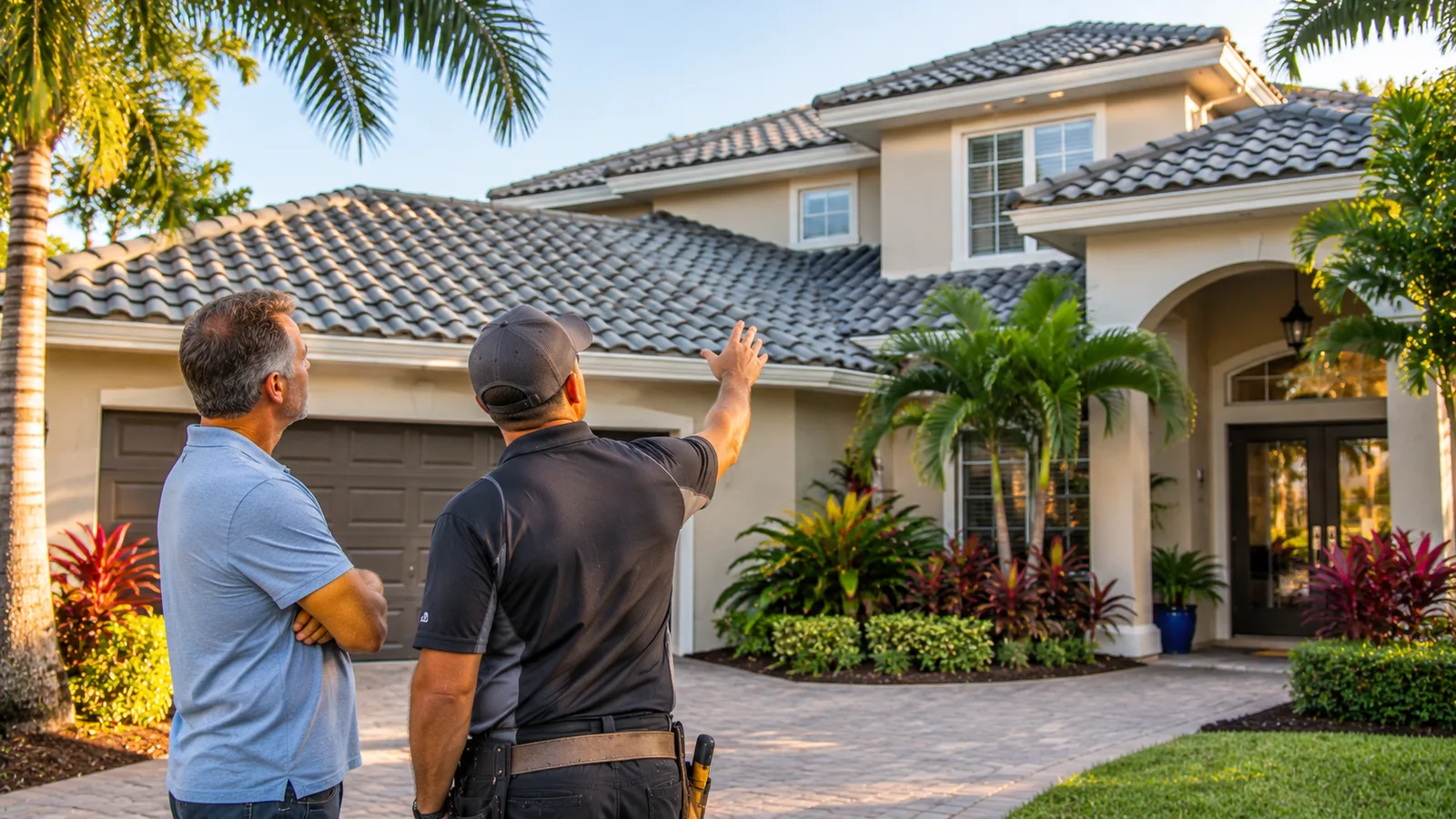
A buyer is purchasing a 1998 home in Pinellas County with a shingle roof replaced in 2009. Because the home is more than 20 years old, a Citizens application needs a 4-point inspection. The roof is 17 years old in 2026, under Citizens' 25-year shingle threshold but past the 15-year mark in section 627.7011, so an insurer must allow an inspection before requiring replacement.
The inspector fills in the date of the last roofing permit. The buyer looks up the permit history and finds the 2009 re-roof permit closed with a final inspection, which supports the roof age on the form. Had the permit been left open, the buyer would know to raise it before closing.
Our take: Never accept a roof certification as a substitute for a permit. A clean form describes how a roof looks today. A closed permit shows the roof was inspected while it was built, and insurance forms ask for that date for a reason.
What should you do next?
Match the document to the question.
- Ask your insurer which form it accepts, then hire a Florida-licensed professional it accepts.
- Look up the roof's permit history so the permit date on the form is accurate.
- If the roof needs replacing, have a licensed roofer pull the permit before work begins.
- After the permit is finaled, consider a wind mitigation inspection. One qualifying roof covering answer on the uniform mitigation verification form (OIR-B1-1802) is a roofing permit application date on or after March 1, 2002.