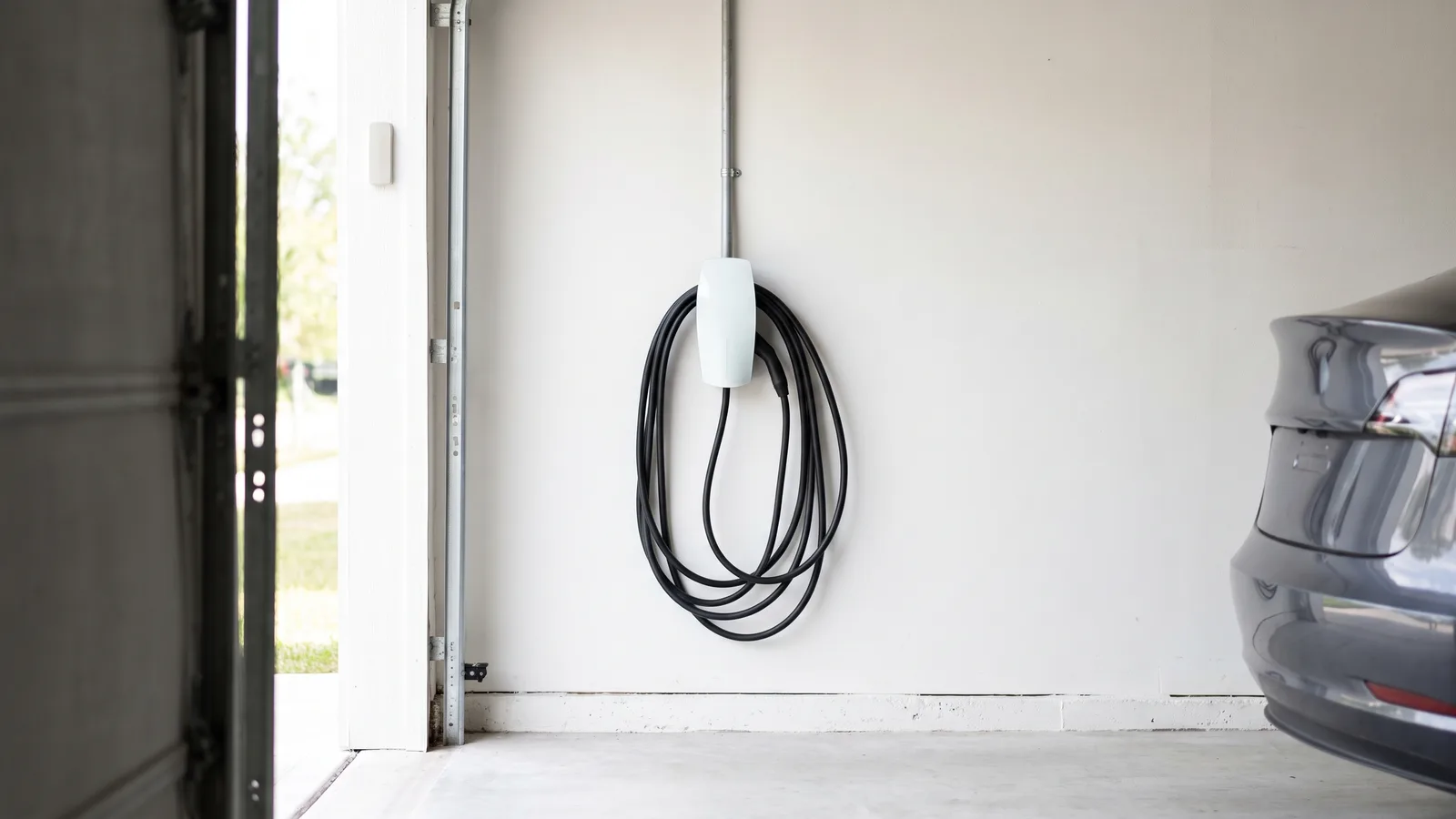
Installing a Level 2 EV charger at a North Carolina home needs an electrical permit. State law requires a permit for the installation, extension, alteration or general repair of electrical wiring, devices, appliances or equipment, and adding a dedicated 240 volt circuit is squarely that. North Carolina does let a homeowner do the work on their own property without an electrical contractor license, which is unusual, but that exemption does not remove the permit.
Key takeaways
-
A Level 2 charger means a new dedicated circuit, which NCGS 160D-1110 treats as permitted electrical work.
-
The statutory no-permit exceptions cover only lighting fixture and device replacement and a like-for-like electric water heater connection, and each still requires a licensed person.
-
NCGS 87-43.1(5a) lets you do electrical work on your own property, for your own benefit, when the property is not intended for rent, lease or sale.
-
Plugging a cord set into an existing receptacle is a different question, and 87-43.1(7) treats cord-connected equipment differently from installing the receptacle.
-
The load calculation, not the charger, decides what this project costs.
Do I need a permit for an EV charger in North Carolina?
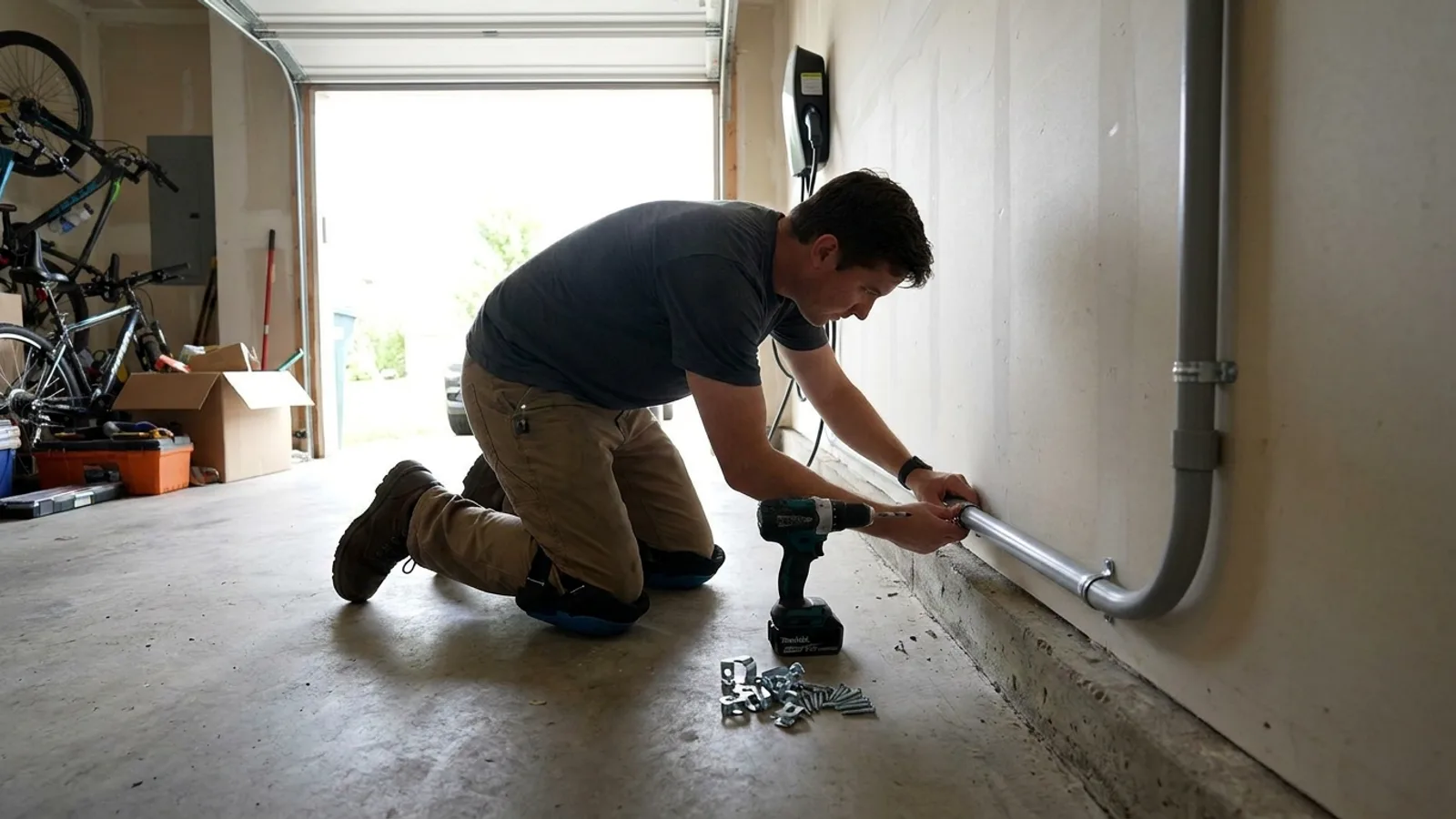
For a hardwired or dedicated-circuit Level 2 charger, yes. NCGS 160D-1110(a) provides that no person shall commence the installation, extension, alteration or general repair of any electrical wiring, devices, appliances or equipment without first securing all permits required by the North Carolina State Building Code and any other State or local law.
The exceptions in that subsection are narrow and specific. In a one or two-family dwelling no permit is required to repair or replace lighting fixtures or devices such as receptacles and switches, or to connect an existing branch circuit to a replacement electric water heater, subject to same-location, same-or-less-capacity, licensed-person and current-code conditions. A new circuit for vehicle charging is not on that list.
What about a Level 1 cord set?
That is a different question, because nothing is being installed. A Level 1 charger plugs into an existing 120 volt receptacle, and the relevant licensing provision treats that separately: NCGS 87-43.1(7) exempts the replacement of lamps and fuses and the installation and servicing of cord-connected appliances and equipment connected by attachment plug-in devices to suitable receptacles that have been permanently installed.
Note what that same subdivision excludes. It states the exception does not apply to permanently installed receptacles or to the installation of the junction box. So the moment someone adds an outlet for you rather than using one that already exists, you are back in permitted, and normally licensed, territory.
| Level 1 | Level 2 | |
|---|---|---|
| Supply | Existing 120 volt receptacle | Dedicated 208 or 240 volt circuit |
| Work involved | None, if a suitable receptacle exists | New circuit, breaker, often panel or service work |
| Permit under 160D-1110 | Generally not, because nothing is installed | Yes |
| Licensing | Cord-connected equipment sits in the 87-43.1(7) exception | Licensed contractor, or homeowner under 87-43.1(5a) |
Can I install it myself?
North Carolina says yes on the licensing question, within limits. NCGS 87-43.1(5a) exempts any person installing, maintaining, altering or repairing electric work, wiring, devices, appliances or equipment upon that person's own property and for that person's own benefit, when the property is not intended at the time for rent, lease or sale.
All three conditions bind. Your own property, your own benefit, and not intended for rent, lease or sale at the time, which excludes fitting out a rental or preparing a house for market.
And the exemption is from licensing only. The permit requirement in 160D-1110 is a separate statute and still applies, so a homeowner doing their own charger installation applies for an electrical permit and gets inspected like anyone else. A homeowner also cannot use the no-permit exceptions, since those require a licensed person.
Will my panel handle it?
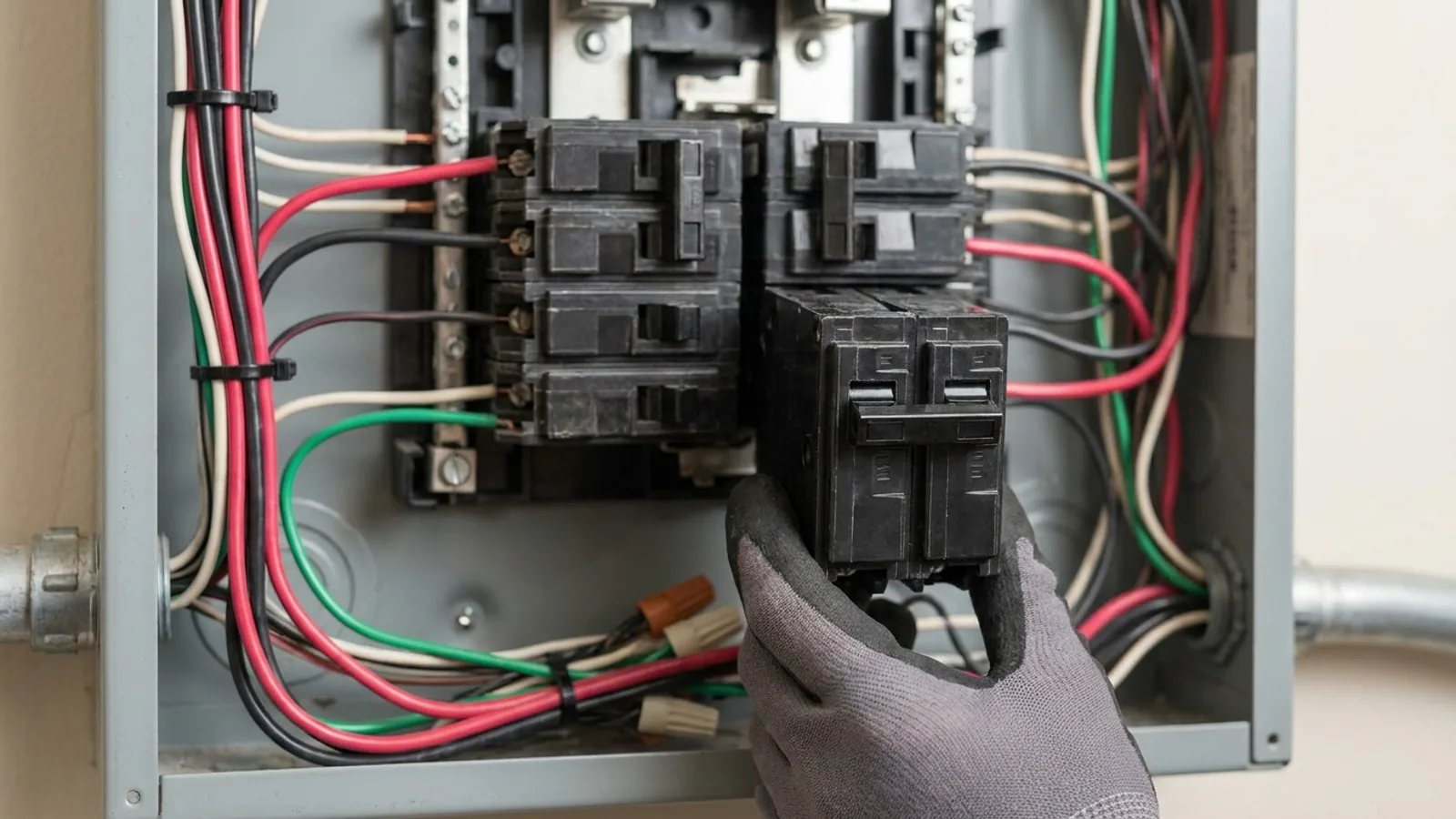
This is the question that decides your budget, and it should be answered before you buy equipment. A Level 2 charger is a large, sustained load added to a panel sized years ago for a different set of appliances. An electrician performs a load calculation for your specific service, and the result determines whether you need a simple new circuit, a subpanel, a panel replacement or a full service upgrade involving the utility.
Take them in that order: load calculation, then charger selection, then permit. Choosing a large charger first and discovering the service cannot carry it is the most common and most expensive version of this project. If a service or panel change is in scope, read the North Carolina electrical panel upgrade guide and the electrical panel project page before committing.
Which code applies?
The North Carolina Electrical Code, described by the Office of State Fire Marshal's current codes page as an adopted version of the National Electrical Code supplemented by North Carolina amendments. That page states the 2020 Electrical Code was effective from November 1, 2021 and is currently effective, while the 2018 codes remain in force elsewhere and the 2024 suite has been delayed.
Edition matters here more than on most projects, because requirements around electric vehicle supply equipment, load management and ground fault protection have moved between recent National Electrical Code cycles. Ask your inspector which edition governs your permit.
Our take: North Carolina gives homeowners more room on this than most states, and the room is worth using carefully. Pull the permit even though the licensing exemption might tempt you to skip it, because the inspection is the only independent check that a 40 or 60 amp continuous load was installed correctly in a panel that was never designed for one.
What inspections will there be?
A rough inspection wherever anything is concealed, and a final once the equipment is installed and energized. The state's Administrative Code defines rough-in as being made when the parts of the electrical system that will be hidden from view have been placed, but before any wall or ceiling finish or insulation is installed, and requires a final inspection for each trade after the permitted work is complete.
On a garage installation with surface conduit there may be nothing concealed, in which case the job goes straight to a final. Confirm with your department which inspections your specific route needs, and see what a North Carolina inspector checks for the readiness definitions.
What should I do before buying a charger?
Have a licensed electrician run a load calculation on your existing service. Ask your building department whether they will issue an electrical permit to a homeowner, since the licensing exemption does not oblige them to hand one over without questions. Choose the charger to fit the answer rather than the other way round. Pull the permit, install, and pass the final.
Run the free permit checker for your project and county to confirm which trades are in scope, and check the office details on the page for your North Carolina county.