
Whether a driveway or paver project needs a permit in Florida varies widely, because these projects can touch zoning, drainage, impervious-surface limits, and right-of-way rules. A simple resurfacing may be treated differently from a new or expanded driveway that connects to a public road, so the safe assumption is that a permit or approval may be required until your local government confirms otherwise.
Key takeaways
- Driveway and paver permit requirements vary widely by jurisdiction and by the exact scope of the work.
- New or expanded driveways often trigger zoning, drainage, and impervious-surface review, plus a right-of-way permit where they meet a public road.
- Replacing pavers in the same footprint may be treated more lightly, but confirm this locally.
- Work in the public right-of-way, such as a new apron or connection to the road, usually needs its own approval.
Table of contents
- Do I need a permit for a driveway or pavers in Florida
- Why do driveway rules vary so much
- What is a right-of-way permit
- Do pavers over an existing driveway need a permit
- Driveway and paver scenarios compared
- A worked example: expanding a driveway in Polk County
- What about drainage and impervious surface
- How do I confirm what my project needs
Do I need a permit for a driveway or pavers in Florida
It depends on the scope and your jurisdiction. A new driveway, an expansion, or a connection to a public road commonly needs a permit or approval, while a like-for-like resurfacing may not, so the answer turns on exactly what you are doing.
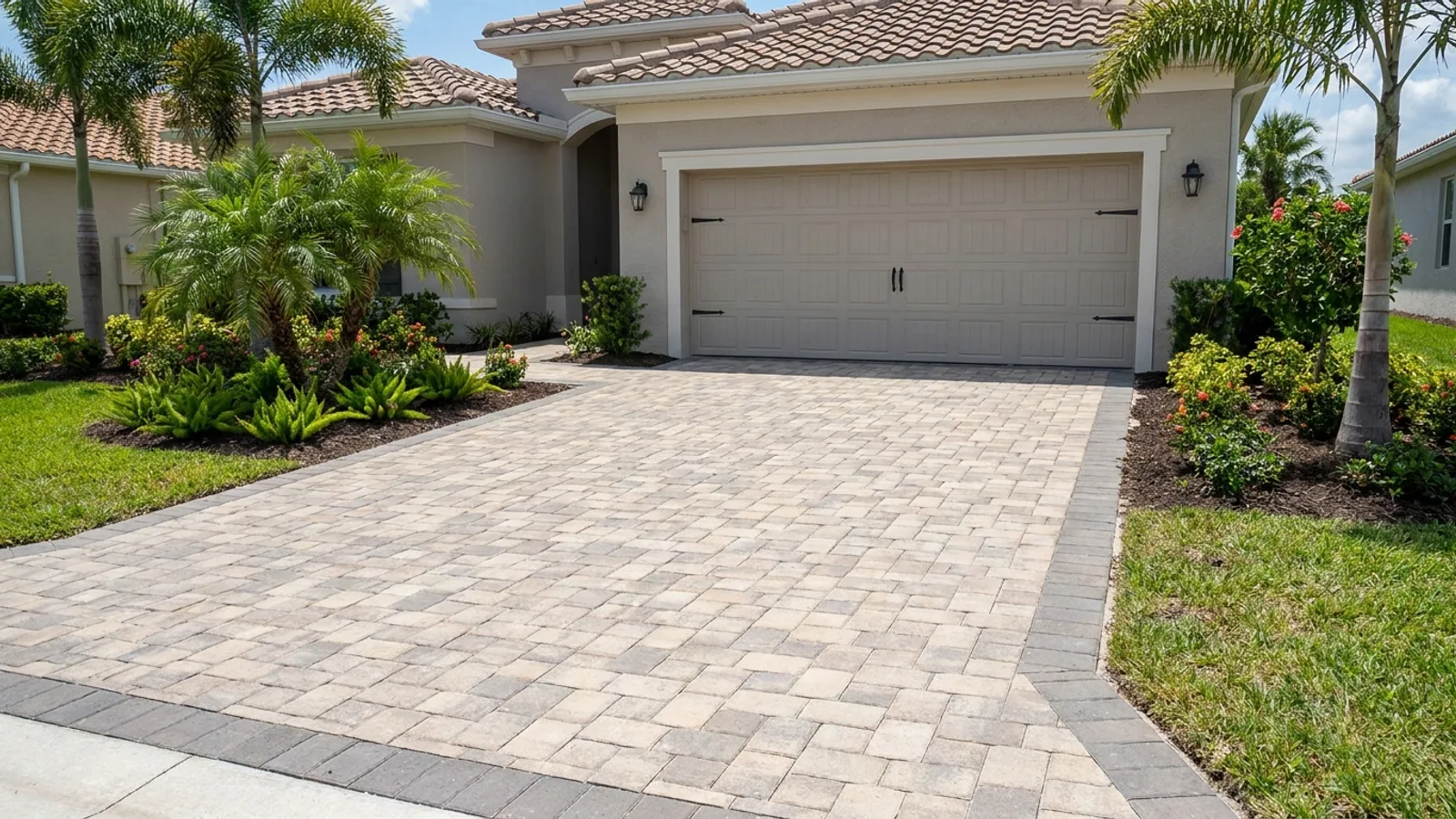
Because driveways interact with zoning and drainage, more than one type of approval can apply. Assume some form of review may be needed and confirm the specifics with your city or county. Use the permit checker to frame the project.
Why do driveway rules vary so much
Driveways sit at the intersection of several rules: zoning limits on width and placement, drainage and stormwater requirements, impervious-surface caps, and right-of-way rules where the driveway meets a public road. Different jurisdictions weigh these differently.
That is why a project that needs no building permit can still require a zoning or right-of-way approval. Our guide on pavers and hardscape at the project level summarizes the common considerations for these surfaces.
What is a right-of-way permit
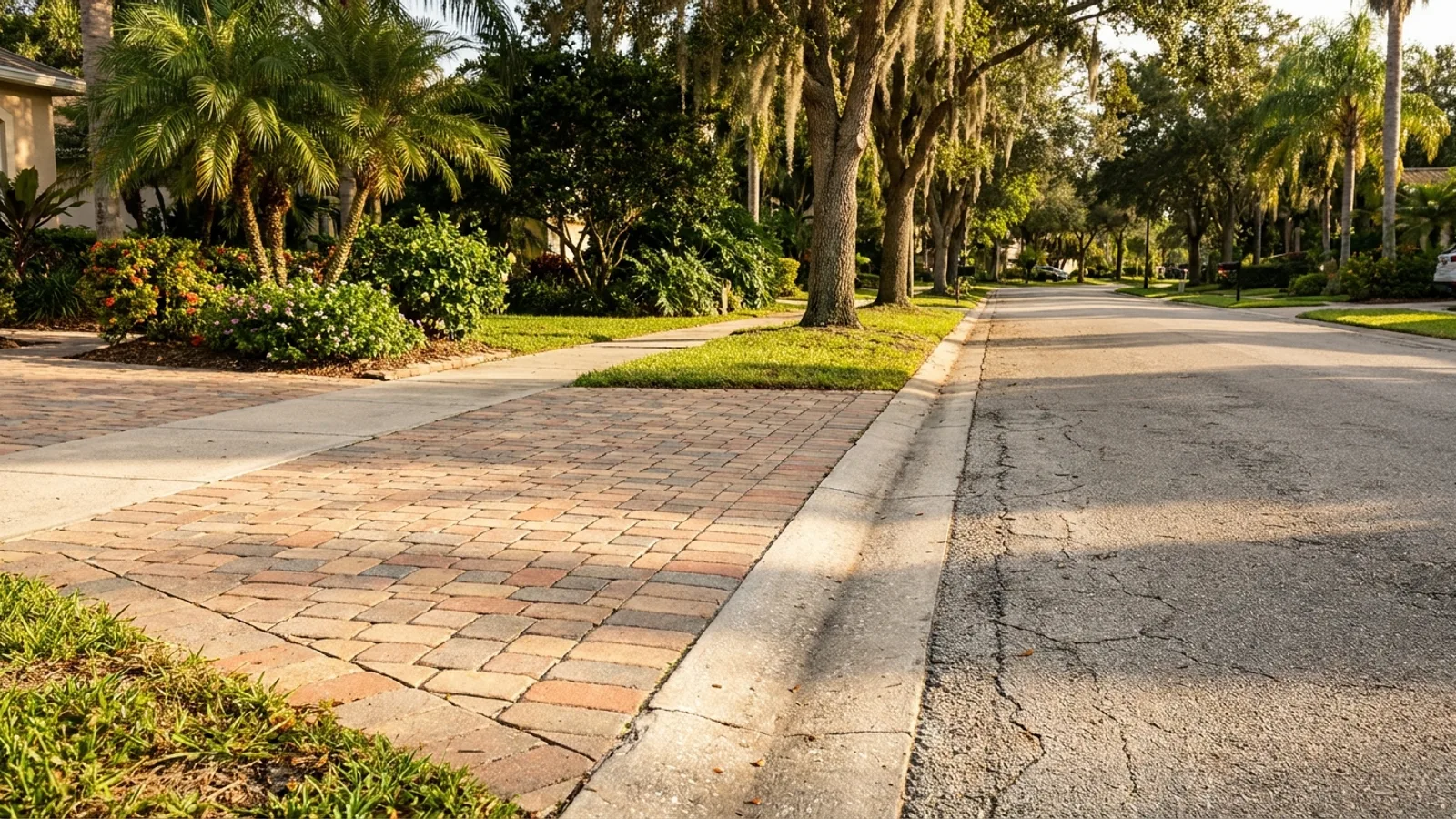
A right-of-way permit authorizes work in the public strip of land along the road, such as a driveway apron or the connection between your driveway and the street. This area is controlled by the local government or the road authority, not the homeowner.
If your project changes where or how the driveway meets the road, expect a right-of-way review even if the rest of the driveway is on your property. This is one of the most commonly missed approvals on driveway projects.
Do pavers over an existing driveway need a permit
Sometimes. Overlaying or replacing pavers within the exact existing footprint may be treated as maintenance in some jurisdictions, while others still require a permit or want to confirm drainage is not affected. The footprint and drainage impact usually drive the answer.
Expanding the paved area is more likely to trigger review because it increases impervious surface and can affect stormwater. When the scope grows beyond a like-for-like replacement, assume review is more likely and confirm locally.
Driveway and paver scenarios compared
| Scenario | Typical outlook | Common review type |
|---|---|---|
| Resurface same footprint | Often lighter or none | Confirm locally |
| New driveway | Permit or approval likely | Zoning, drainage, right-of-way |
| Expanding driveway width | Review likely | Impervious surface, drainage |
| New apron at the road | Approval likely | Right-of-way permit |
A worked example: expanding a driveway in Polk County
Consider a homeowner in Polk County who wants to widen a driveway and add a paver parking pad. Because the project increases impervious surface and may affect drainage, they check with the county on zoning width limits, drainage, and whether a right-of-way permit applies at the road.
If the expansion stays within zoning limits and drainage is addressed, the county explains which approvals are needed. Confirming first avoids building something that has to be torn out. Our guide on concrete slab permits covers a related flatwork question.
What about drainage and impervious surface
Adding hard surface changes how water moves across your lot, which is why many jurisdictions cap impervious surface or require drainage to be managed. A larger paved area can push a lot over its limit or send water toward a neighbor.
This is a common reason driveway expansions get reviewed even when a simple building permit would not otherwise apply. Our guide on retaining walls covers a related grading and drainage topic.
Our take: Driveways look simple but sit under several overlapping rules, and the right-of-way connection to the road is the piece homeowners forget most. Ask about zoning, drainage, and right-of-way together, because any one of them can require approval.
How do I confirm what my project needs
Describe the exact scope to your city or county: the current surface, the new surface, whether the footprint changes, and whether the work touches the connection to the road. Ask specifically about zoning, drainage, and right-of-way, since more than one may apply.
Getting all three answers up front prevents surprises mid-project. If your scope is a simple replacement, say so clearly, because that can change the answer.