
Whether a concrete slab needs a permit in Florida depends on how big it is, where it sits, and what will go on top of it. A small at-grade slab like a modest patio may be exempt in some jurisdictions, but a slab that supports a structure, a shed, a carport, or a room addition, generally needs a permit. A concrete slab permit in Florida is really a question about what the slab is for, so define the end use before you pour.
Key takeaways
- A concrete slab permit in Florida depends on size, location, and whether the slab supports a structure.
- A small at-grade patio slab may be exempt, but a slab under a shed, carport, or addition usually is not.
- Slabs that become the foundation for a building are reviewed for structure and anchoring.
- Drainage, setbacks, and flood zones can apply even when a building permit does not.
Table of contents
- Do you need a permit for a concrete slab in Florida?
- What makes a slab need a permit?
- Does a patio slab need a permit?
- What does the review check on a structural slab?
- A quick example: a shed pad in Polk County
- What else applies to a slab besides the permit?
Do you need a permit for a concrete slab in Florida?
It depends on the slab's purpose. A small, at-grade concrete slab that is purely a walking or patio surface may be exempt in some Florida jurisdictions, much like other minor flatwork. But once a slab supports a structure or becomes a building foundation, it is permitted, because the structure above depends on it.
The safest way to think about it: the slab follows the project. If you are pouring a pad for a shed or accessory structure or a carport, the permit for that structure covers the slab. Use our permit checker to confirm your case.
What makes a slab need a permit?
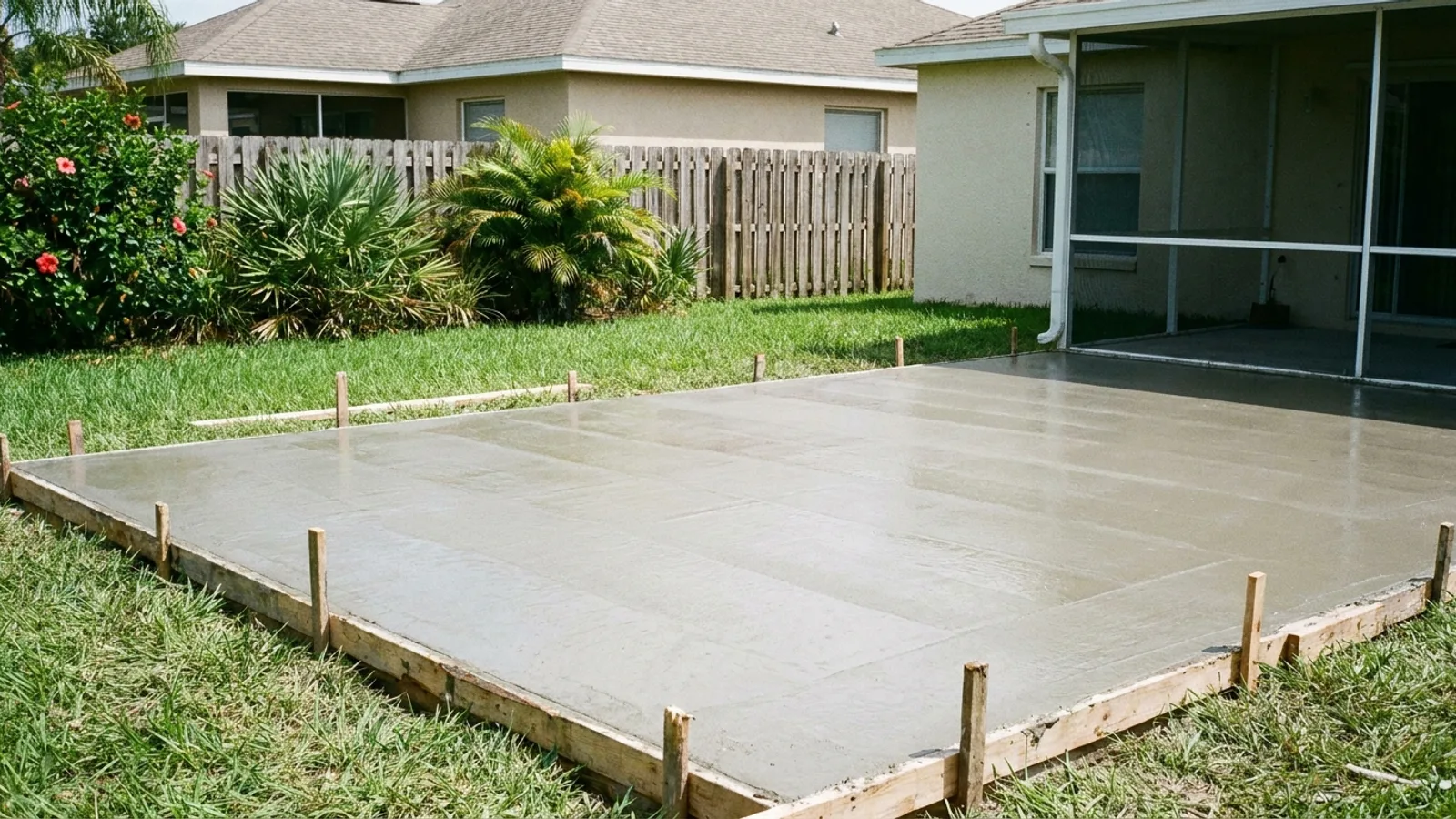
Purpose and size drive it. A thin decorative or patio slab at grade is the case most likely to be exempt. A slab engineered to carry a building is not, because it is structural.
| Slab use | Permit usually needed? |
|---|---|
| Small at-grade patio or walkway | Often no |
| Large patio or extensive flatwork | Confirm locally |
| Pad under a shed or accessory building | Usually yes, with the structure |
| Slab under a carport or addition | Yes, foundation review |
| Slab with plumbing or electrical in it | Yes, for those trades |
If anything runs through the slab, like plumbing rough-in or conduit, that trade work brings its own permitting regardless of the slab's size.
Does a patio slab need a permit?
Often not, if it is a simple at-grade patio with nothing built on it, no roof, no walls, no enclosure. That kind of flatwork is the most likely to fall under an exemption. But the moment you add a roof, screen it in, or build on it, you have changed the project into a structure, and the permitting follows.
This is why a lanai or patio cover is a different question from a bare patio. The concrete may be the same; the roof and enclosure are what trigger review.
What does the review check on a structural slab?
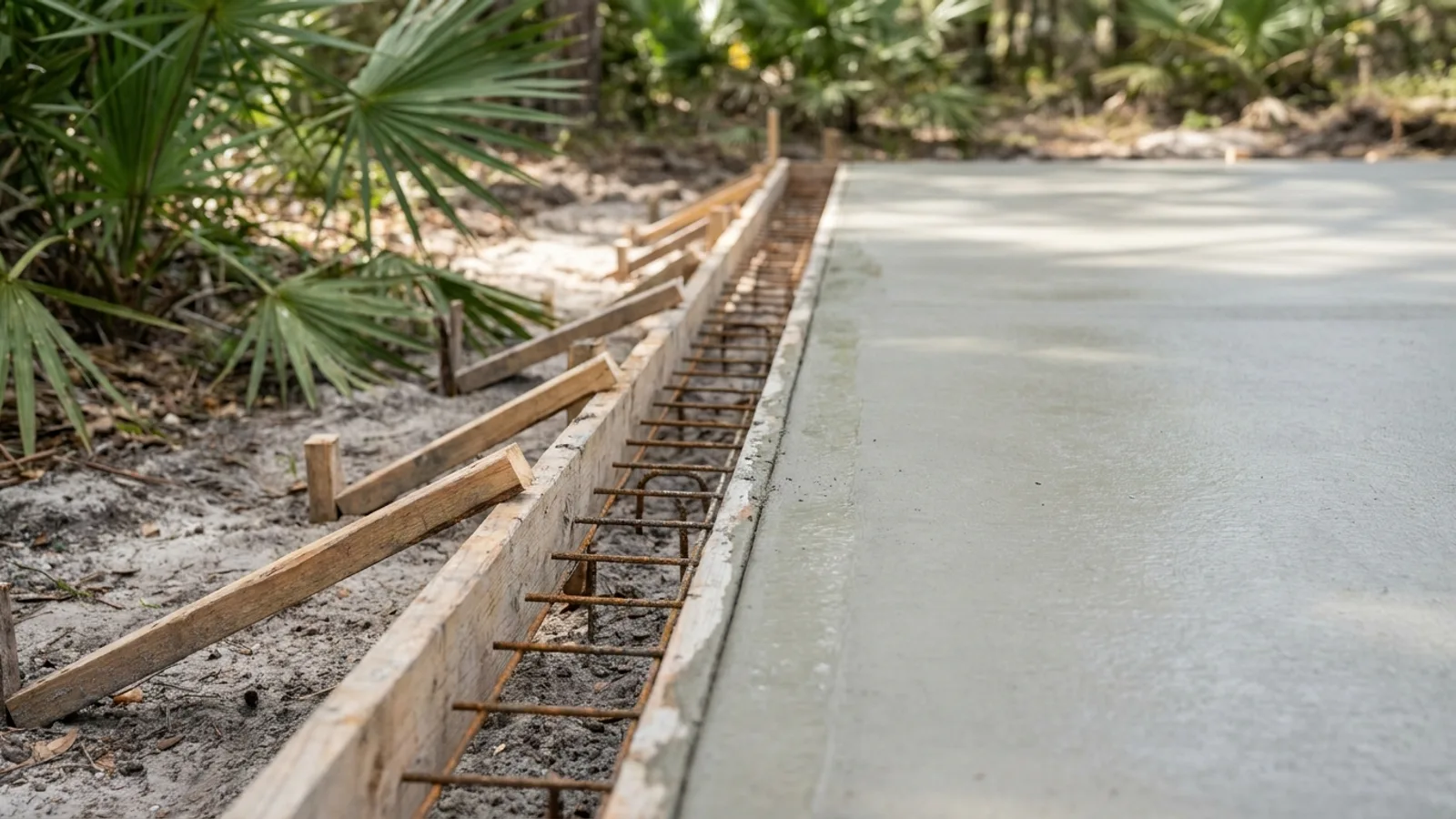
When a slab is a foundation, the building department reviews its thickness, reinforcement, and how the structure above anchors to it. In Florida's wind environment, that anchoring is what keeps a shed, carport, or addition attached to the ground in a storm, so it is a meaningful part of the review.
Expect inspections before and after the pour on structural slabs, often including the ground preparation and any embedded plumbing before concrete is placed. Once it is poured, a problem underneath is expensive to reach.
A quick example: a shed pad in Polk County
A homeowner in Polk County pours a slab for a new storage shed. Because the slab is the shed's foundation, the shed permit covers it: the building department reviews the pad and the shed's anchoring, inspects the prepared ground, and inspects again after the structure is up.
A separate homeowner pouring a simple 8-by-8 patio slab with nothing on it may need no building permit at all, though they should still check drainage and setbacks.
Our take: Let the slab's purpose decide. A bare patio is often fine, but the moment the slab carries a structure it is a foundation, and pouring an unpermitted foundation is the kind of hidden work that surfaces at resale.
What else applies to a slab besides the permit?
Drainage matters in flat Florida yards; a slab that redirects water toward a neighbor or the house can cause problems even if it needed no permit. Zoning setbacks control how close it can sit to property lines, and flood zones can add requirements. An HOA may also have rules on hardscape.
Confirm these before you form and pour. Adjusting a slab on paper is easy; breaking up and re-pouring cured concrete is not. The order that keeps slab projects smooth is simple: decide what the slab is for, confirm whether that use needs a permit, then handle drainage, setbacks, and any embedded utilities before the concrete truck arrives. Once the slab has cured, every one of those items becomes far harder and more expensive to change.