
Wondering whether you need a building permit in Ohio? For most projects that change a home's structure, electrical, plumbing, or mechanical systems, the answer is yes, and the permit comes from your local building department rather than the state. Ohio homes are built and renovated under the Residential Code of Ohio (RCO), a statewide code for one-, two-, and three-family dwellings that is based on the International Residential Code. The state writes the code, but a certified city, county, or regional building department issues the permit and inspects the work for your address. Before you start, it is worth confirming the specifics with that local department. You can also check your project to see the likely requirements.
Key takeaways
- The Residential Code of Ohio applies statewide, but permits are issued and inspected locally by certified building departments.
- Ohio sets no statewide dollar amount that waives a permit; any exemption for minor work is decided by your local department.
- Ohio has no statewide general-contractor license, so a homeowner who owns and occupies the home can generally pull their own permit and do their own work, subject to local rules.
- Certain trades (electrical, HVAC, plumbing, hydronics, and refrigeration) are state-licensed, and hired work in those trades must use a state-licensed contractor.
- When in doubt, confirm with the local building department that serves your address.
On this page
- Do I always need a permit in Ohio?
- Who issues permits in Ohio?
- The code is statewide, so why are permits local?
- What projects usually need a permit?
- Which trades need a licensed contractor?
- Can I pull my own permit as a homeowner?
- What happens if I skip the permit?
- How do I find my local building department?
Do I always need a permit in Ohio?
Not for every task, but for more projects than many homeowners expect. Ohio does not set a single statewide dollar threshold that automatically waives a permit, so whether small work is exempt is decided by your local building department. Routine maintenance and cosmetic work, such as painting, replacing a faucet, or swapping flooring, typically does not require a permit. Structural, electrical, plumbing, and mechanical changes usually do. Because the exemptions vary from one community to the next, the safest step is to call the department that covers your address before you begin.

Who issues permits in Ohio?
Permits are issued and inspected by certified local building departments. Depending on where you live, that could be a city, a county, or a regional department, and some communities contract the work to their county or another certified agency. This means two neighbors in different jurisdictions can follow slightly different application steps even though both build under the same statewide code. Start with the Ohio hub to find your area, then drill into your county.
| Metro area | County page | Example communities |
|---|---|---|
| Columbus | Franklin County | Columbus, Dublin, Westerville, Grove City |
| Cleveland | Cuyahoga County | Cleveland, Parma, Lakewood, Cleveland Heights, Euclid |
| Cincinnati | Hamilton County | Cincinnati, Norwood, Blue Ash, Sharonville |
| Dayton | Montgomery County | Dayton, Kettering, Centerville |
The code is statewide, so why are permits local?
Because Ohio splits code-writing from code-enforcement. The Residential Code of Ohio is adopted statewide by the Ohio Board of Building Standards within the Department of Commerce, so the technical rules for one-, two-, and three-family dwellings are consistent across the state. Enforcement, however, is delegated to certified local building departments, which handle applications, review plans, collect fees, and perform inspections. So the standard your work must meet is set at the state level, while the office you deal with, the forms you fill out, and the fee you pay are all local.
Our take: Read the statewide code as the finish line and the local department as the referee. The RCO tells you what "passing" looks like, but your city or county department decides how you apply, what it costs, and when the inspector shows up.
What projects usually need a permit?
As a rule of thumb, anything that changes the structure or the core systems of the home needs a permit, while cosmetic upkeep usually does not. Because Ohio leaves minor-work exemptions to local departments, treat the list below as general guidance and confirm the details locally.
| Project type | Usually needs a permit? |
|---|---|
| Room additions and structural changes | Yes |
| Decks, and many detached structures | Often, confirm locally |
| Electrical panel or service changes | Yes |
| HVAC or furnace replacement | Usually |
| Water heater or repiping | Usually |
| Painting, flooring, cosmetic updates | Usually not |
For system-level jobs, our project pages explain the typical steps, such as an HVAC replacement.
Which trades need a licensed contractor?
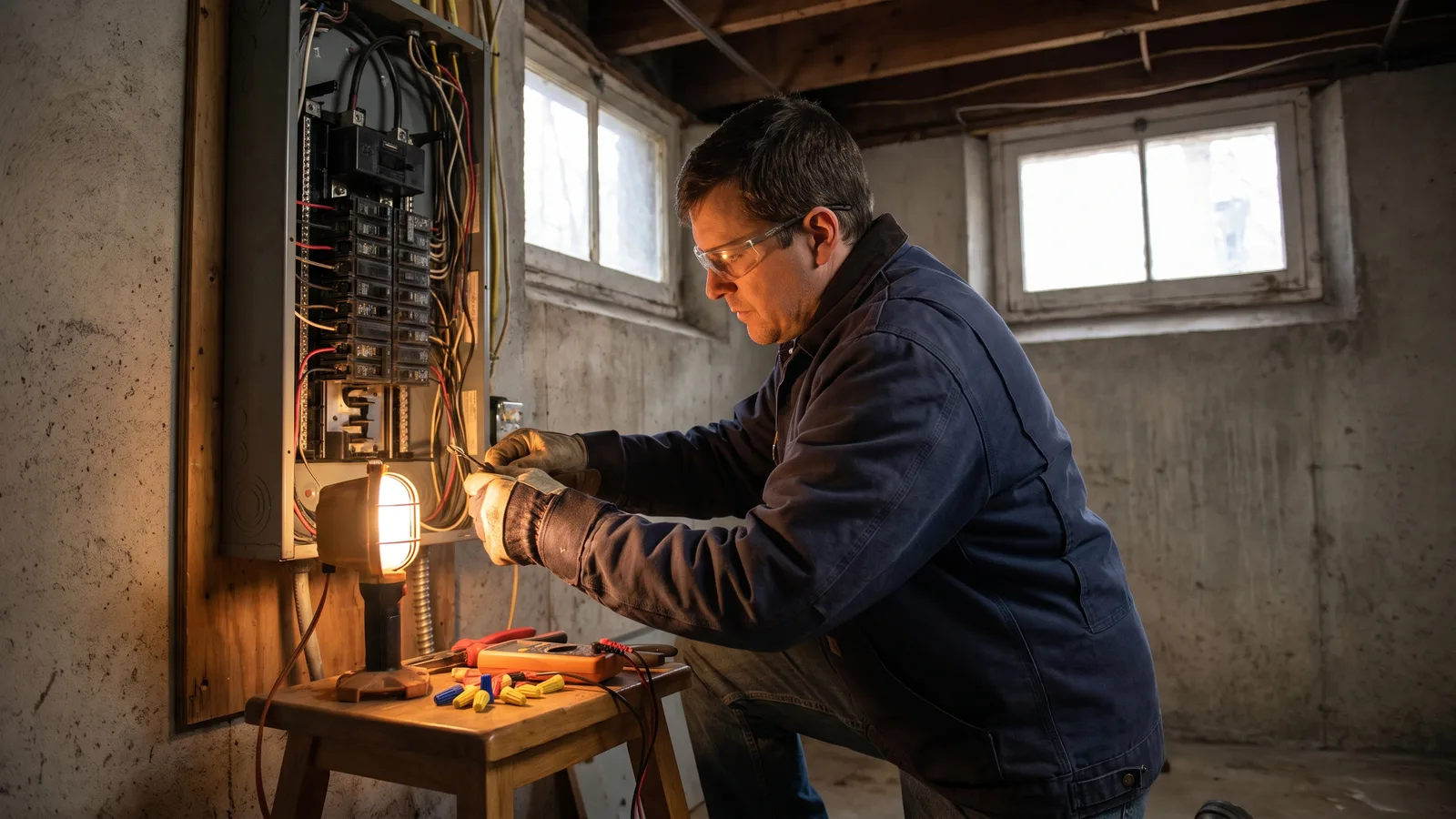
Ohio has no statewide general-contractor license, but it does license specific trades. The state licenses electrical, HVAC, plumbing, hydronics, and refrigeration contractors through the Ohio Construction Industry Licensing Board (OCILB). If you hire someone to do work in one of those trades, that hired work must be performed by a state-licensed contractor. This is separate from the permit itself; even licensed trade work still needs the appropriate local permit and inspection.
Can I pull my own permit as a homeowner?
Generally yes, on a home you own and occupy. Because Ohio has no statewide general-contractor license, a homeowner can usually pull their own permit and do their own work on their own residence, subject to the local building department's rules. The catch is the licensed trades: even as an owner-builder, if the job falls into electrical, HVAC, plumbing, hydronics, or refrigeration and you hire it out, that hired work must go to a state-licensed contractor. Your local department can tell you what an owner-builder can and cannot self-perform in your community.
What happens if I skip the permit?
Skipping a required permit can create expensive problems later. Unpermitted work can lead to stop-work orders, fees, and orders to open up or redo finished construction so it can be inspected. It can also surface during a home sale or insurance claim, when a buyer, appraiser, or insurer asks for records the work never generated. Pulling the permit up front is almost always cheaper and less stressful than resolving unpermitted work after the fact.
How do I find my local building department?
Start with your county, since that is where most residents are served or directed. Use the Franklin County or Cuyahoga County pages if you are in those metros, or browse the Ohio hub for the rest of the state. If your city runs its own department, it will handle your permit; if not, it likely points you to the county or a regional agency. Building rules in other states work similarly, so if you are comparing, see our guides for Illinois and Pennsylvania.