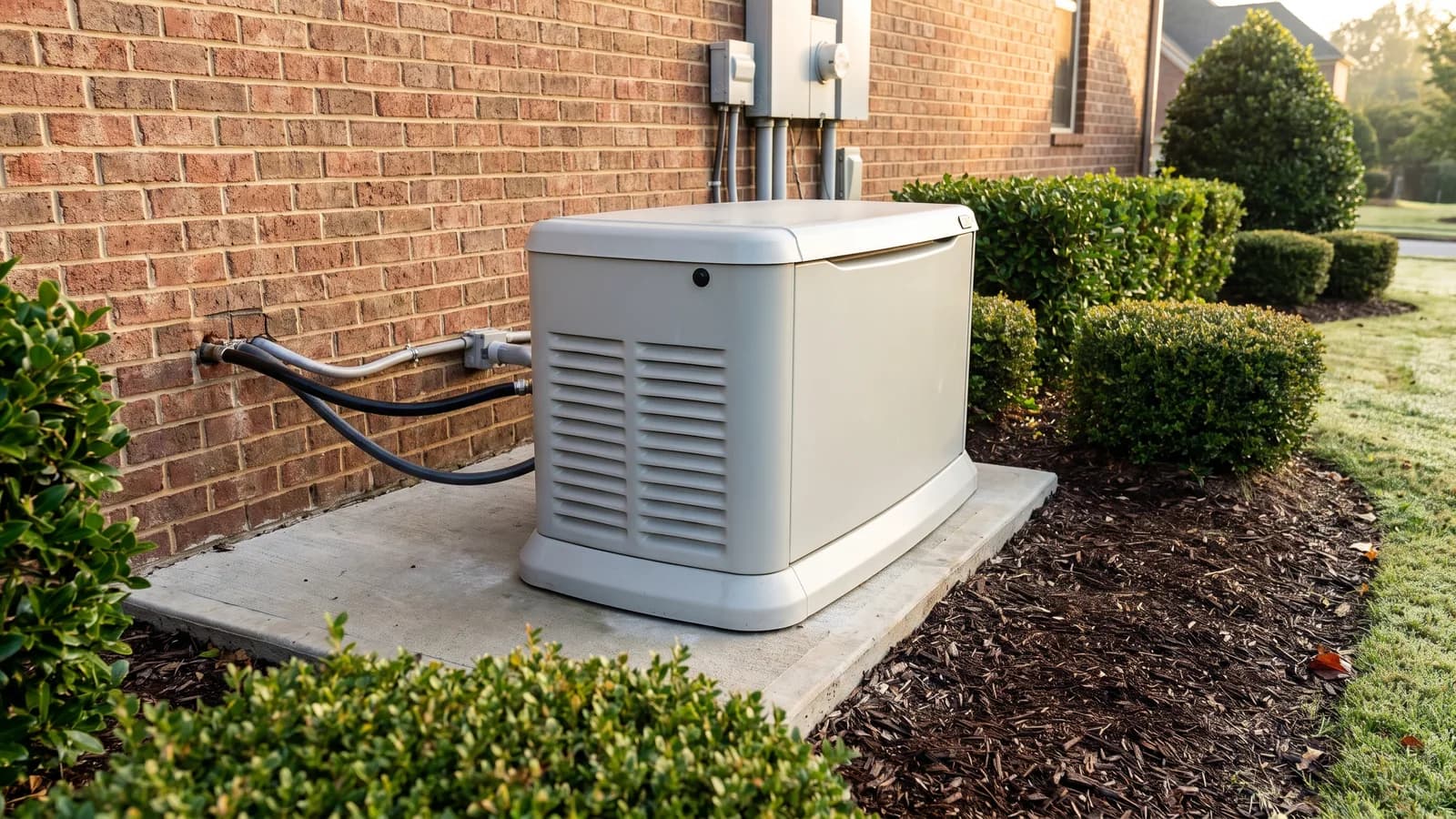
Yes, installing a standby generator in Georgia needs permits, and usually more than one: an electrical permit for the transfer switch and wiring, a gas or mechanical permit if it runs on natural gas or propane, and often a building or zoning review for the pad and its placement. Georgia has no statewide permit exemption list to fall back on, and unlike the owner-builder rule for general contracting, Georgia's licensing law contains no homeowner carve-out for electrical work.
Key takeaways
-
A whole-house standby generator normally triggers an electrical permit, a fuel gas or mechanical permit, and a placement review, issued by your city or county.
-
Georgia's electrical code is the National Electrical Code, 2023 Edition, with Georgia amendments, adopted as a mandatory state minimum standard code.
-
O.C.G.A. 43-14-8 requires a license to engage in electrical contracting, and it contains no express homeowner exemption comparable to the owner-builder exemption for general contracting.
-
Georgia deleted IRC Chapter 1, so there is no statewide list of work exempt from permits. Your local jurisdiction sets that, not the state.
-
Generator placement is usually the part that goes wrong: clearance from openings, the gas meter and the property line are set by code and by local zoning, and a pad poured in the wrong place is expensive to move.
Do I need a permit for a standby generator in Georgia
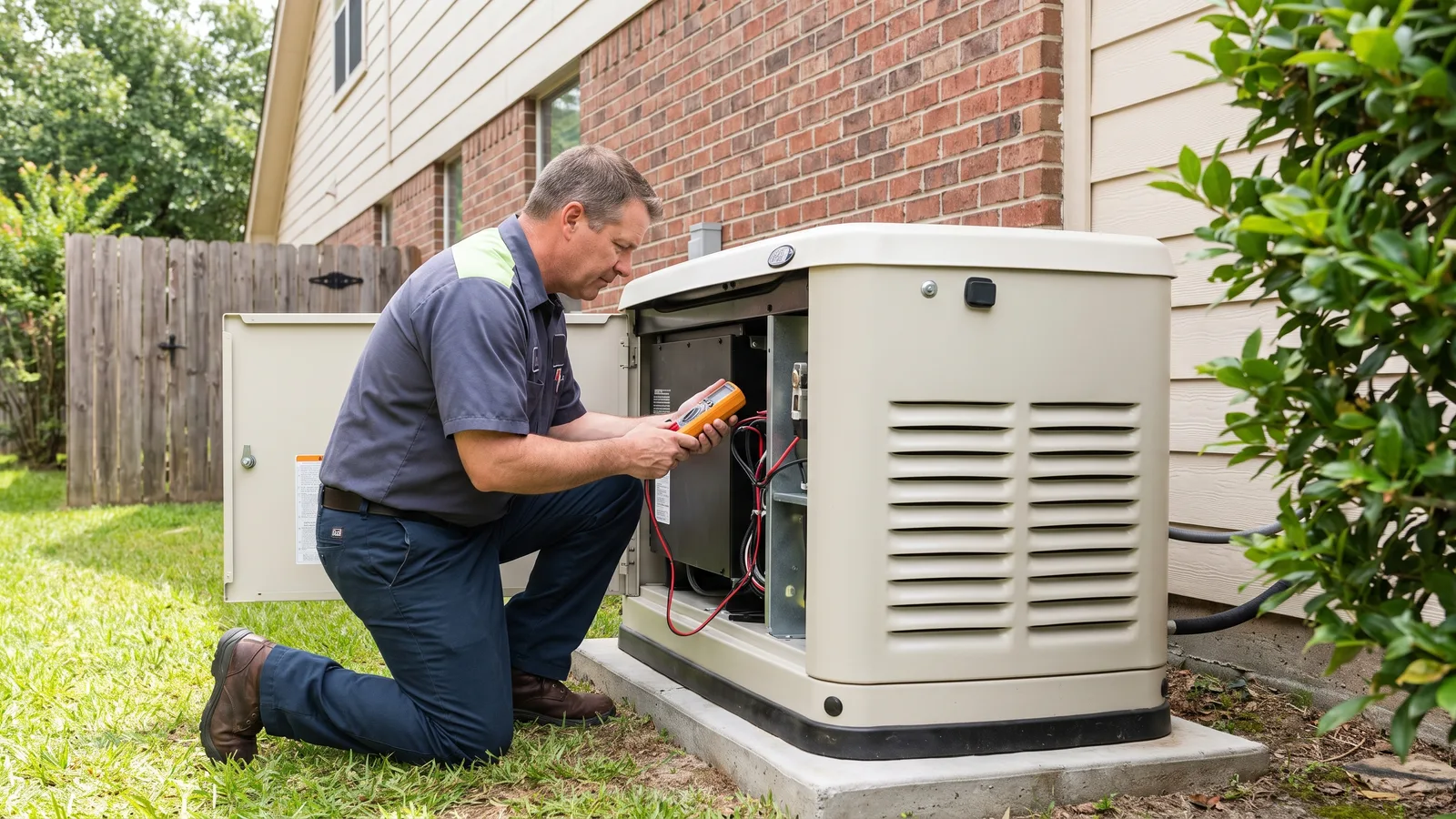
Assume yes, and assume more than one. A permanently installed standby generator is not a plug-in appliance. It is wired into the home's electrical system through a transfer switch, it is usually connected to a fuel supply, and it sits on a permanent pad. Each of those engages a different code.
There is no statewide shortcut to check. Georgia's mandatory codes apply statewide, but the administrative chapter that would list permit exemptions was deleted from the residential code, so the question of what needs a permit is answered by your city or county building department.
Which permits a generator installation usually triggers
Most Georgia jurisdictions treat a standby generator as three overlapping scopes of work.
| Scope | Why it applies | Typically permitted as |
|---|---|---|
| Transfer switch and branch wiring | Work on the home's service and distribution | Electrical permit |
| Natural gas or propane supply line | New fuel piping and connection | Gas or plumbing permit |
| Concrete or composite pad | A permanent structure on the lot | Building permit or zoning review |
| Setback and placement | Distance to lot lines and openings | Zoning review |
A portable generator you roll out and plug in is a different matter, but the moment you install a transfer switch so it can back-feed the house, you are doing permitted electrical work.
What code applies to the electrical side
Georgia's mandatory electrical code is the National Electrical Code, 2023 Edition, with Georgia amendments, adopted as a state minimum standard code by the Department of Community Affairs.
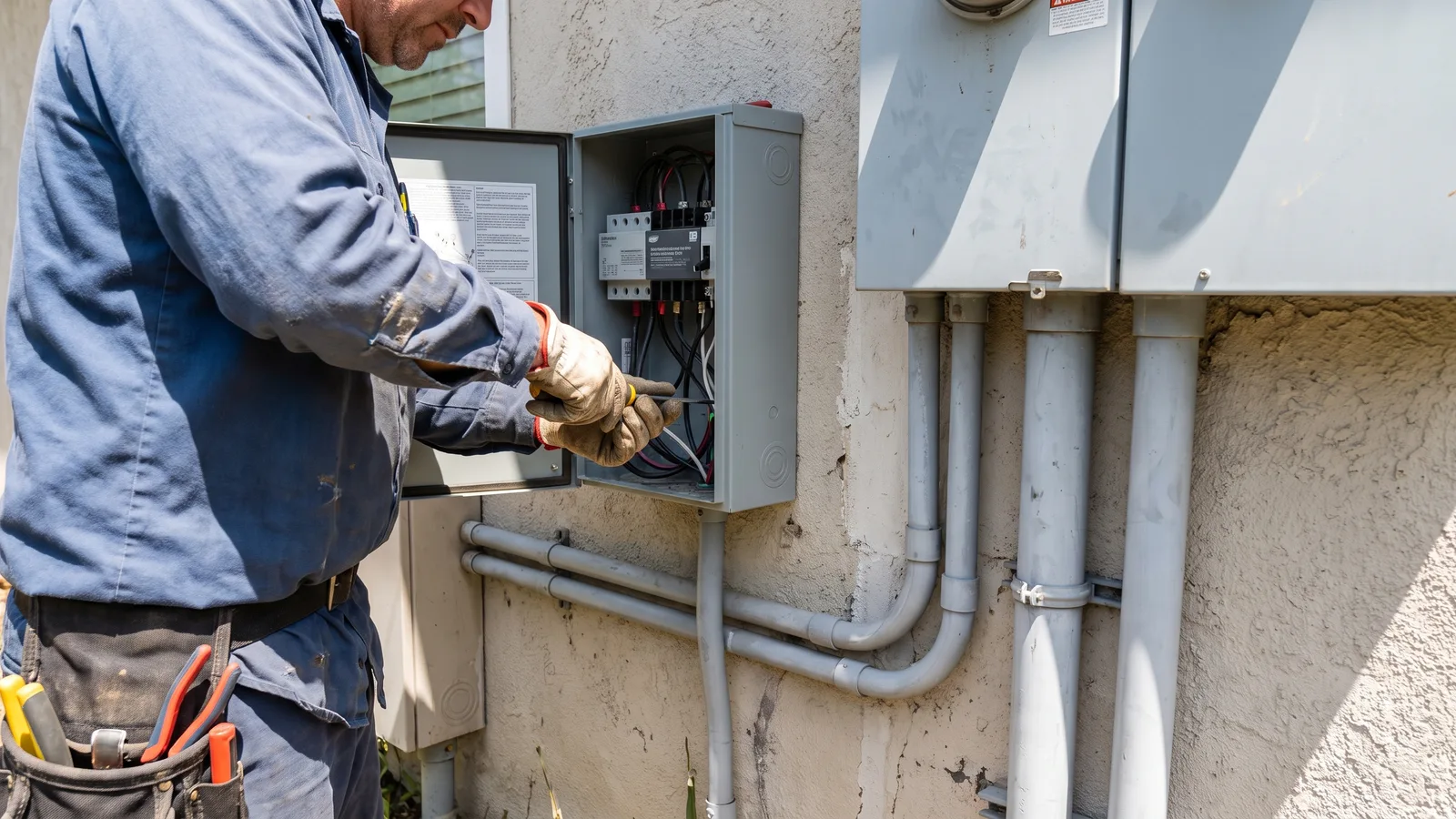
That matters because the NEC governs the transfer equipment, the grounding and bonding arrangement, conductor sizing between the generator and the transfer switch, and working clearances. Inspectors look hardest at the transfer switch, because an improperly installed one can back-feed the utility line and endanger line workers.
Georgia also deletes Part VIII, Electrical, from the residential code and substitutes the Georgia State Minimum Standard Electrical Code, so your generator's wiring rules are not in the residential code book.
Can I install my own generator in Georgia
Be careful here, because Georgia treats general contracting and the licensed trades differently.
Georgia does have an owner-builder exemption for general contracting, in O.C.G.A. 43-41-17(h), which lets you build on your own land without a residential or general contractor license. But the licensed trades sit under a different statute. O.C.G.A. 43-14-8 provides that no person shall engage in the electrical contracting business as an electrical contractor without a valid license from the Division of Electrical Contractors, and it contains no express homeowner exemption of the kind the general contracting statute has.
The statute is written around engaging in the contracting business, so the treatment of a homeowner working on their own house is a question your local building department answers in practice. Some Georgia jurisdictions will issue a homeowner electrical permit and some will not. Ask before you buy equipment, and do not assume the owner-builder exemption you read about for general contracting carries over to the electrical work.
Our Georgia owner-builder guide covers what that exemption does and does not reach.
Where the generator is allowed to sit
Placement is the most common expensive mistake, because a pad is poured before anyone checks it.
Three separate sets of rules govern where the unit can go: the manufacturer's listed clearances, which the code requires you to follow; code clearances from windows, doors and other openings, because the unit produces exhaust; and your local zoning ordinance's setbacks from property lines, which apply to accessory equipment just as they do to a shed.
Add two more that operate outside the building code entirely. A homeowner association can restrict placement, screening and even the model. And if your lot is in a flood hazard area, elevation requirements may apply to the equipment.
Confirm all of these before the concrete goes in. Moving a generator pad means new concrete, new gas piping and new conduit.
What inspectors look at
Expect at least an electrical inspection and, if there is fuel piping, a gas inspection with a pressure test. Inspectors commonly check the transfer switch installation and its interlock, the grounding and bonding arrangement, conductor sizing and overcurrent protection, the fuel line material, support and connection, clearance to openings and to the meter, and whether the pad and anchorage match what was approved.
Have the manufacturer's installation instructions on site. Because the code requires listed equipment to be installed per its listing, those instructions are effectively part of the code for your installation, and inspectors ask for them.
Our take: the electrical permit is not the risky part, the fuel connection and the placement are. A generator wired correctly but sitting too close to a window or a lot line is a real problem, and it is one you discover after the concrete has cured. Get placement approved in writing before anything is poured.
What to do before you buy
- Identify the department that permits your address, which is not always the city in your mailing address.
- Ask which permits a standby generator requires there, and whether the electrical, gas and pad are separate applications.
- Ask whether that jurisdiction issues homeowner electrical permits, or whether a licensed electrical contractor must pull it.
- Confirm placement against the manufacturer's clearances, code clearances to openings, and your zoning setbacks, before pouring.
- Check your HOA covenants and, if applicable, your flood zone.
- Run your project through our free permit checker, and see the standby generator project page for the documents and inspections usually involved.
For the requirements, documents, inspection sequence and the contact details for the office covering your address in one place, the Permit Prep Pack assembles it for your specific project. You can also browse your county from the Georgia coverage page.