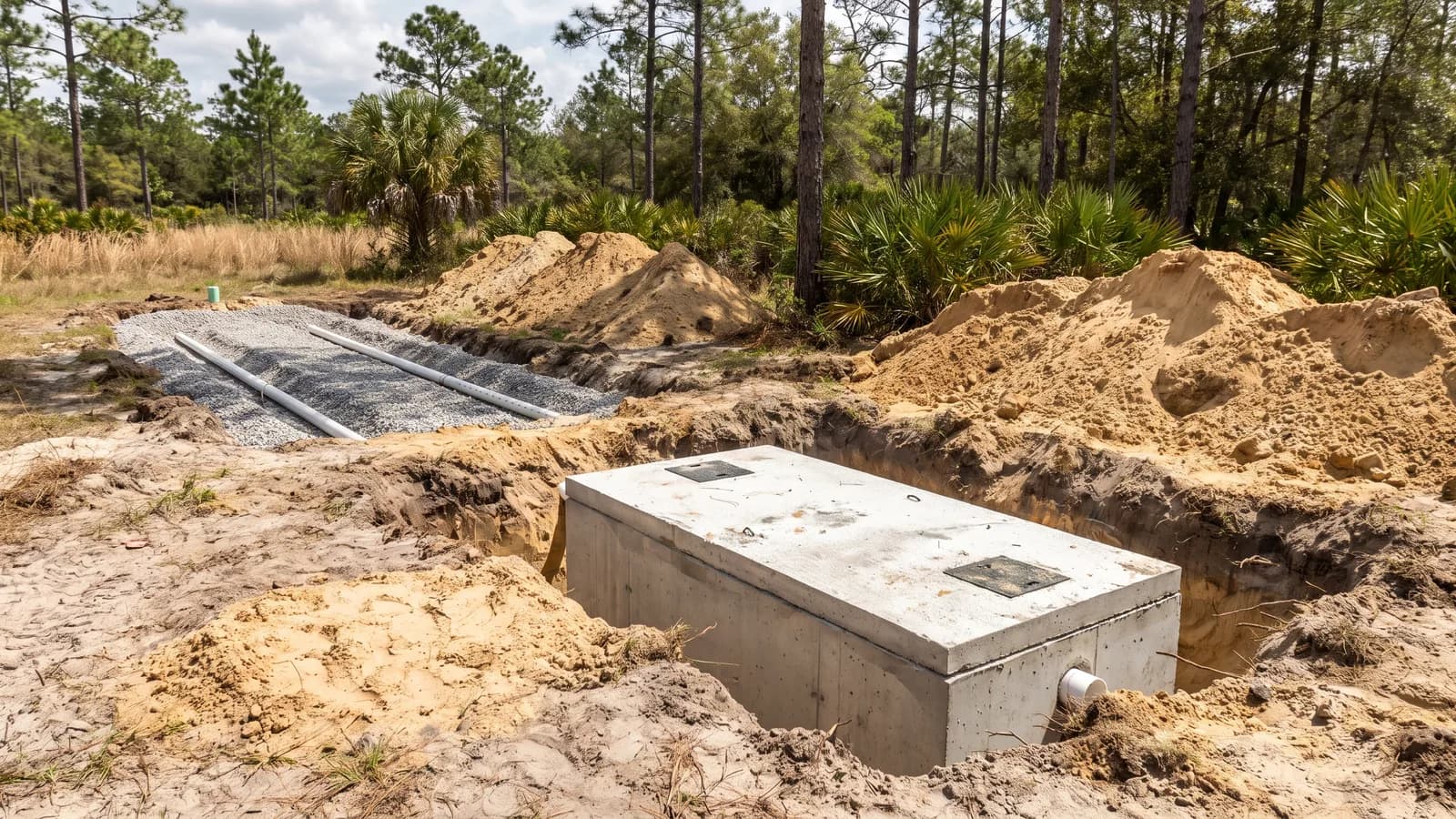
Installing or repairing a septic system in Florida requires a permit, and that permit comes from the health department or the Department of Environmental Protection, separate from any building permit. A septic permit in Florida (for what the state calls an onsite sewage treatment and disposal system) is required because these systems protect groundwater and public health. The reviewing agency depends on your county, so confirming who has jurisdiction is the first step.
Key takeaways
- Septic system work in Florida requires a permit from the health department or DEP, not just the building department.
- These onsite sewage systems are regulated to protect groundwater and public health.
- Which agency reviews your septic permit depends on your county.
- New systems, repairs, and modifications each have their own requirements, so confirm your scope.
Table of contents
- Do you need a permit for a septic system in Florida?
- Which agency issues a septic permit in Florida?
- Why is septic permitting so strict?
- Is a repair different from a new system?
- A quick example: a new drainfield in Polk County
- How do you start a septic project the right way?
Do you need a permit for a septic system in Florida?
Yes. Installing a new septic system, or repairing or modifying an existing one, requires a permit in Florida. The state regulates these onsite sewage treatment and disposal systems because they handle wastewater in the ground, close to groundwater and drinking-water sources. This is a separate approval from any building permit for the house itself.
Where the septic connects to your home's plumbing, that indoor drainage is regular permitted plumbing, similar to a sewer line replacement. The tank and drainfield, though, fall under the septic program. Use our permit checker to orient on the building side and confirm the septic authority separately.
Which agency issues a septic permit in Florida?
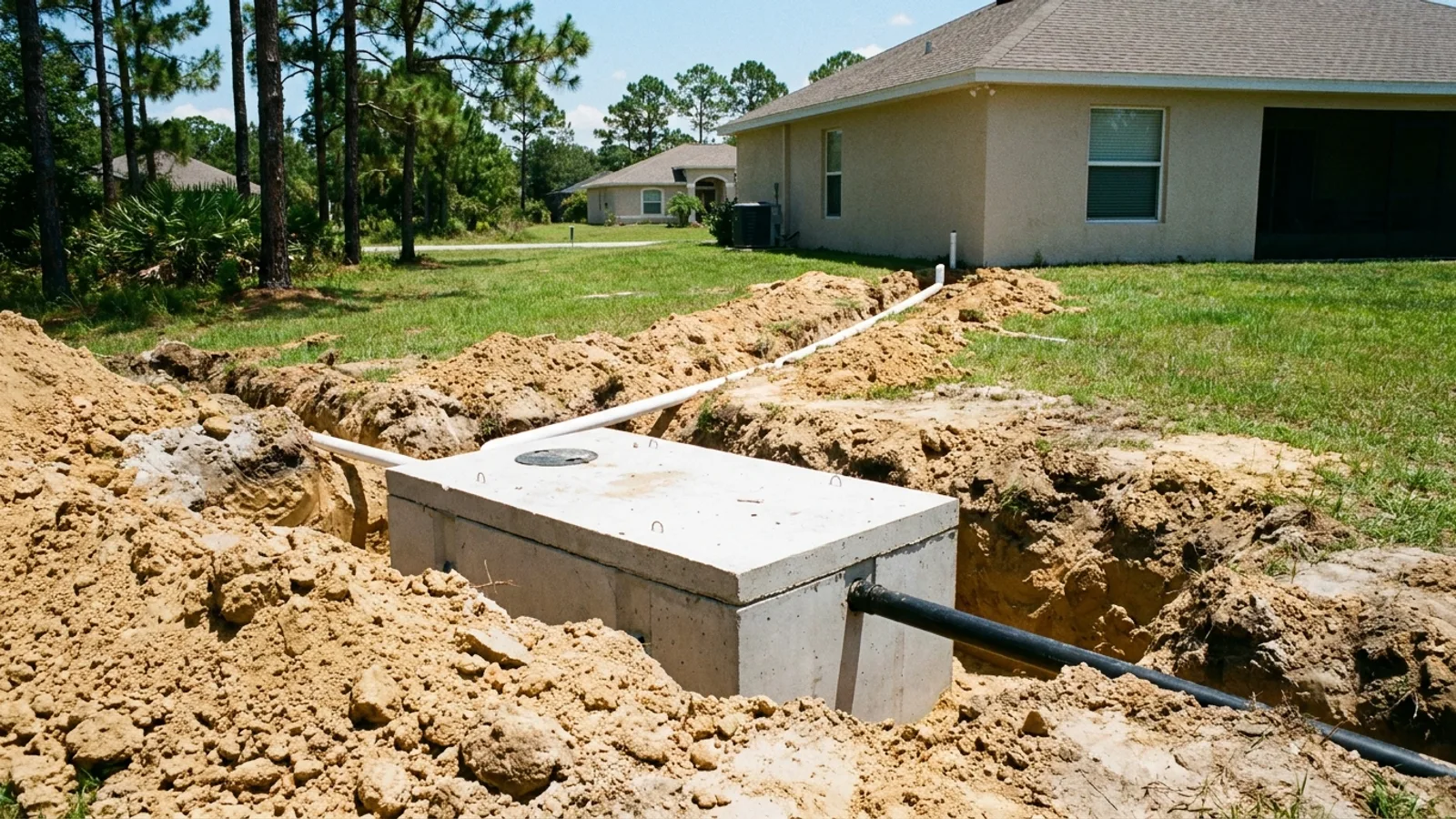
This depends on your county. Historically, county health departments handled septic permitting statewide, and they still do in most of Florida. The Florida Department of Health notes that in a set of counties the program has moved to the Department of Environmental Protection, so the reviewing agency varies by location.
| Element | Who typically handles it |
|---|---|
| Septic (onsite sewage) permit | County health department or Florida DEP, by county |
| Tank and drainfield design and inspection | The septic permitting agency |
| Indoor plumbing connection | Local building department |
| Well on the same property | Water management district |
The practical step is to confirm which agency covers your county before you plan the system. Do not assume the county building department handles it.
Why is septic permitting so strict?
A septic system treats and disposes of household wastewater in the soil. If it is undersized, poorly sited, or placed too close to a well or a waterbody, it can contaminate groundwater and drinking water. That public-health stake is why the state reviews the soil, the site, and the system design, not just the paperwork.
The review typically considers soil conditions, the drainfield size for the home, and setbacks from wells, property lines, and water. These are exactly the factors an unpermitted system tends to get wrong.
Is a repair different from a new system?
Often, yes. A minor repair, a new system, and an expansion can each carry different requirements and inspections. Adding bedrooms or significantly increasing the load on an existing system can trigger a review of whether the drainfield is still adequate.
Because the categories are defined by the permitting agency, describe your actual scope to them rather than guessing. A repair that grows into a replacement can change what is required, so it is better to confirm up front.
A quick example: a new drainfield in Polk County
A homeowner in Polk County has a failing drainfield and needs it replaced. They confirm their septic permitting agency, work with a licensed septic contractor who obtains the permit, install the new drainfield to the approved design, and pass the required inspection before the excavation is covered.
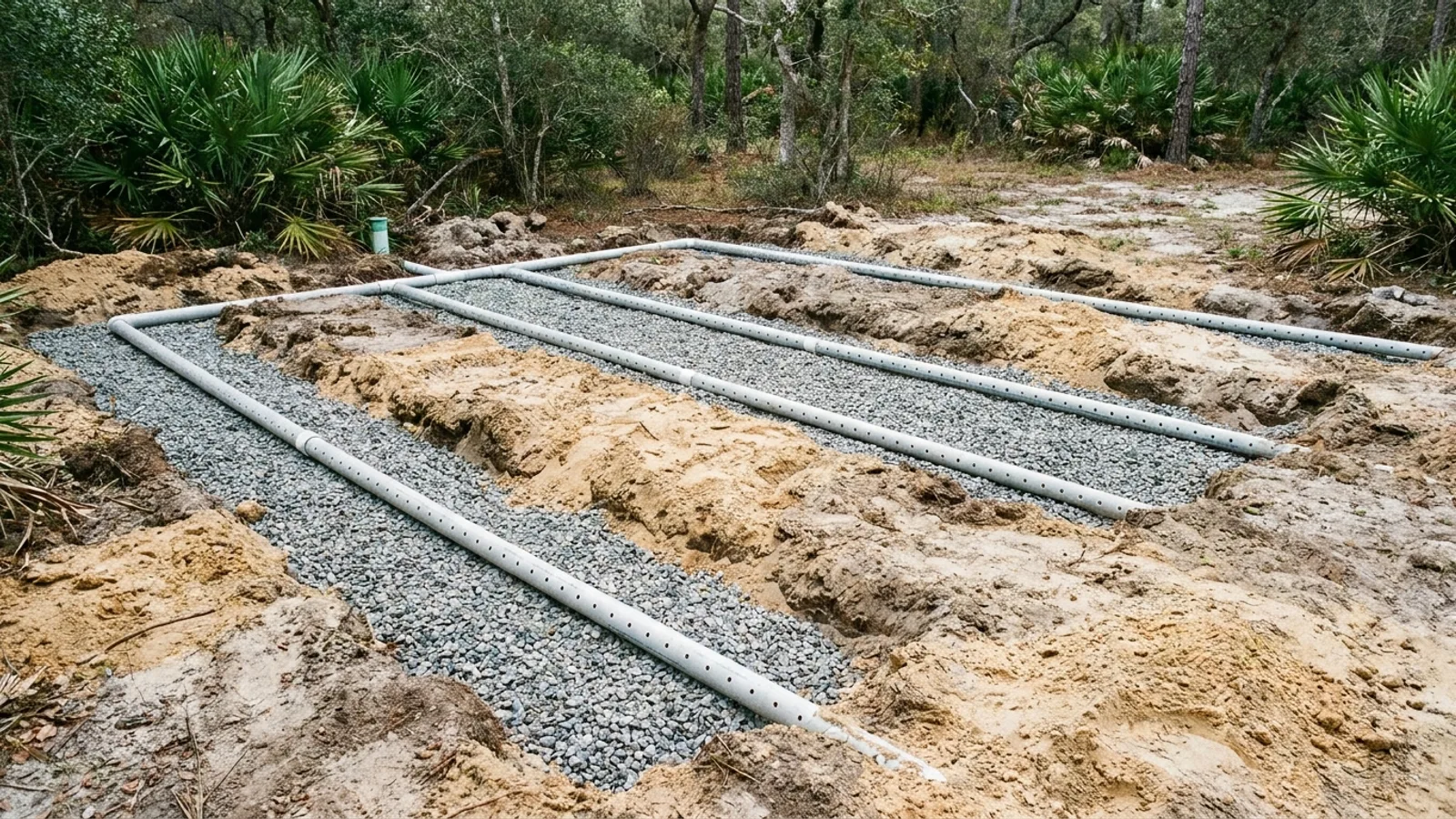
Inspecting the system before it is buried is central, because once the drainfield is covered, verifying it would mean digging it back up. Compare this with a well on the same property, which is permitted by yet another agency.
Our take: Never install or replace a septic system without the proper permit. This is public-health infrastructure in your yard, and an unpermitted system that contaminates groundwater or a well is a serious and expensive problem. Confirm your county's agency and use a licensed contractor.
How do you start a septic project the right way?
Identify the agency that permits septic in your county, the health department or the DEP, and hire a licensed septic contractor who knows the local requirements. Coordinate the indoor plumbing connection with your building department, and keep the well and septic setbacks in mind if you have both.
Keep the septic permit and inspection records with your home documents. For a property on septic, that paperwork is important for maintenance, resale, and confirming the system was installed to standard, and buyers routinely ask for it during a sale.