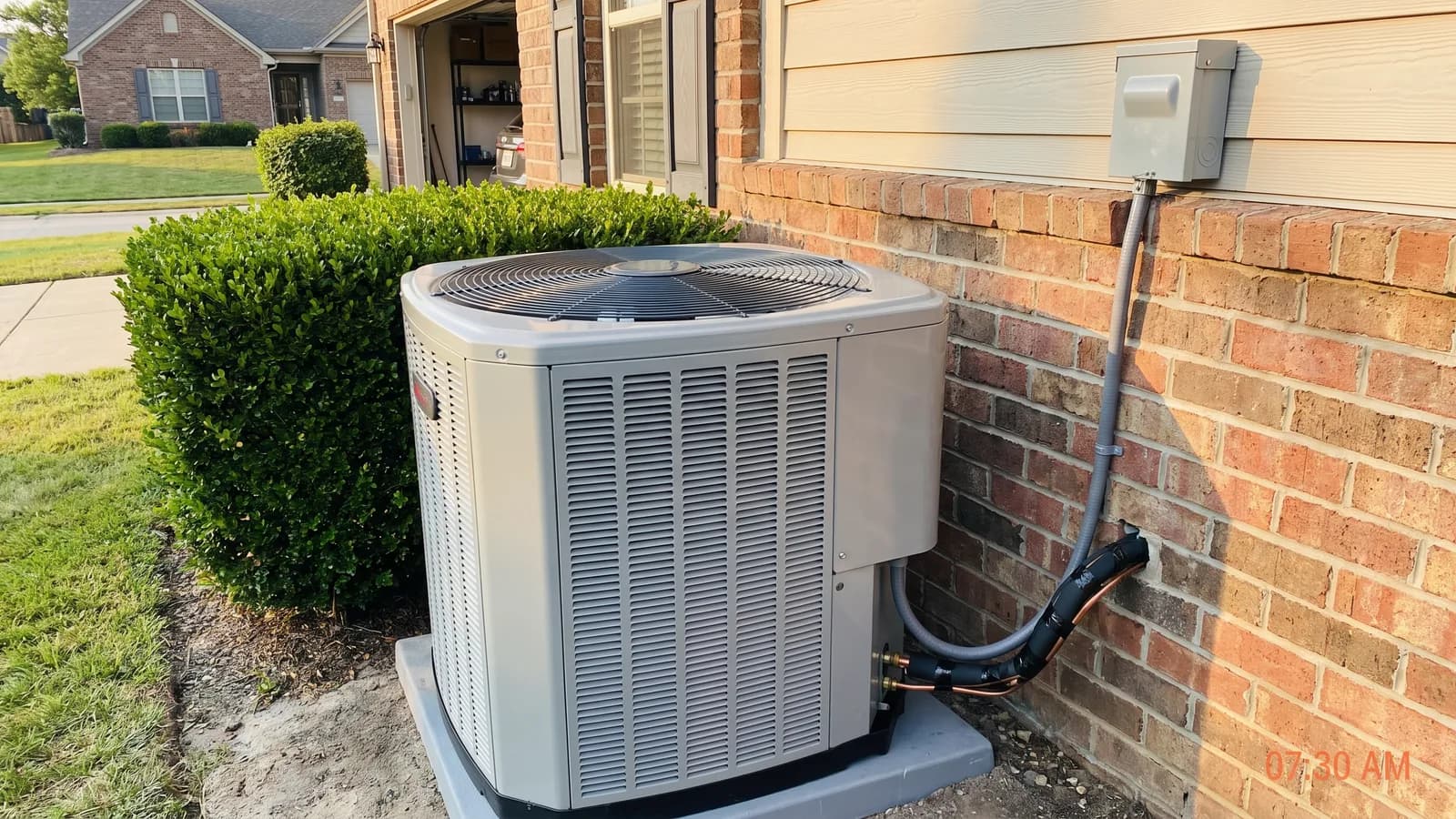
Replacing an air conditioner, heat pump or furnace in Georgia is permitted mechanical work in essentially every jurisdiction that enforces the codes, and Georgia is unusually clear about who may do it. O.C.G.A. 43-14-8 requires a license to engage in the business of conditioned air contracting, and unlike general contracting there is no owner-builder exemption written into that statute.
Key takeaways
-
An HVAC changeout is normally permitted work. Georgia sets no statewide list of exempt work, because the state amendments delete IRC Chapter 1, so the threshold is local.
-
Georgia's mandatory mechanical code is the International Mechanical Code, 2024 Edition, with Georgia amendments, and gas appliances also engage the International Fuel Gas Code, 2024 Edition, with Georgia amendments.
-
O.C.G.A. 43-14-8 provides that no person shall engage in the business of conditioned air contracting as a conditioned air contractor without a valid license.
-
The owner-builder exemption at O.C.G.A. 43-41-17(h) covers general contracting only. It does not carry over to the licensed trades.
-
A changeout usually involves more than the equipment: electrical for the disconnect and circuit, gas piping for a furnace, condensate handling, and duct or refrigerant line work.
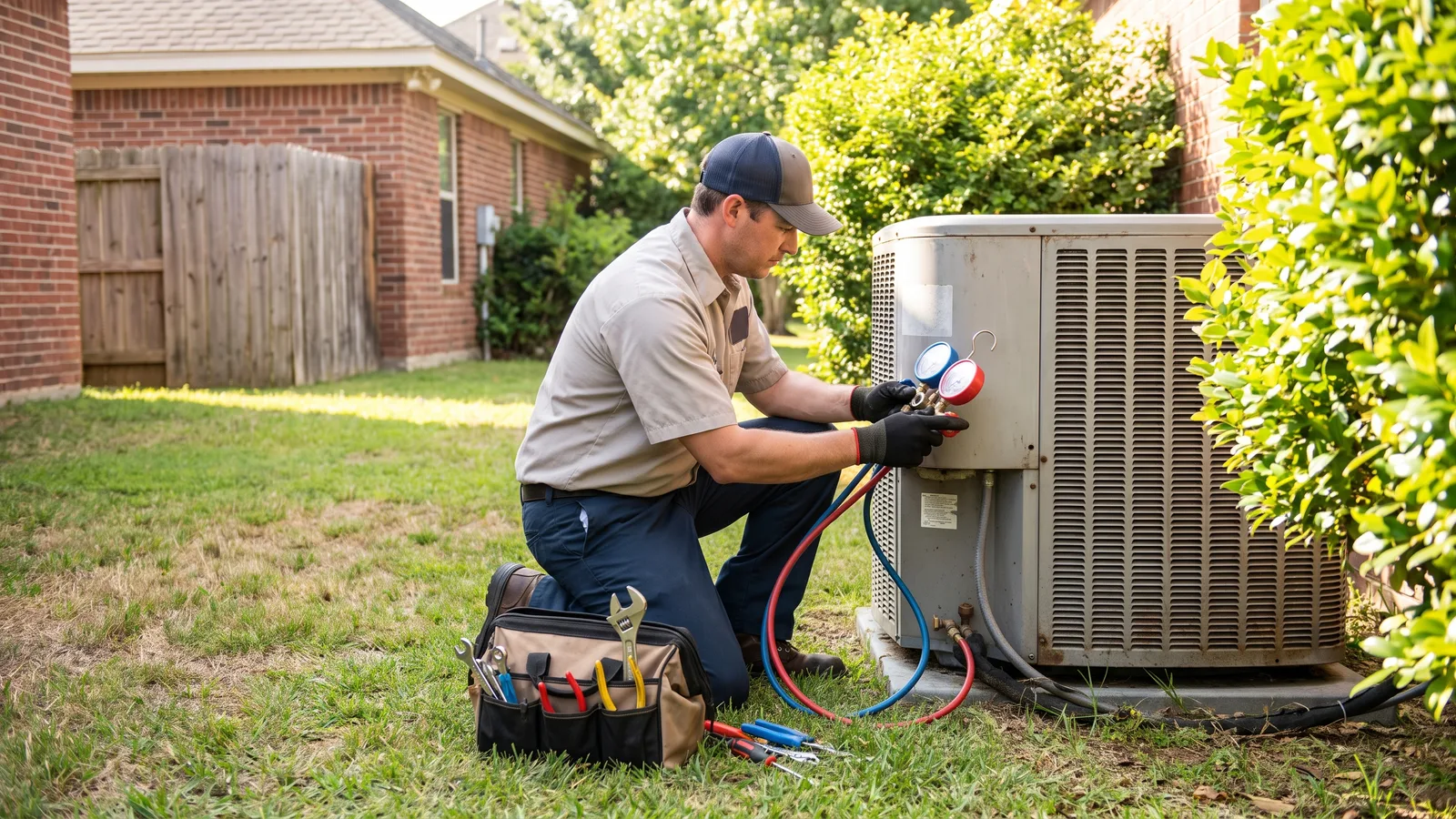
Do I need a permit to replace an HVAC system in Georgia
Assume yes. Replacing a condenser, air handler, heat pump or furnace alters a permanent building system, usually changes the equipment's capacity or efficiency, and touches electrical and often gas connections.
Georgia gives no statewide exemption to fall back on. The state amendments to the residential code delete Chapter 1, Scope and Administration, without substitution, and Chapter 1 is where the model code's list of work exempt from permits sits. That leaves the threshold to each city and county, and jurisdictions that enforce the codes do not treat mechanical equipment as minor work.
Which codes apply
Georgia adopts a family of mandatory state minimum standard codes, and an HVAC job can engage several at once.
| Scope of work | Governing Georgia code |
|---|---|
| Equipment, ducts, ventilation | International Mechanical Code, 2024 Edition, with Georgia amendments |
| Gas piping and gas appliances | International Fuel Gas Code, 2024 Edition, with Georgia amendments |
| Disconnect, circuit, whip | National Electrical Code, 2023 Edition, with Georgia amendments |
| Condensate drainage | International Plumbing Code, 2024 Edition, with Georgia amendments |
| Insulation and equipment efficiency | Georgia State Minimum Standard Energy Code |
Note the last row. Georgia deletes Part IV, Energy Conservation, from the residential code and substitutes the Georgia State Minimum Standard Energy Code, and the code references direct that the energy code be used for heating and air conditioning equipment. That is where efficiency and duct sealing requirements live, not in the residential code chapter people usually reach for.
Who is allowed to do the work
This is where Georgia differs from what homeowners expect after reading about owner-builders.
O.C.G.A. 43-14-8 provides that no person shall engage in the business of conditioned air contracting as a conditioned air contractor without a valid license, with parallel requirements for electrical contracting and for master and journeyman plumbers. The statute has no express homeowner exemption of the kind the general contracting law provides.
Georgia's owner-builder exemption, at O.C.G.A. 43-41-17(h), sits in a different chapter and covers general contracting. It does not reach conditioned air work. Our Georgia owner-builder guide explains what that exemption does and does not cover.
Because 43-14-8 is framed around engaging in the contracting business, how a homeowner working on their own house is treated in practice is a question your local building department answers. Ask before you buy equipment, and do not assume the answer transfers from another state.
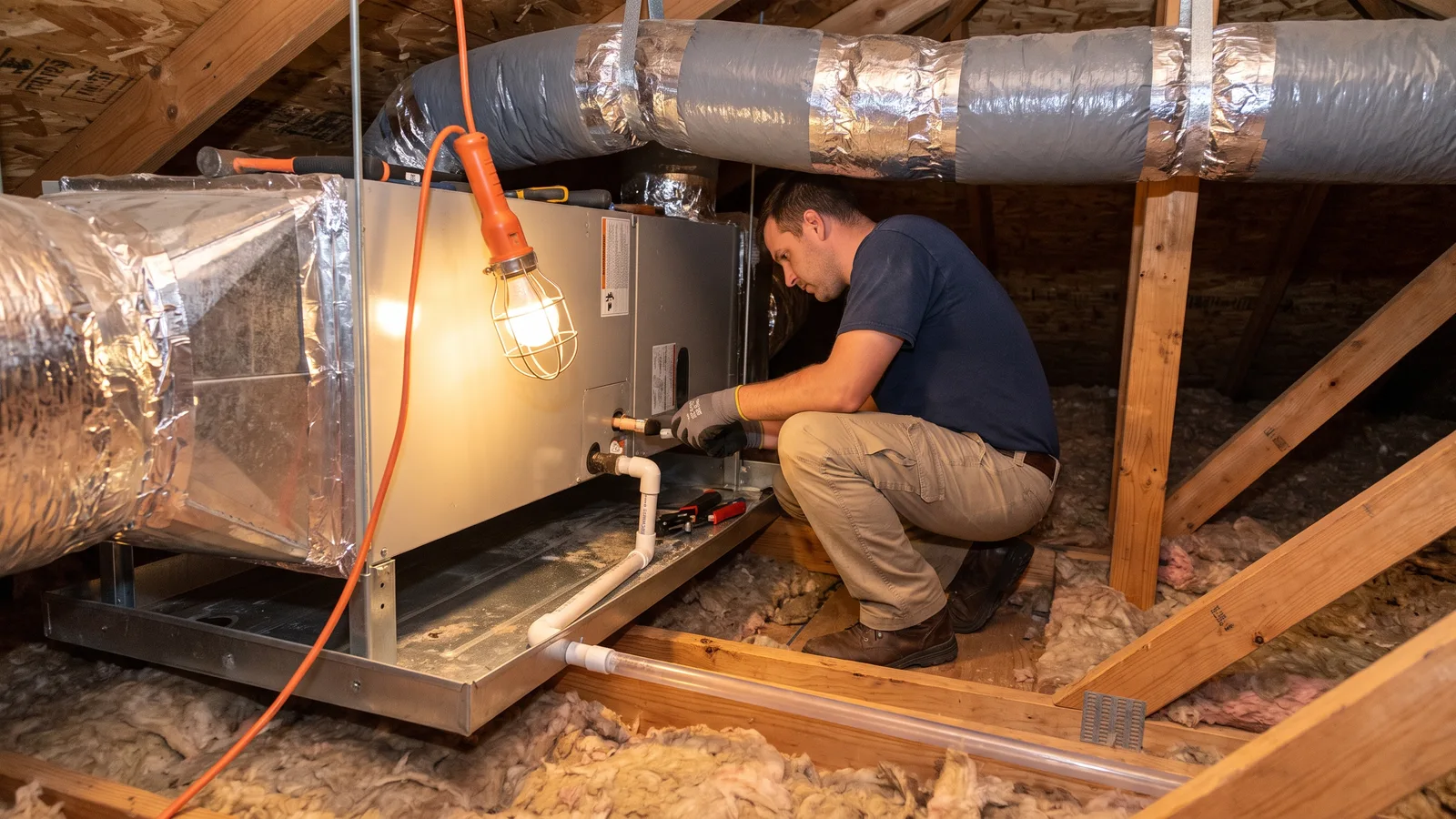
What a changeout usually involves beyond the equipment
Contractors sometimes quote only the box. Permit and inspection cover the whole installation.
- Electrical. The outdoor disconnect, the circuit and overcurrent protection, and whether the existing circuit is correctly sized for the new equipment.
- Gas. For a furnace, the piping material and support, the connection, the leak test, and the venting.
- Condensate. The primary drain, the secondary or overflow provision, and where it terminates. Attic air handlers in Georgia's humidity make this a real inspection item rather than a formality.
- Combustion air and clearances, for gas equipment.
- Refrigerant lines and duct connections, including whether existing line sets and ducts are suitable for the new system.
If your quote does not mention any of these, ask what is included and who is pulling the permit.
Why unpermitted HVAC work causes trouble later
An unpermitted changeout is invisible until it is not. It surfaces during a home sale when the buyer's inspector notes newer equipment with no permit record, during an insurance claim after a fire or water damage from a failed condensate line, and during any later permit application on the property.
There is also a warranty dimension. Manufacturers condition warranties on correct installation, and an installation nobody inspected is harder to defend when a compressor fails inside the warranty period.
Our take: the licensing point is the one to internalize in Georgia. You can legally be your own general contractor on a whole renovation and still not be the right person to change out the conditioned air equipment. Hire a licensed conditioned air contractor, make the permit their responsibility in writing, and keep the final inspection record with your house documents.
What to do next
- Confirm the department that permits your address using our guide to finding the right building department.
- Ask that department what an HVAC changeout requires there, and whether mechanical, electrical and gas are separate permits.
- Confirm your contractor holds a Georgia conditioned air license and ask who pulls the permit.
- Ask whether the existing circuit, line set and ducts are being reused or replaced.
- Run the project through the free permit checker, and see the HVAC project page for typical documents and inspections.
The Permit Prep Pack assembles the requirements, documents, inspections and the department contact for your specific address, and the Georgia coverage page lists the counties and cities we cover.