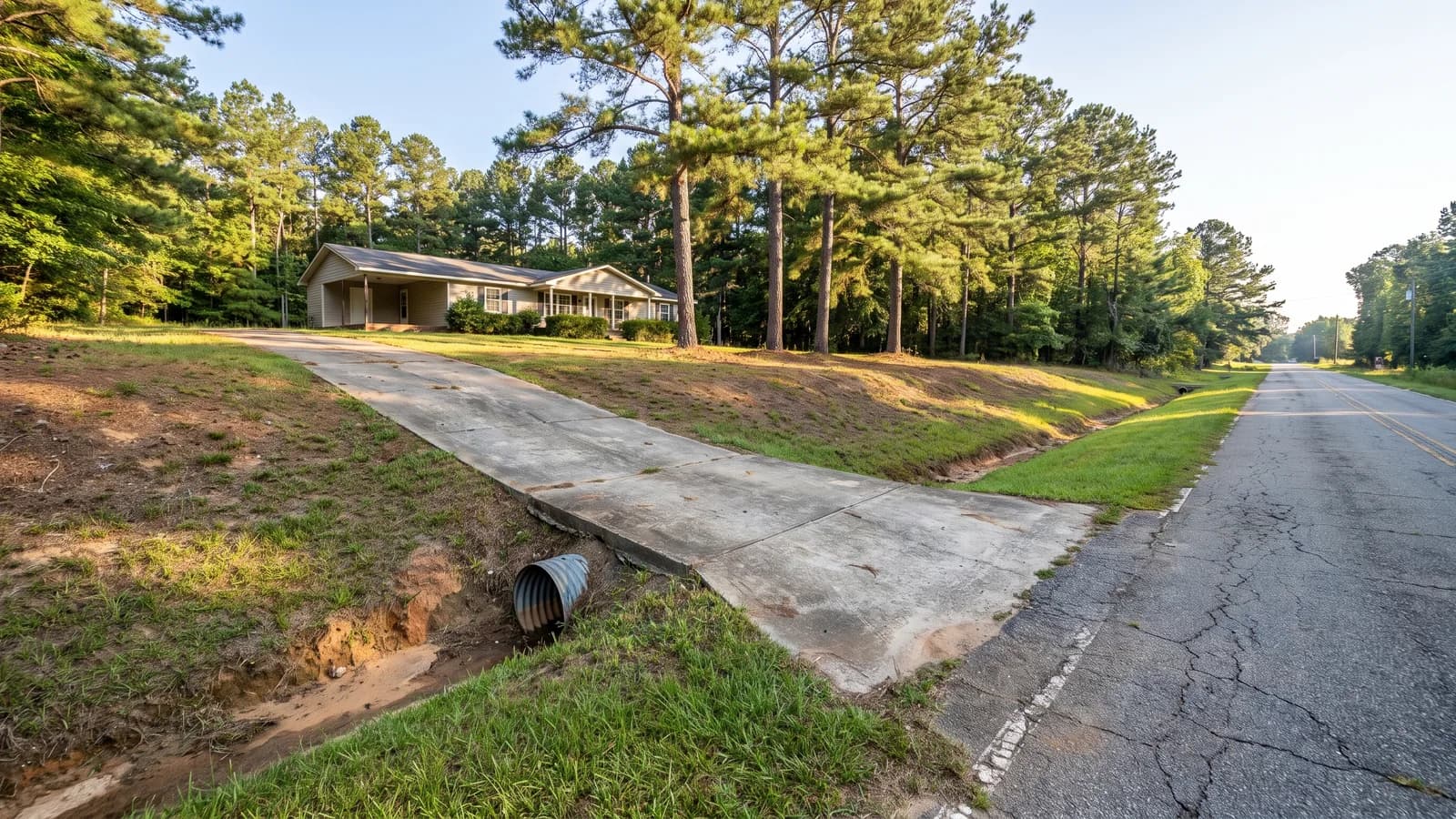
Whether your driveway needs a permit in Georgia depends first on which road it touches. A driveway connecting to a state route is permitted by the Georgia Department of Transportation, not your county. A driveway onto a county or city street is a local right-of-way question. And a paver patio in the back yard is a third question again, answered by your local zoning and stormwater rules rather than by either road authority.
Key takeaways
-
A new or widened driveway connecting to a state route needs a GDOT residential driveway permit, administered by the GDOT Area Engineer.
-
GDOT will not approve an individual drive for newly subdivided lots of less than five acres, and expects shared drives or subdivision streets instead.
-
A driveway onto a local street is permitted by the city or county, usually as a right-of-way or encroachment permit, separate from any building permit.
-
Patios and pavers away from the road are usually a zoning and stormwater question: impervious surface, lot coverage and setbacks.
-
Georgia sets no statewide exemption for any of this, because the state deletes the code chapter that would contain one.
Who permits a driveway in Georgia?
Whoever owns the road you are connecting to. That single question routes the whole project, and homeowners routinely call the wrong office first.
If the connection is to a state route, it is GDOT. The department's Regulations for Driveway and Encroachment Control devote a chapter to residential driveways and state that residential driveway permits are administered by the GDOT Area Engineer. The Area Permit Inspector advises the applicant on the location of the drive, the size of pipe to be placed under the driveway if one is required, and approves the grading plan from the outer edge of the road shoulder to the right-of-way line.
If the connection is to a county road or a city street, the permit comes from that local government, normally through public works or engineering rather than the building department. Either way it is separate from any building permit for the house.
What does GDOT require for a residential driveway?
Specifics that are worth knowing before you design anything. GDOT's regulations state that individual drives shall not be approved for newly subdivided lots of less than five acres, and that subdivision streets or shared drives shall be used to provide access to smaller lots or subdivided properties. That rule alone stops some plans outright.
On dimensions, the regulations describe residential driveways as normally 14 to 16 feet wide, with the Area Engineer able to approve a driveway up to 20 feet. Turnarounds are recommended so vehicles do not have to back into the highway. Where a paved drive has no curb and gutter, at least a two foot shoulder along the drive and around the radii is described as desirable before the slope down to the ditch.
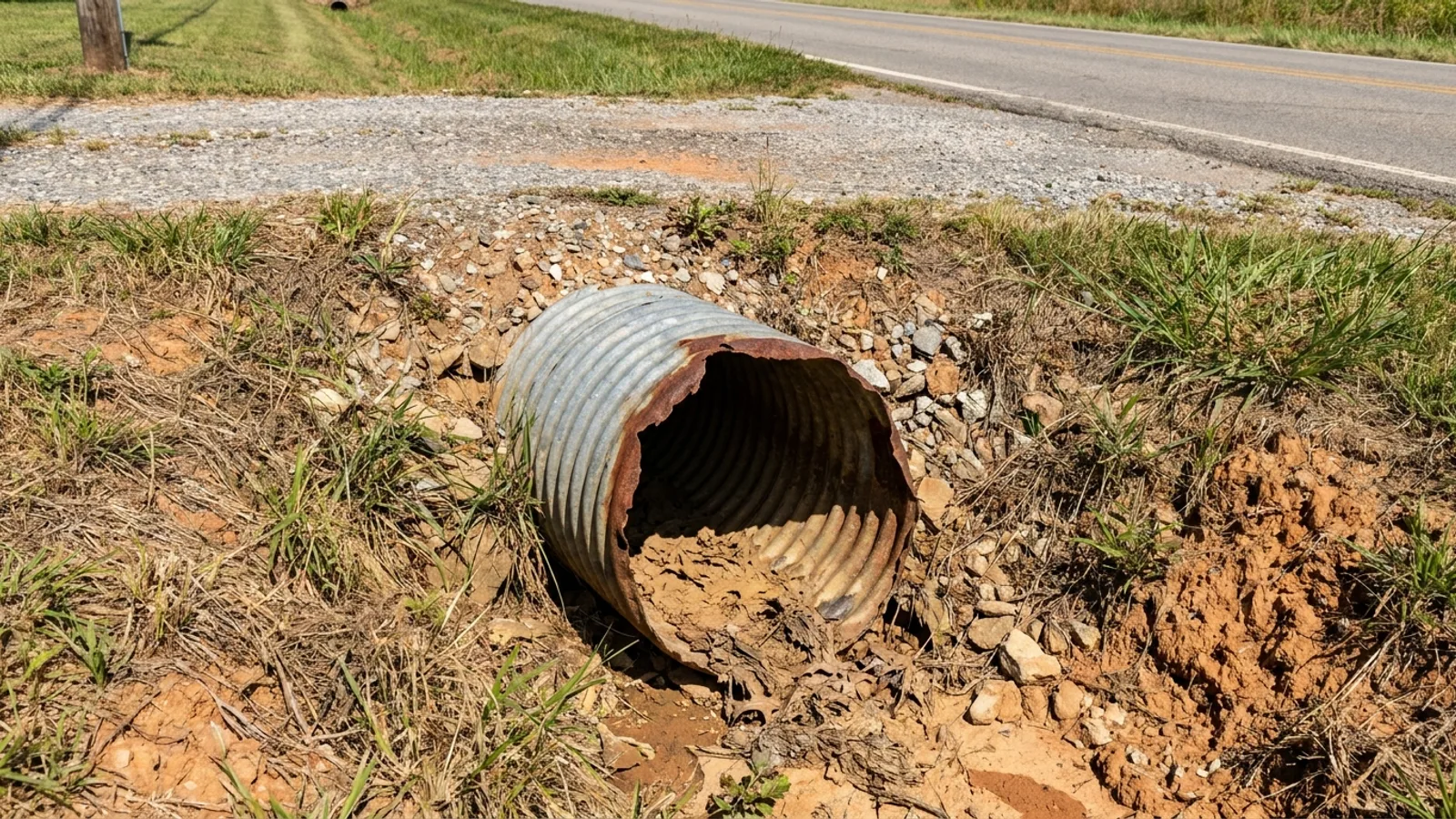
Drainage carries its own requirements. All side drain pipes larger than 48 inches must have an inlet and an outlet headwall, and where pipe ends are exposed to traffic inside the clear zone, safety slope end sections are required. GDOT also states that routine maintenance of the pipe and driveway up to the roadway edge of pavement is the owner's responsibility.
Do I need a permit for a paver patio or walkway?
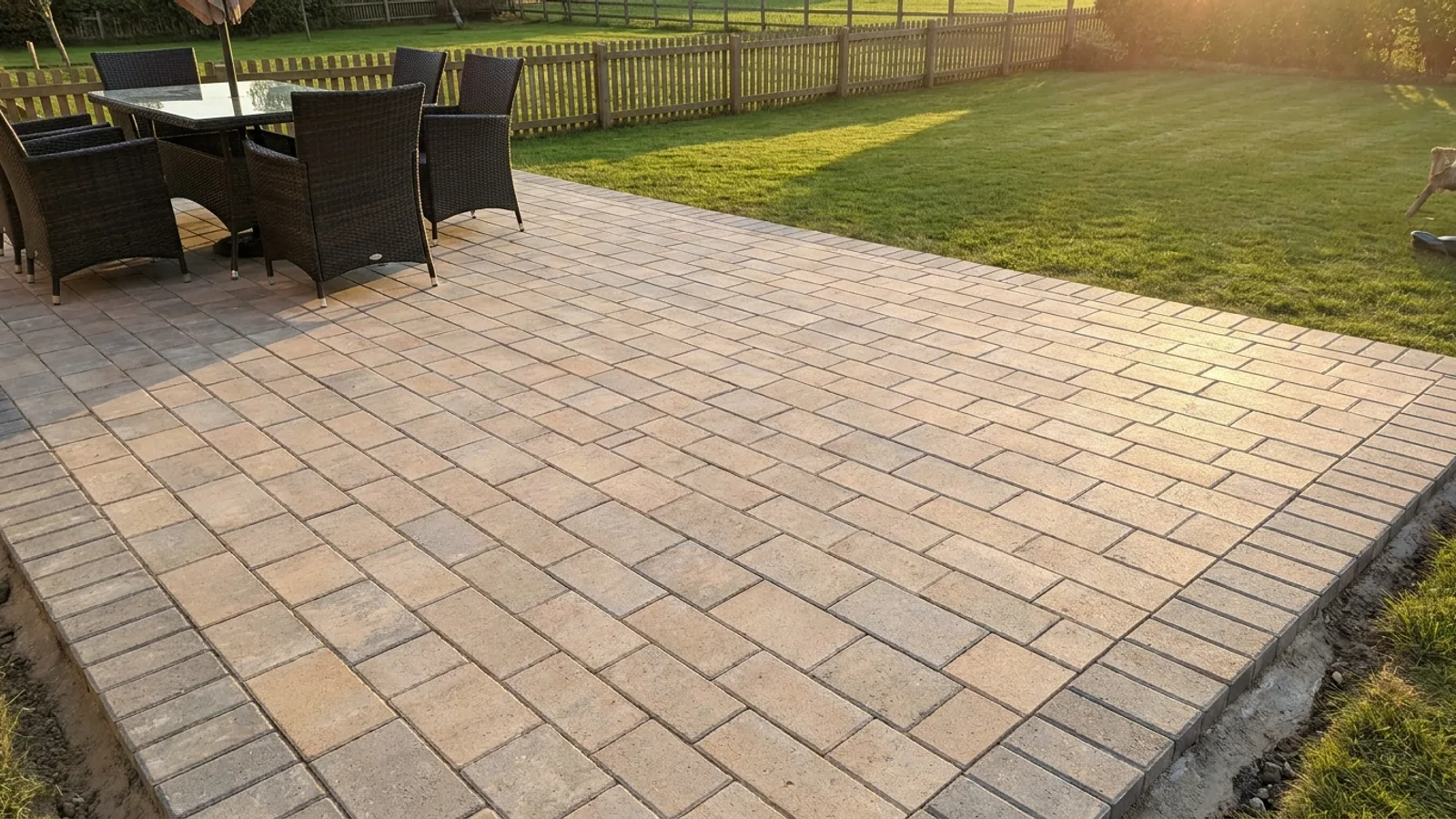
Ask your city or county, because Georgia gives no statewide answer. The state amendments to the International Residential Code delete Chapter 1 "without substitution," and that chapter is where the model code lists work exempt from permits. So the widely repeated thresholds for patios and flatwork are not Georgia rules.
What usually decides it locally is not the paving itself but what the paving does to the lot. Setbacks, maximum lot coverage and impervious surface limits are zoning standards, and a patio can count toward them. A structure attached to the patio, such as a pergola or a roof, changes the answer again and generally pulls in a building permit. The pavers and hardscape project page and the Georgia setbacks and zoning guide cover how the two approvals interact.
| Project | Who usually permits it | The question being asked |
|---|---|---|
| New or widened drive onto a state route | GDOT Area Engineer | Sight distance, width, drainage pipe, grading to the right-of-way |
| New drive onto a county or city street | Local public works or engineering | Right-of-way encroachment, apron, drainage |
| Resurfacing an existing drive in place | Often nothing, but confirm | Whether the connection or grade is changing |
| Paver patio or walkway on the lot | Local zoning, sometimes building | Setbacks, lot coverage, impervious surface |
| Patio with a pergola or roof | Local building department | Structure, footings, attachment |
Does stormwater law reach a residential patio?
In part of Georgia it can, though most single-family work sits below the thresholds. The Metro North Georgia Water Planning District was created by the General Assembly and covers 15 counties and roughly 95 cities in the Atlanta region. Every local government inside it must adopt the District's model post-construction stormwater ordinance, or an equivalent ordinance at least as effective, and the headline standard is retaining the first 1.0 inch of rainfall on site.
The important qualifier is that those requirements are aimed at land disturbance and impervious surface at a development scale, and the local triggers are usually well above a back yard patio. Cobb County, for instance, publishes a trigger of 5,000 square feet of impervious surface or one acre disturbed. Ask your county whether your project reaches its threshold rather than assuming either that it does or that it cannot.
What about drainage on my own property?
Worth taking seriously even where no permit applies. Paving converts ground that absorbed water into ground that sheds it, and the water goes somewhere. Directing runoff onto a neighboring property is a civil problem no permit protects you from, and grading that traps water against a foundation is a problem you inherit.
Plan where the water goes before the base is laid. Slope away from the house, keep the outfall on your own land, and if a pipe under the drive is involved, size it with the office that will inspect it.
Our take: make the road call first. Homeowners spend weeks on a design and then discover the access itself will not be approved, or that GDOT rather than the county controls the connection. The road authority question takes one phone call and it constrains everything downstream, including where the drive can meet the pavement at all.
What should I do before starting?
Identify the road. If it carries a state route number, start with the GDOT Area Office for your county and ask for the residential driveway permit process. If it is a local street, call your city or county public works and ask about a right-of-way or driveway permit.
Then handle the lot separately. Confirm your setbacks and any lot coverage or impervious surface limit with planning or zoning, and ask whether a patio counts toward them. Run the free permit checker for your project and county, read how to find your Georgia building department if you are unsure which office to call, and get the contact details from the page for your Georgia county.