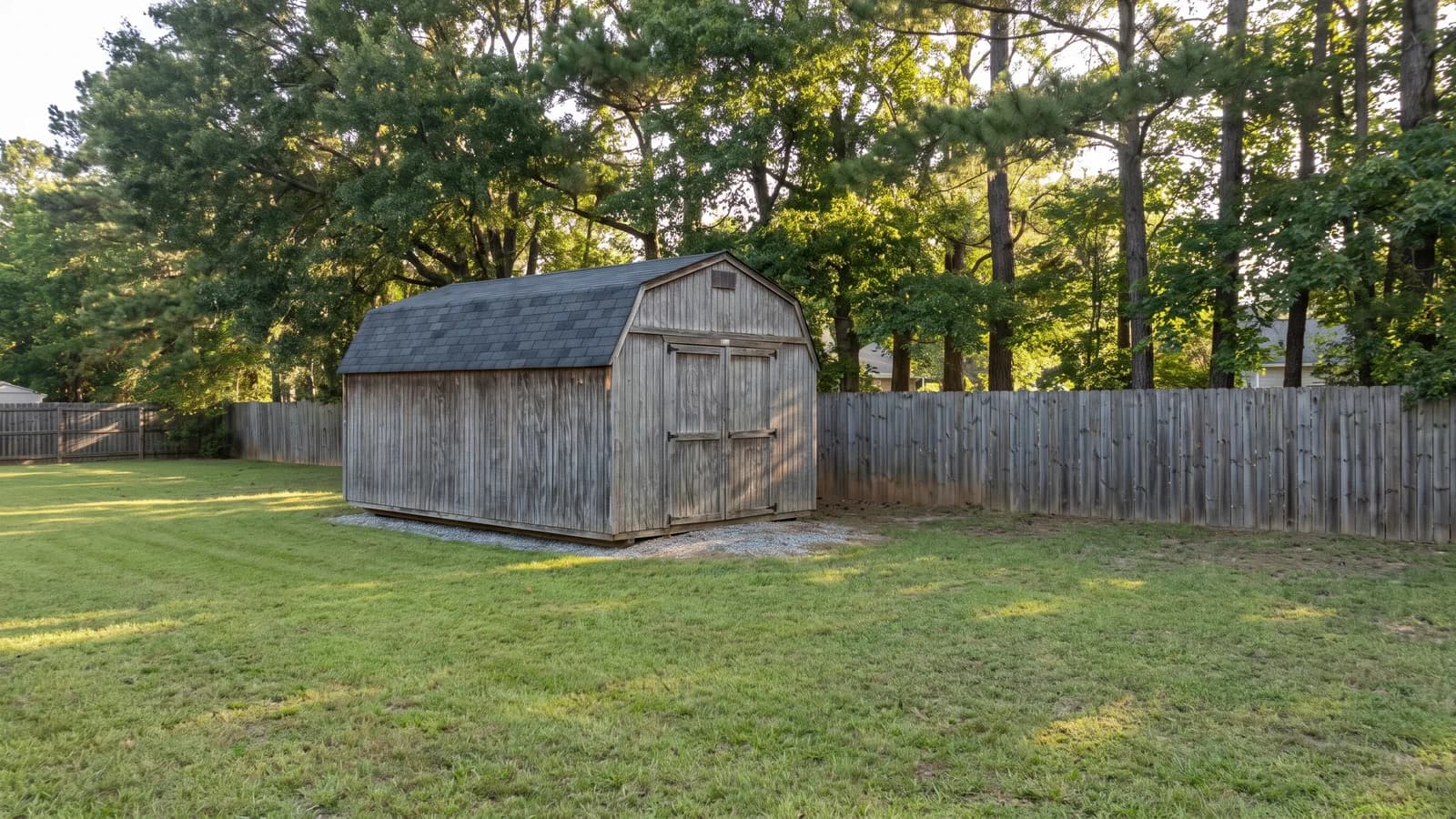
If you have read that Georgia exempts sheds under 200 square feet from needing a permit, that figure does not come from Georgia law. It comes from the base International Residential Code, and Georgia deleted the chapter it appears in. There is no statewide shed permit exemption in Georgia. Whether your shed needs a permit is decided by your city or county, and the only reliable answer comes from them.
Key takeaways
-
Georgia adopts the International Residential Code, 2024 Edition, with Georgia amendments, as its mandatory state minimum standard code for one- and two-family dwellings.
-
The Georgia amendments delete IRC Chapter 1, Scope and Administration, without substitution, effective January 1, 2026.
-
Chapter 1 is where Section R105.2, the list of work exempt from permits, lives. Deleting it means Georgia has no statewide permit exemption list, and no statewide square footage threshold for sheds.
-
The amendment packet says Chapter 1 remains in the code only as a reference and guide for local governments developing their own administrative procedures.
-
So the real threshold for your shed is whatever your local building department adopted, and local governments must file their amendments with the Georgia Department of Community Affairs.
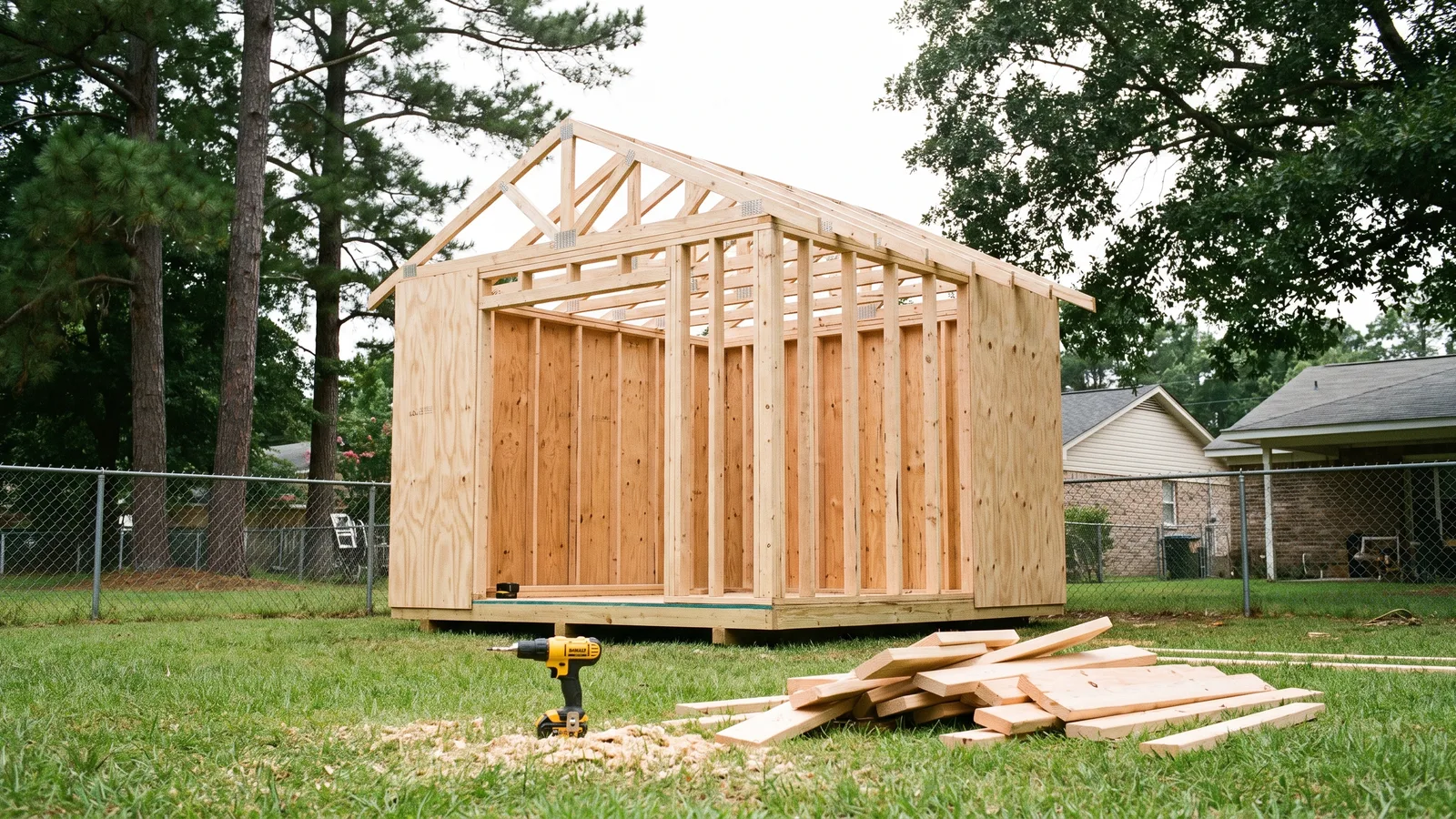
Do I need a permit for a shed in Georgia
There is no single statewide answer, and any source that gives you one is guessing. Georgia's mandatory residential code is the International Residential Code, 2024 Edition, with Georgia amendments, but the state amendments remove the administrative chapter that would set a statewide permit threshold.
What that means in practice is that two neighboring Georgia counties can lawfully use different shed thresholds, and both are correct. Your answer comes from the building department with jurisdiction over your address, not from the state.
Where the 200 square foot number comes from
The base International Residential Code, published by the International Code Council, contains Section R105.2, a list of work exempt from permits. In the model code that list includes one-story detached accessory structures under a stated floor area, along with things like fences below a certain height, retaining walls, sidewalks and driveways, and painting and papering.
That model list is what gets quoted in national blog posts and then attributed to whatever state the reader is in. It is genuine code text. It is simply not Georgia's, because of what the Georgia amendments do to Chapter 1.
What Georgia actually deleted
The Georgia State Amendments to the International Residential Code, published by the Department of Community Affairs and revised January 1, 2026, are explicit. Under Chapter 1, the amendment directs that Chapter 1 Scope and Administration is deleted without substitution, and that Chapter 1 remains in the code as a reference and guide for local governments to use in developing their own administrative procedures.
Section R105, Permits, sits inside Chapter 1. So does R105.2. Deleting the chapter removes the statewide permit application process, the statewide permit exemption list, and the statewide threshold in one move, and hands all three to local government.
| Claim you will see online | Accurate for Georgia |
|---|---|
| Sheds under 200 sq ft are exempt statewide | No. That is base IRC text Georgia did not adopt |
| Georgia has a statewide permit exemption list | No. Chapter 1 was deleted without substitution |
| Your county sets the shed threshold | Yes, through its own administrative procedures |
| A permit exemption also waives zoning setbacks | No. Zoning is a separate local approval |
Zoning is a separate question from the building permit
Even where a local government does exempt a small shed from a building permit, that exemption does not touch zoning. Setbacks from property lines, maximum lot coverage, accessory structure height limits, and rules about placing a structure in a front yard or an easement are zoning matters, handled under your local ordinance.
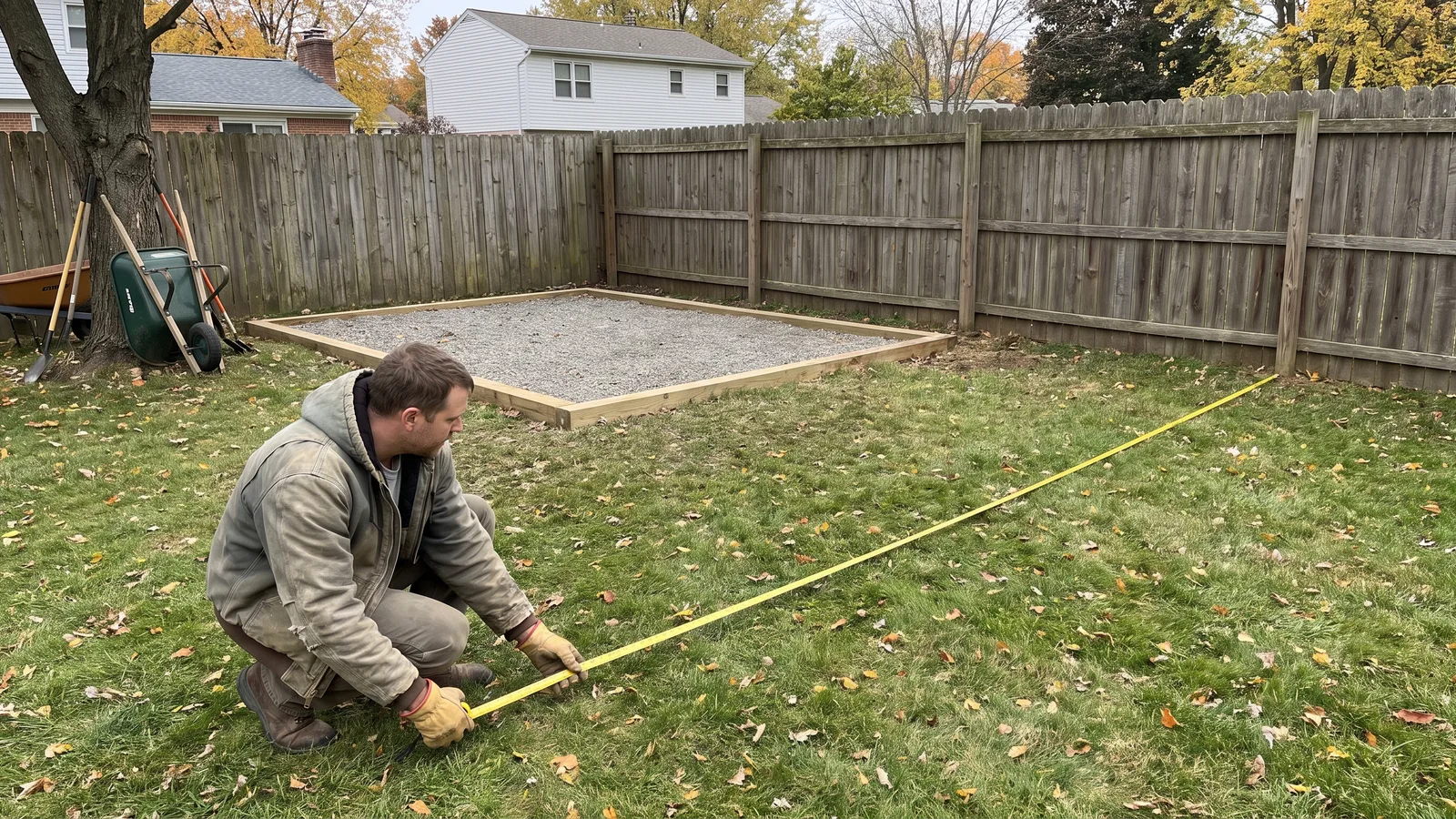
This catches people constantly. A shed can be genuinely permit-exempt and still be illegally placed. Ask your local office both questions in the same call: does this need a building permit, and what are the setback and coverage rules for an accessory structure on my lot.
What changes the answer even in a permissive jurisdiction
Some features tend to pull a shed back into permit territory almost everywhere, because they engage other codes that Georgia does adopt statewide.
- Electrical power. Running a circuit to the shed engages the Georgia State Minimum Standard Electrical Code, which is the National Electrical Code, 2023 Edition, with Georgia amendments.
- Plumbing. A sink or hose bib engages the Georgia plumbing code. Georgia deletes Part VII, Plumbing, from the IRC and substitutes the Georgia State Minimum Standard Plumbing Code.
- A permanent foundation. Slabs and footings are structural work.
- Size and use. Larger structures, and anything used as a workshop, office or living space, are treated differently from a garden shed.
- Flood zones and HOA rules. Both operate independently of the building permit.
How to get the real answer for your address
- Identify the authority that actually permits your property. Your mailing city is not always the permitting jurisdiction, particularly in unincorporated areas.
- Ask that department directly whether a detached accessory structure of your size needs a building permit, and ask for the written policy.
- Ask separately about zoning setbacks, height and lot coverage for accessory structures.
- Ask whether the department has filed local amendments with the Department of Community Affairs, since local amendments must be submitted to DCA for review and filed after adoption.
- Confirm whether power or plumbing to the shed is being treated as separate permits.
Our free permit checker walks your specific project and address through this and tells you which permits are likely, along with the office that handles them. The shed and accessory structure project page shows the documents and inspections typically involved.
Our take: on this topic the confident answers online are the wrong ones. Georgia genuinely does not set a statewide shed threshold, so anyone quoting you a square footage figure for the whole state is repeating model code that Georgia removed. Get it from your jurisdiction in writing, and keep that answer with your project records.
What it costs to get this wrong
An unpermitted shed is usually fixable, but the fix is not free. Depending on the jurisdiction you may face an after-the-fact permit at a higher fee, a requirement to expose the foundation or wiring for inspection, or an order to relocate or remove a structure that violates setbacks. Unpermitted structures also reliably surface during a home sale, when the buyer's lender or inspector asks about them.
If you want the requirements, the documents, the inspection sequence and the contact details for the office that covers your address in one place, that is what the Permit Prep Pack is built for. You can also browse coverage from the Georgia state page.