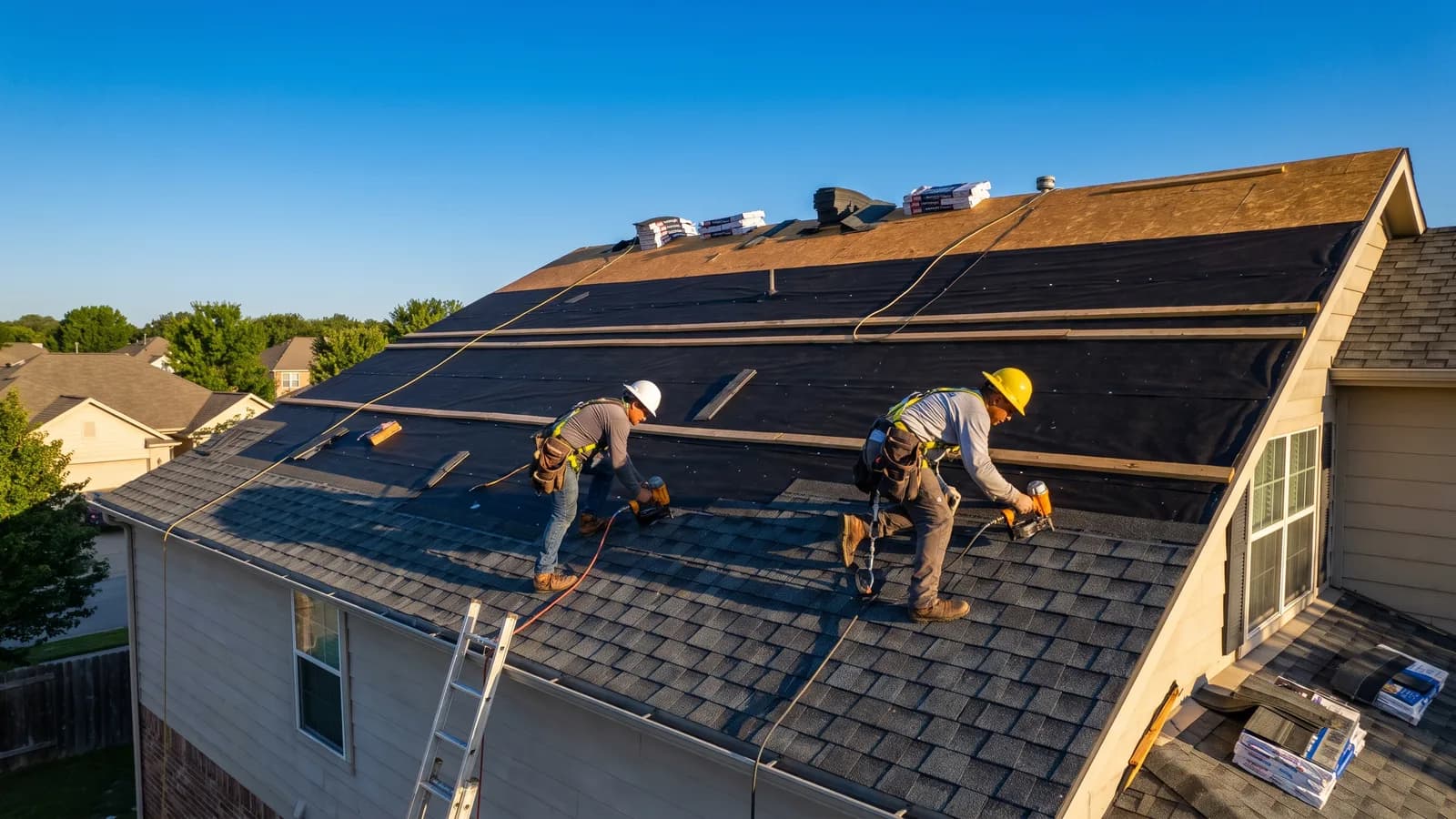
Most Georgia jurisdictions require a permit to replace a roof, but the state does not say so, because Georgia deleted the code chapter where permit thresholds live. What Georgia does offer is an optional resilience appendix that some jurisdictions adopt and others do not, and it changes what your roof has to include. Knowing whether your jurisdiction adopted it is the difference between a smooth inspection and a rejected reroof.
Key takeaways
-
Georgia sets no statewide reroof permit threshold. IRC Chapter 1, which contains the exempt-work list, is deleted without substitution by the Georgia amendments.
-
Georgia's mandatory residential code is the International Residential Code, 2024 Edition, with Georgia amendments.
-
The Department of Community Affairs adopts Appendix U, Disaster Resilient Construction, as optional, and it may be adopted in whole or in part by local jurisdictions.
-
Where a jurisdiction adopts it, Appendix U can add a secondary water barrier requirement and an increased design wind speed, and the appendix's own guidance says an adopted wind speed option must be higher than the mapped speed in the IRC.
-
Ask your jurisdiction two questions before you sign a roofing contract: do you require a permit, and have you adopted Appendix U or any part of it.
Do I need a permit to replace a roof in Georgia
In most of populated Georgia, yes, but it is a local question rather than a state one. The Georgia amendments delete IRC Chapter 1, Scope and Administration, without substitution, and that chapter is where the model code lists work exempt from permits and sets the permit process.
So there is no statewide "reroofs under X squares are exempt" rule to rely on, and there is no statewide answer about whether a repair is small enough to skip a permit. Both come from the jurisdiction that permits your parcel.
Appendix U, and why it is the question to ask
This is the Georgia-specific piece most homeowners and plenty of contractors miss. The Georgia amendments to the residential code state that the Department of Community Affairs adopts Appendix U, Disaster Resilient Construction, as optional, effective January 1, 2026.
Optional means it is not in force statewide, and it is not dead letter either. The appendix comes with a sample ordinance so a local government can adopt it in whole or in part, choosing which chapters and sections to take.
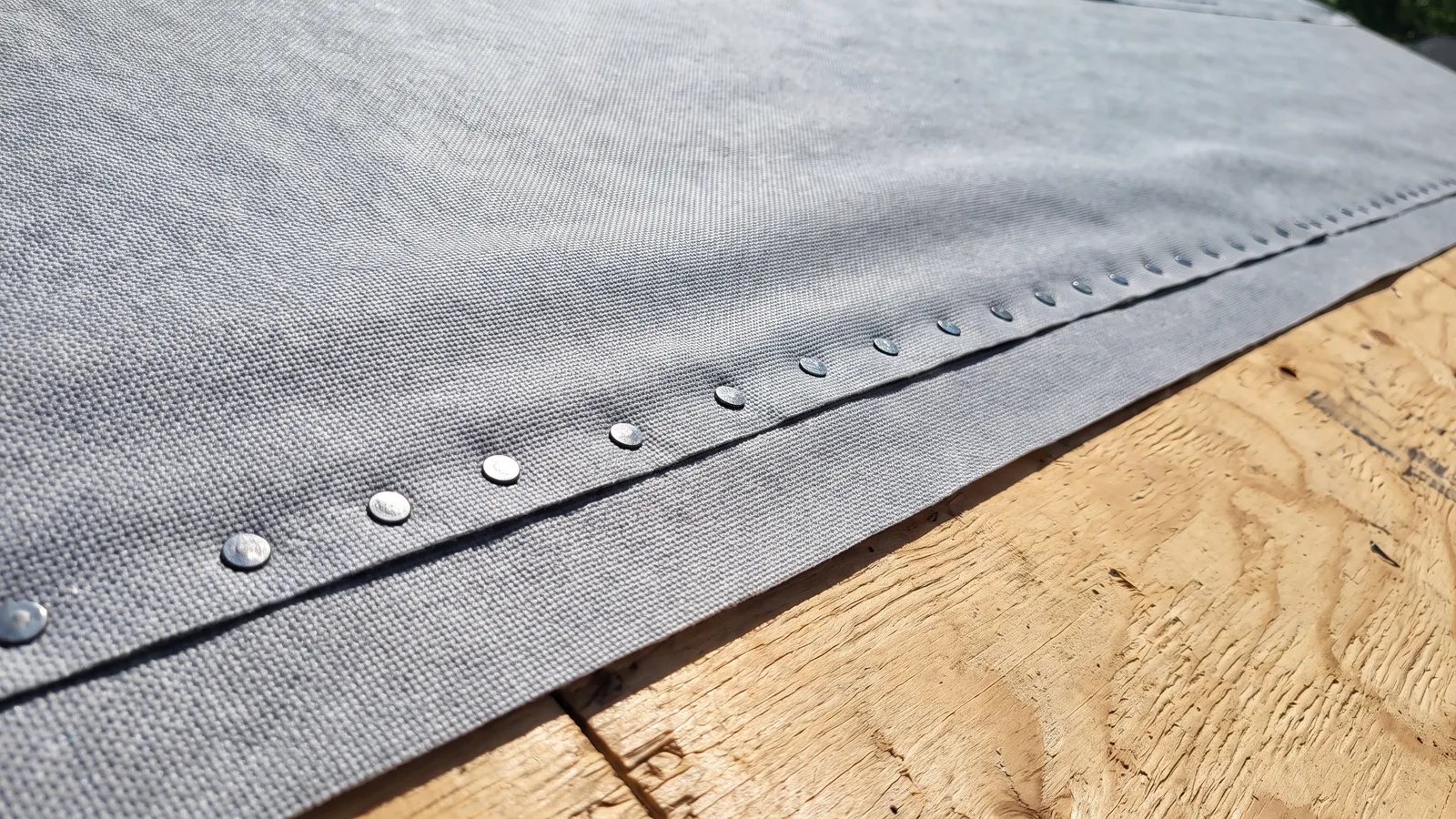
Two of those choices reach roofing directly. The appendix includes secondary water barrier provisions covering underlayment application and fastening, which go beyond ordinary roof underlayment practice. And its wind chapter offers increased design wind speed options, with the appendix's own instructions specifying that only one option may be chosen and that it must be higher than the mapped wind speed shown in the International Residential Code.
| Question | Where the answer comes from |
|---|---|
| Do I need a permit for this reroof | Your city or county |
| What the roof assembly must meet | IRC 2024 with Georgia amendments, statewide |
| Whether a secondary water barrier is required | Only if your jurisdiction adopted that part of Appendix U |
| What design wind speed applies | IRC map, unless the jurisdiction adopted a higher Appendix U option |
| Whether appendices are enforceable | Only when referenced in the code body or adopted by DCA or your AHJ |
That last row is worth reading twice. The Georgia amendment packet states plainly that appendices are not enforceable unless specifically referenced in the body of the code or adopted by DCA or the authority having jurisdiction. A contractor quoting from the appendix in a jurisdiction that never adopted it is over-specifying, and one ignoring it in a jurisdiction that did adopt it is under-specifying.
What a roofing permit usually covers
Where a permit is required, expect the scope to include tear-off and disposal, deck inspection and repair of deteriorated sheathing, underlayment and any required water barrier, flashing at walls, chimneys, valleys and penetrations, drip edge, and ventilation.
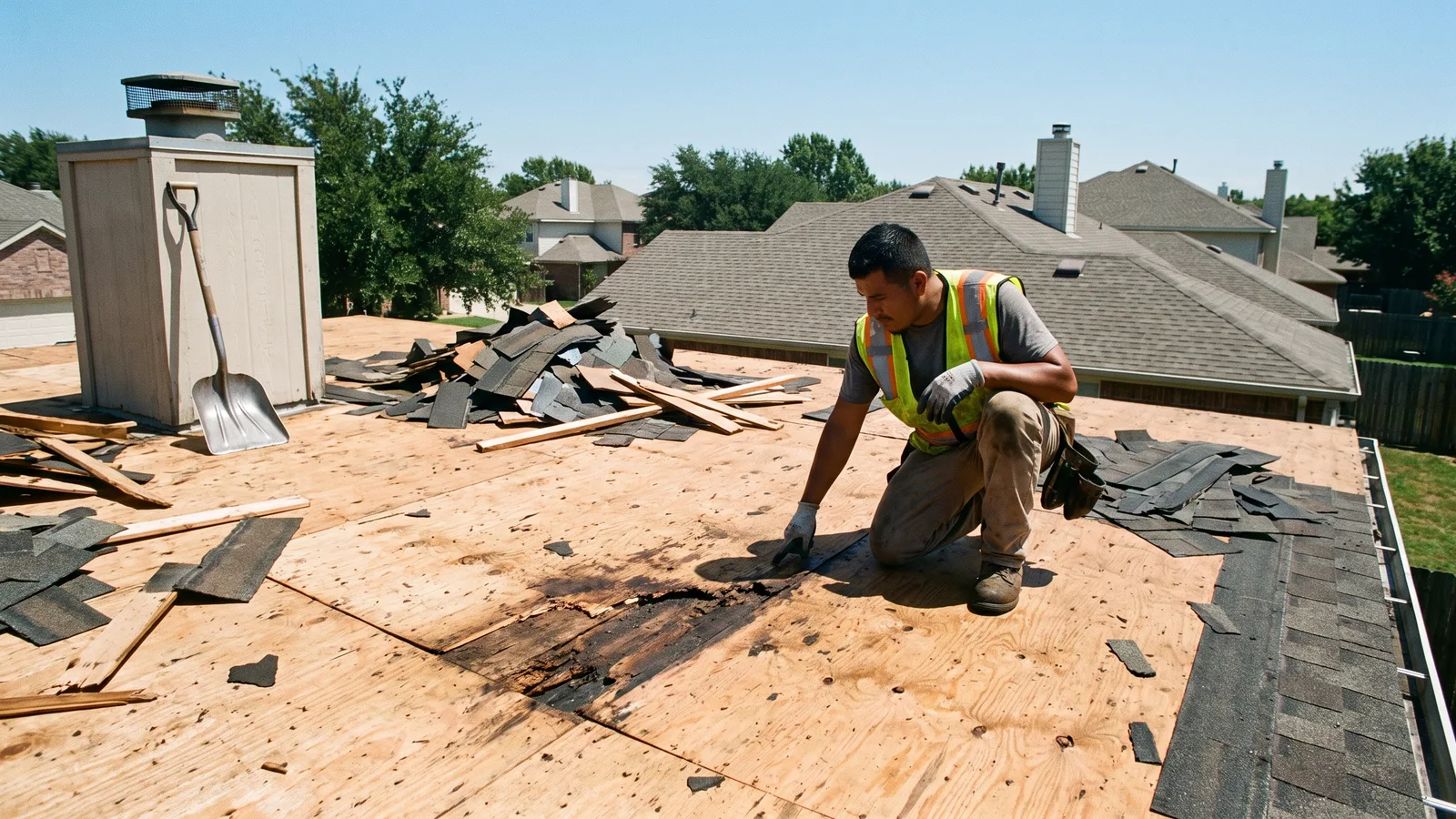
The deck inspection is the one that produces change orders. Rotten or delaminated sheathing is not visible until the old covering comes off, and a contract priced without an allowance for it will be renegotiated on the roof. Ask how deck replacement is priced before work starts rather than after.
Roof ventilation deserves attention too. Georgia's summers put attics under real thermal load, and intake and exhaust ventilation is both a code item and a longevity item for the shingles above it.
Layers, and when a tear-off is required
Whether a new covering may be installed over an existing one, and how many layers are permitted, is governed by the code's reroofing provisions and by the condition of what is already there. In practice a full tear-off is required more often than homeowners expect, particularly where the existing covering is buckled, where the deck condition cannot be verified, or where the assembly needs a water barrier that can only be installed on a clean deck.
A layover quote and a tear-off quote are not comparable prices. Confirm which one your jurisdiction will accept for your roof before treating the cheaper number as real.
Our take: on Georgia roofs, the two questions that matter are local, not statutory. Does this jurisdiction require a permit, and did it adopt Appendix U or any part of it. Get both answers in writing before you sign, because a secondary water barrier requirement discovered at inspection is a rework, not an adjustment.
What to ask before you sign
- Do you require a permit for a residential reroof, and who pulls it?
- Have you adopted Appendix U, Disaster Resilient Construction, in whole or in part?
- If so, does the adopted portion include the secondary water barrier or an increased wind speed?
- What design wind speed applies to this address?
- Is a tear-off required, or is a layover acceptable on this roof?
- How is deteriorated deck sheathing priced if it is found?
- What inspections will there be, and at what stages?
What to do next
Confirm the authority that permits your parcel using our guide to finding the right building department, since a Georgia property can carry a city mailing address while sitting in unincorporated county.
Then run the project through the free permit checker and see the roof replacement project page for the documents and inspections typically involved. The Georgia permit process guide explains why the process is local, and the Permit Prep Pack assembles it for your address.